
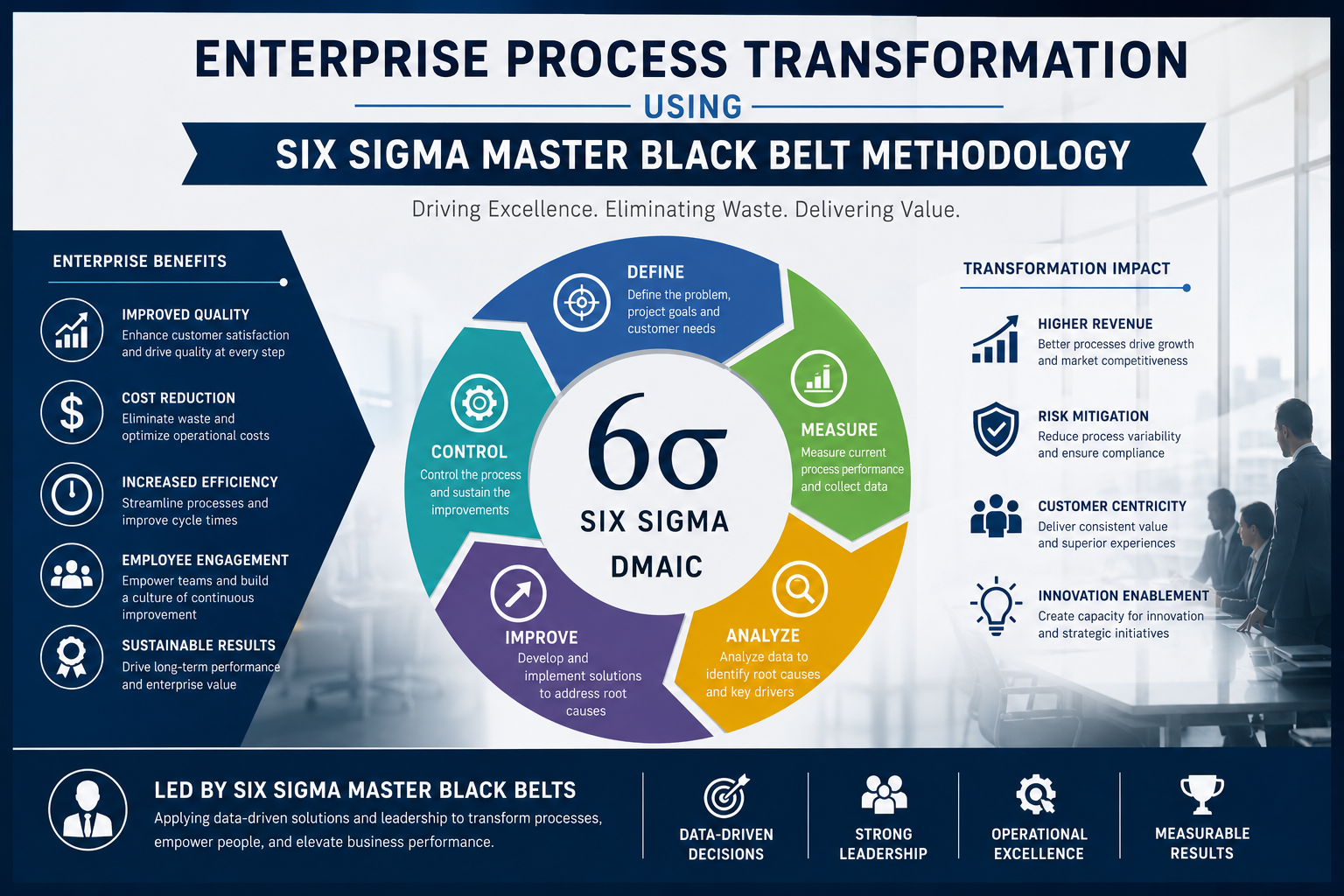


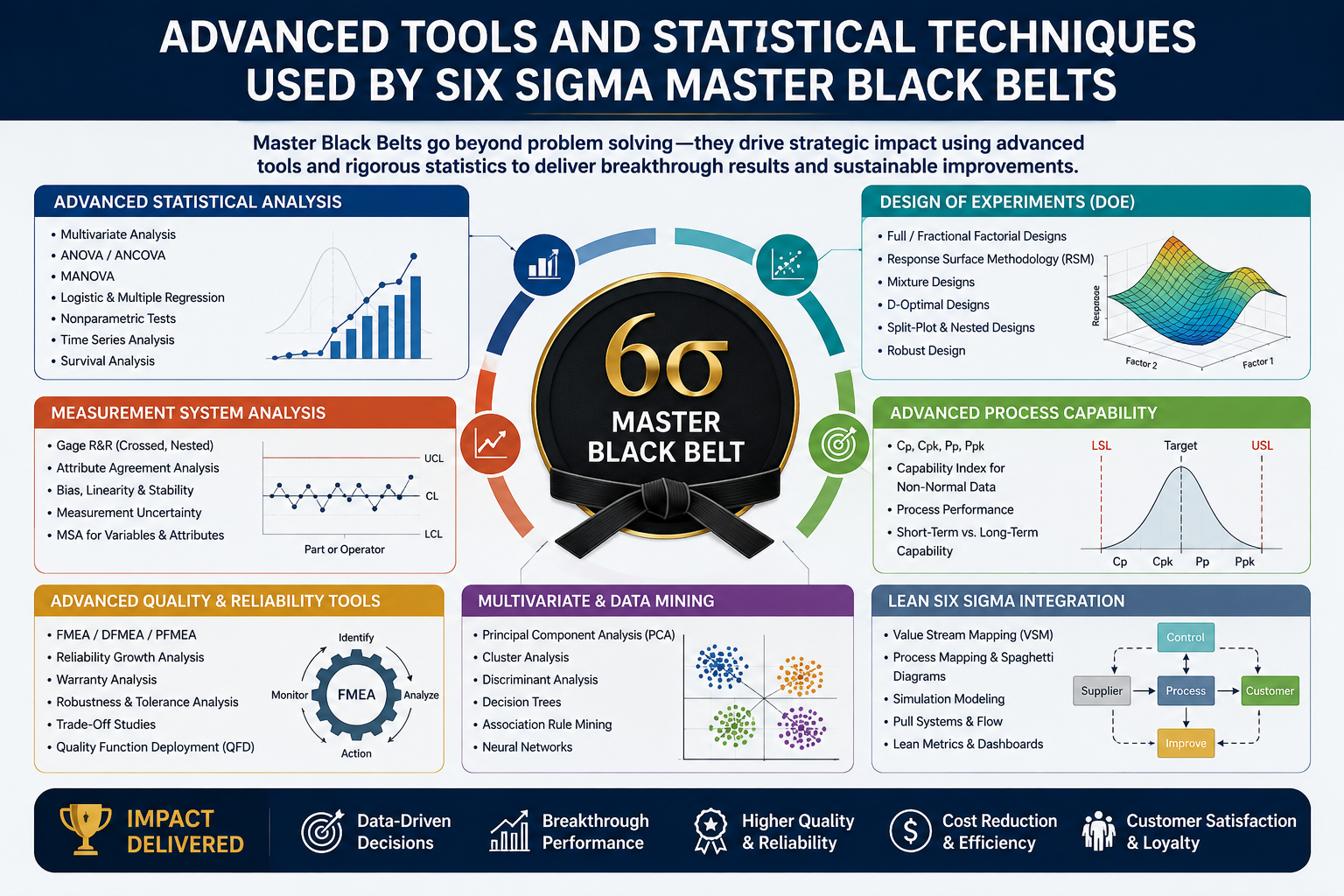

In the realm of quality management and process improvement, Six Sigma has emerged as a cornerstone methodology. Among the various levels of Six Sigma practitioners, the Master Black Belt stands out as an expert, responsible not only for implementing Six Sigma practices but also for mentoring others and driving the organization towards operational excellence. In this blog, we will explore the advanced Six Sigma tools and statistical techniques utilized by Master Black Belts to enhance quality and efficiency.
Understanding the Role of a Master Black Belt
Before diving into the tools and techniques, it's essential to grasp the significance of a Master Black Belt in the Six Sigma framework. These professionals possess a deep understanding of Six Sigma principles and are adept at using complex statistical methods to analyze data and improve processes. They play a pivotal role in training and mentoring Green Belts and Black Belts, ensuring the successful implementation of Six Sigma projects across various sectors.
Key Advanced Six Sigma Tools
Master Black Belts employ a variety of advanced tools that are integral to the Master Black Belt methodology. Here, we will discuss some of the most impactful tools that shape their approach to problem-solving and process improvement.
1. Statistical Process Control (SPC)
Statistical Process Control (SPC) is a vital tool that Master Black Belts leverage to monitor and control processes. By utilizing control charts, they can visualize process variations over time, enabling them to distinguish between common cause variation and special cause variation. This distinction is critical for maintaining process stability and ensuring quality.
2. Design of Experiments (DOE)
Design of Experiments (DOE) is an advanced statistical technique used to plan, conduct, and analyze controlled tests. Master Black Belts utilize DOE to identify cause-and-effect relationships, allowing them to optimize processes by systematically varying input factors. This method not only improves efficiency but also enhances product quality.
3. Failure Mode and Effects Analysis (FMEA)
FMEA is a proactive tool used to identify potential failure modes in a process and their associated risks. By assessing the severity, occurrence, and detection of each failure mode, Master Black Belts can prioritize risks and implement measures to mitigate them. This structured approach ensures that issues are addressed before they escalate, safeguarding process integrity.
4. Process Mapping and Value Stream Mapping
Process mapping and value stream mapping are essential tools for visualizing workflows and identifying areas for improvement. Master Black Belts utilize these tools to analyze the flow of materials and information, pinpointing inefficiencies and waste. By mapping out the current state, they can develop strategies to streamline processes and enhance overall efficiency.
5. Multivariate Analysis
Multivariate analysis is a sophisticated statistical technique that allows Master Black Belts to analyze multiple variables simultaneously. By examining the relationships between these variables, they can uncover insights that drive informed decision-making. This tool is particularly useful in complex processes where numerous factors influence outcomes.
Statistical Techniques Employed by Master Black Belts
In addition to utilizing advanced tools, Master Black Belts are well-versed in various statistical techniques that support data-driven decision-making. Here are some of the key statistical techniques they apply:
1. Hypothesis Testing
Hypothesis testing is a fundamental statistical technique used to determine whether there is enough evidence to support a specific claim or hypothesis. Master Black Belts employ this technique to validate assumptions and make data-driven decisions, ensuring that process improvements are grounded in statistical significance.
2. Regression Analysis
Regression analysis is a powerful statistical method used to understand the relationship between dependent and independent variables. Master Black Belts utilize regression analysis to predict outcomes based on historical data, allowing them to make informed decisions about process changes and improvements.
3. Capability Analysis
Capability analysis assesses a process's ability to produce output within specified limits. Master Black Belts use this technique to evaluate how well a process meets customer requirements and identify areas for improvement. Through capability analysis, they can ensure that processes consistently deliver high-quality results.
4. Control Charts
Control charts are graphical representations of process data over time, designed to monitor process behavior and stability. Master Black Belts use control charts to identify trends, shifts, and outliers, enabling them to take corrective actions before issues escalate.
5. Pareto Analysis
Pareto analysis is a prioritization technique that focuses on identifying the most significant factors contributing to a problem. By applying the 80/20 rule, Master Black Belts can concentrate their efforts on the issues that will yield the most substantial improvements, maximizing the impact of their Six Sigma initiatives.
Implementing Master Black Belt Methodology in India
In India, the adoption of Six Sigma practices has gained momentum across various industries, including manufacturing, healthcare, and services. The Master Black Belt methodology is crucial for organizations aiming to enhance quality and operational efficiency. By leveraging advanced Six Sigma tools and statistical techniques, Master Black Belts can drive significant improvements, leading to higher customer satisfaction and increased profitability.
Organizations in India are increasingly recognizing the value of investing in Master Black Belts to lead their Six Sigma initiatives. The expertise and statistical knowledge they bring can transform processes and foster a culture of continuous improvement within the organization.
FAQs
What is the role of a Master Black Belt in Six Sigma?
A Master Black Belt is responsible for mentoring other Six Sigma practitioners, leading complex projects, and ensuring the successful implementation of Six Sigma methodologies within an organization.
Which advanced tools are commonly used by Master Black Belts?
Commonly used tools include Statistical Process Control (SPC), Design of Experiments (DOE), Failure Mode and Effects Analysis (FMEA), Process Mapping, and Multivariate Analysis.
How does a Master Black Belt contribute to process improvement?
By utilizing advanced statistical techniques and tools, Master Black Belts identify inefficiencies, optimize processes, and implement data-driven solutions that lead to improved quality and efficiency.
Why is Six Sigma important for Indian industries?
Six Sigma is important for Indian industries as it helps organizations improve quality, reduce waste, enhance customer satisfaction, and ultimately drive profitability in a competitive market.
Conclusion
Master Black Belts play a crucial role in the success of Six Sigma initiatives by employing advanced tools and statistical techniques to drive process improvement. As organizations in India continue to embrace Six Sigma methodologies, the demand for skilled Master Black Belts will only grow. By mastering these tools and techniques, these professionals can lead their teams towards operational excellence and create a culture of continuous improvement.
If you are looking to enhance your organization's quality management practices or wish to pursue a career as a Master Black Belt, consider investing in Six Sigma training and certification. Join the ranks of professionals who are making a difference in their organizations through the power of Six Sigma!
Call to Action: Ready to take your Six Sigma journey to the next level? Explore our comprehensive training programs and become a certified Master Black Belt today!