About iQS

Empowering learners and educators with a comprehensive platform that bridges the gap between traditional and modern education. iQS inspires excellence in education and fosters growth for a brighter future.

Follow Us

Home Blogs
Pravin sahani
May 28, 2026
Six Sigma Career Opportunities: Salary, Jobs & Growth After Certification

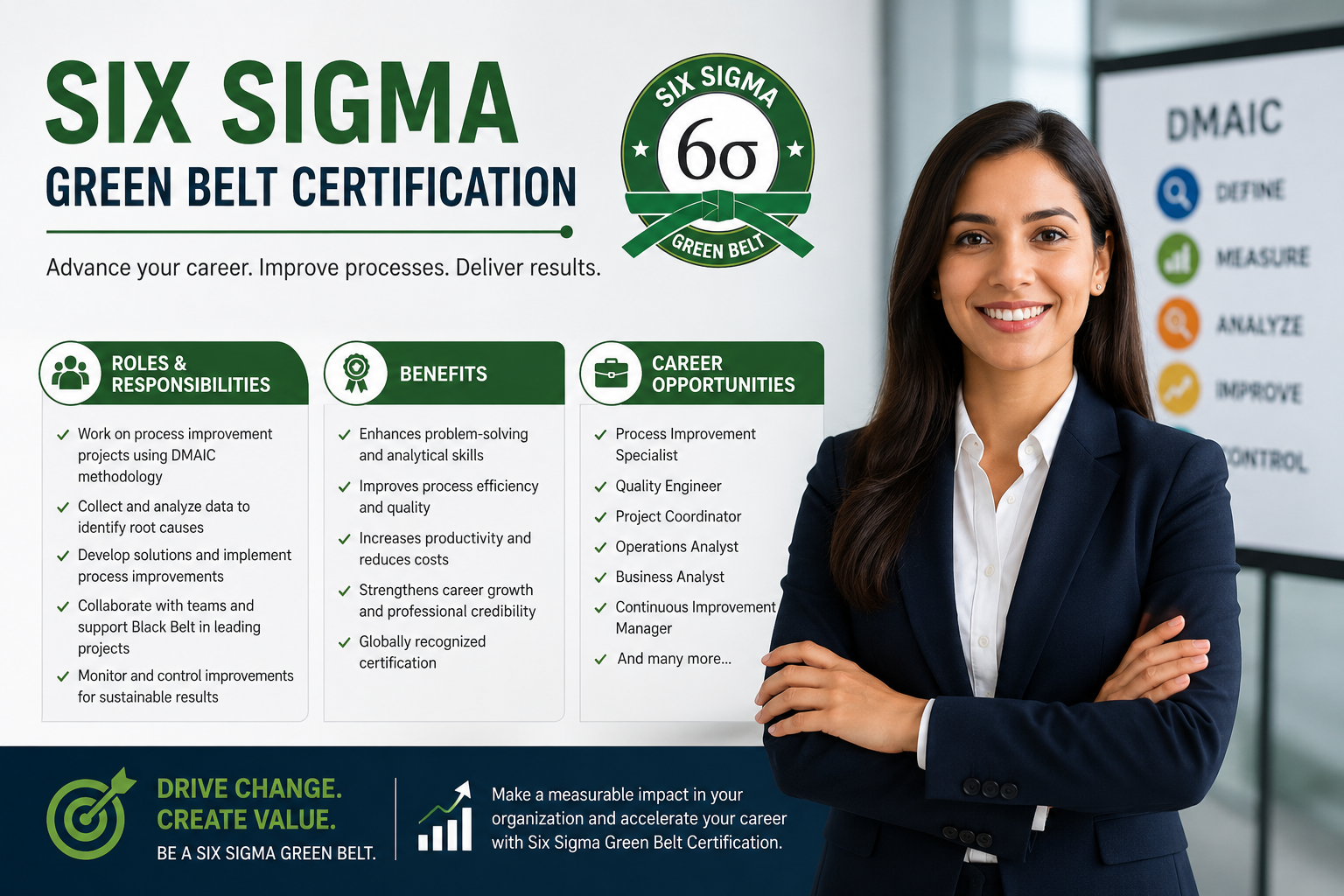
If you're contemplating a career in quality management, Six Sigma is an excellent pathway to explore. This methodology not only enhances operational efficiency but also opens up a plethora of job opportunities across various industries. In this blog, we will delve into the career prospects related to Six Sigma, including salaries, job roles, and growth potential after obtaining your Six Sigma certification. Understanding Six Sigma and Its Importance Six Sigma is a data-driven approach aimed at eliminating defects and improving processes. Originating from manufacturing, its principles are now applied across sectors such as healthcare, finance, and IT. The relevance of Six Sigma in today's competitive market cannot be overstated; companies are increasingly seeking professionals skilled in Six Sigma methodologies to drive operational excellence. Why Get Certified in Six Sigma? Obtaining a Six Sigma certification is a significant step towards enhancing your career prospects. It not only validates your expertise in process improvement but also makes you a valuable asset to employers. With a certification, you can stand out in the crowded job market, especially in India, where the demand for Six Sigma professionals is on the rise. Types of Six Sigma Certification There are several levels of Six Sigma certification, including: Six Sigma Jobs in India The job market for Six Sigma professionals in India is expanding rapidly. Here are some of the common job roles associated with Six Sigma: 1. Six Sigma Consultant As a consultant, you will work with organizations to implement Six Sigma methodologies, conduct training sessions, and guide teams through process improvement projects. 2. Quality Manager A Quality Manager oversees quality assurance processes and ensures compliance with Six Sigma standards. They play a critical role in maintaining product quality and enhancing operational efficiency. 3. Process Improvement Specialist This role focuses on identifying areas for improvement within various processes. Utilizing Six Sigma tools, you will analyze data and recommend strategies to enhance productivity. 4. Project Manager Many project management roles require Six Sigma certification. You will be responsible for managing projects that aim to improve business processes while adhering to Six Sigma principles. 5. Data Analyst Data Analysts with Six Sigma certification can effectively analyze business data to identify trends, inefficiencies, and areas for improvement, making them crucial for data-driven decision-making. Six Sigma Salary in India The salary for Six Sigma professionals varies widely based on experience, job role, and industry. Here's a general breakdown: As you gain experience and expertise in Six Sigma methodologies, your salary can increase significantly, especially if you take on leadership roles or specialize further in certain industries. Growth Potential After Six Sigma Certification The growth potential after obtaining a Six Sigma certification is immense. Here are a few factors contributing to this growth: 1. Increased Job Opportunities The demand for Six Sigma professionals is soaring, especially in sectors such as manufacturing, healthcare, finance, and IT. Companies are increasingly recognizing the need for efficient processes and quality management, leading to a surge in job openings. 2. Versatile Skill Set Six Sigma training equips you with a versatile skill set applicable across various industries. Whether you are in manufacturing or healthcare, the ability to analyze data, solve problems, and lead projects is highly sought after. 3. Career Advancement With a Six Sigma certification, you position yourself for career advancement. Many organizations prefer to promote from within, and having a Six Sigma certification often places you in a favorable position for leadership roles. 4. Networking Opportunities Being part of the Six Sigma community allows you to connect with like-minded professionals, attend workshops, and continuously learn from industry experts. This networking can lead to job opportunities and collaborations that further your career. Frequently Asked Questions (FAQs) 1. What industries value Six Sigma certification? Six Sigma certification is valued across various sectors, including manufacturing, healthcare, finance, IT, and logistics. Companies in these industries seek professionals who can improve processes and enhance quality. 2. How long does it take to get Six Sigma certified? The duration for Six Sigma certification varies depending on the level. Generally, White and Yellow Belt certifications can be completed in a few days, while Green Belt and Black Belt certifications may take several weeks to months. 3. Is Six Sigma certification worth it in India? Absolutely! With the growing demand for quality management professionals, Six Sigma certification can significantly enhance your employability and salary prospects in India. 4. Can I pursue Six Sigma certification online? Yes, many reputable institutions offer online Six Sigma certification courses. This flexibility allows you to study at your own pace while balancing other commitments. Conclusion Embarking on a Six Sigma career not only opens the door to numerous job opportunities but also offers a promising salary and growth trajectory. As industries continue to emphasize quality and efficiency, the demand for certified Six Sigma professionals will only increase. So, if you're ready to enhance your career prospects, consider obtaining a Six Sigma certification today! Ready to take the next step in your career? Enroll in a Six Sigma certification course today and unlock a world of opportunities!

Pravin sahani
May 27, 2026
Six Sigma Belt Levels Explained: White Belt to Master Black Belt

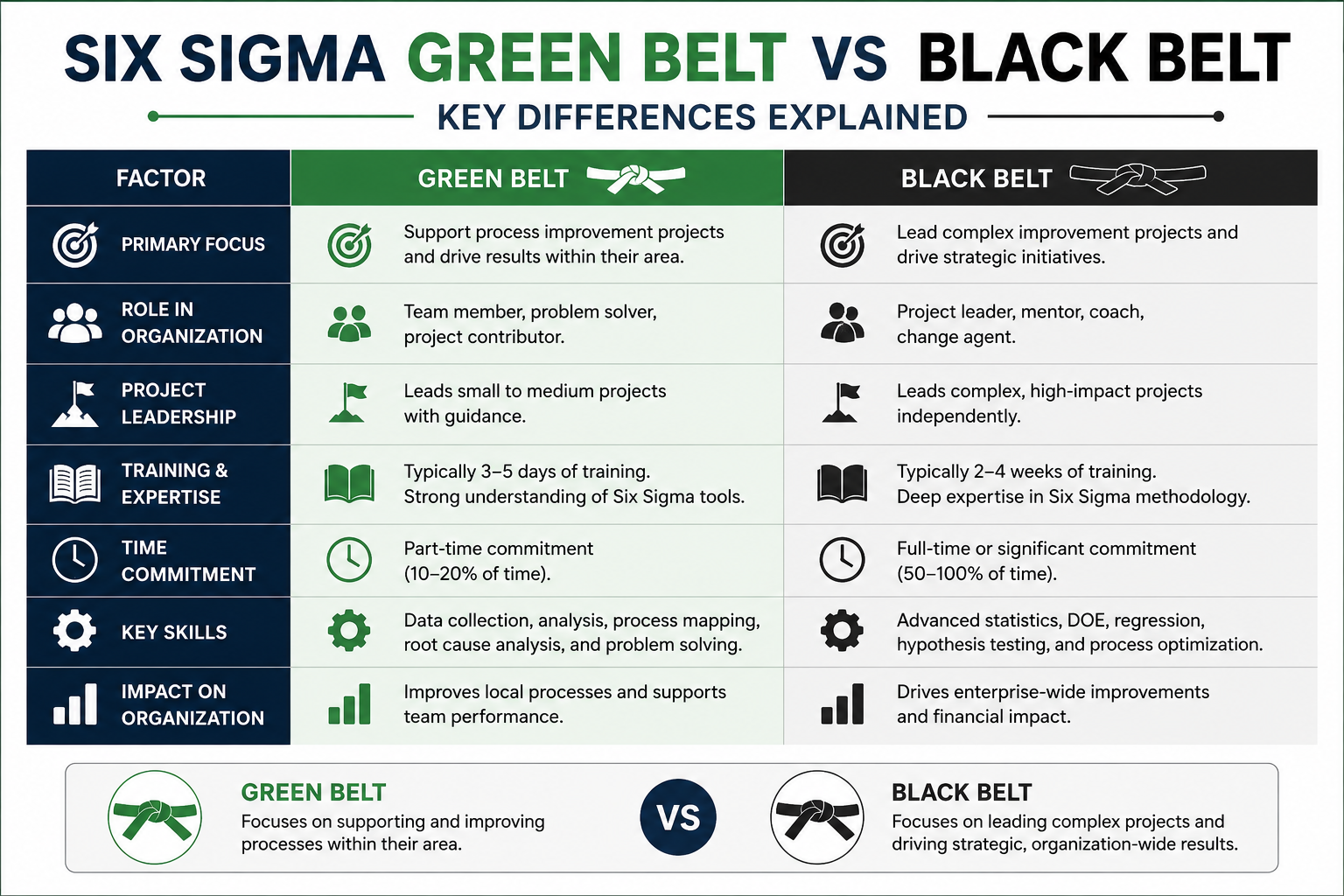
In the realm of process improvement and quality management, Six Sigma has emerged as a powerful methodology. One of the key features of Six Sigma is its belt system, which signifies the level of expertise and knowledge an individual possesses in Six Sigma practices. Whether you are considering a career in quality management or simply want to enhance your skills, understanding the Six Sigma belt levels is crucial. In this blog, we will delve into the different Six Sigma belt levels, from White Belt to Master Black Belt, and explore the significance of each level for professionals in India. What is Six Sigma? Six Sigma is a data-driven approach aimed at improving process quality by identifying and eliminating defects. Originally developed by Motorola in the 1980s, it has since been adopted by various industries worldwide. The methodology focuses on understanding customer needs, reducing variation, and improving overall process performance. Six Sigma uses statistical tools and techniques to streamline processes, enhance quality, and ultimately deliver better products and services. Understanding Six Sigma Belt Levels The Six Sigma belt system is akin to martial arts, where practitioners earn belts to represent their level of proficiency. Each belt level signifies a different level of knowledge, responsibility, and role within Six Sigma projects. Let’s explore each Six Sigma belt level in detail: 1. White Belt The White Belt is the entry-level certification in the Six Sigma hierarchy. Individuals who earn a White Belt have a basic understanding of Six Sigma principles and tools. They typically participate in improvement projects but are not actively involved in leading them. 2. Yellow Belt The Yellow Belt level builds on the foundation established by the White Belt. Individuals at this level have a deeper understanding of Six Sigma methodologies and can assist in problem-solving and process improvement initiatives. 3. Green Belt The Six Sigma Green Belt level is a significant step up from Yellow Belt. Green Belts are often involved in leading smaller-scale projects or assisting Black Belts in larger projects. They play a critical role in implementing Six Sigma techniques and driving process improvement. 4. Black Belt The Black Belt level represents a high level of expertise in Six Sigma methodologies. Black Belts lead complex projects and are responsible for training and mentoring Green Belts and Yellow Belts. They possess a thorough understanding of statistical analysis and problem-solving techniques. 5. Master Black Belt The Master Black Belt is the highest level of Six Sigma certification. Individuals at this level have extensive knowledge and experience in Six Sigma practices. They are responsible for the strategic implementation of Six Sigma across an organization and provide training and guidance to Black Belts and Green Belts. Lean Six Sigma: A Comprehensive Approach Lean Six Sigma combines the principles of Lean manufacturing and Six Sigma to enhance efficiency and reduce waste while maintaining a focus on quality. This approach is gaining traction in India, especially in manufacturing and service sectors. Individuals interested in Lean Six Sigma can pursue certifications like Lean Six Sigma Green Belt and Lean Six Sigma Black Belt, which signify proficiency in both methodologies. Lean Six Sigma Green Belt The Lean Six Sigma Green Belt certification focuses on both Lean principles and Six Sigma methodologies. Professionals with this certification are well-equipped to identify and eliminate waste, streamline processes, and improve quality. Lean Six Sigma Black Belt The Lean Six Sigma Black Belt certification is aimed at professionals who lead complex projects that require both Lean and Six Sigma methodologies. Black Belts are responsible for training team members and driving organizational change. Conclusion Understanding the Six Sigma belt levels is essential for anyone looking to enhance their career in quality management. From the foundational knowledge of a White Belt to the strategic expertise of a Master Black Belt, each level plays a crucial role in driving process improvement and achieving organizational excellence. Whether you choose to pursue Six Sigma or Lean Six Sigma certifications, mastering these methodologies can lead to significant career advancement and opportunities in various industries across India. FAQs 1. What is the difference between Six Sigma and Lean Six Sigma? Six Sigma focuses primarily on reducing defects and improving quality through statistical analysis, while Lean Six Sigma combines these principles with Lean manufacturing techniques aimed at eliminating waste and enhancing efficiency. 2. How long does it take to earn a Six Sigma certification? The duration to earn a Six Sigma certification varies based on the belt level. White and Yellow Belt certifications may take a few days, while Green Belt and Black Belt certifications can take several weeks to months, depending on the training program. 3. Can I pursue Six Sigma certifications online? Yes, many institutes offer online Six Sigma certification courses, allowing you to learn at your own pace and convenience. 4. Is Six Sigma certification worth it in India? Yes, Six Sigma certification is highly regarded in India, particularly in manufacturing and service sectors, where quality improvement is essential. It can significantly enhance your career prospects and increase your earning potential. 5. What are the career opportunities after obtaining a Six Sigma certification? After earning a Six Sigma certification, professionals can pursue roles such as Quality Manager, Process Improvement Specialist, Operations Manager, and even higher positions in leadership and consultancy. Call to Action If you’re ready to enhance your skills and embark on a journey to excellence in quality management, consider enrolling in a Six Sigma certification program today! Explore various options available for Six Sigma and Lean Six Sigma certifications, and take the first step toward a rewarding career.

Pravin sahani
May 27, 2026
What is Six Sigma Certification? Complete Guide for Beginners in 2026

In today’s competitive business landscape, organizations are constantly striving for excellence—whether that's improving processes, reducing waste, or enhancing quality. One of the most recognized methodologies for achieving these goals is Six Sigma. If you're considering advancing your career or improving your organization's processes, understanding Six Sigma certification is crucial. This guide will provide you with all the information you need about Six Sigma certification, including its benefits, methodologies, and how to get certified, especially for an Indian audience in 2026. What is Six Sigma? Six Sigma is a data-driven methodology that aims to improve business processes by minimizing defects and variability. Originally developed by Motorola in the 1980s, it has since become a global standard for quality management. The core principle of Six Sigma is to use statistical tools and techniques to identify and eliminate causes of defects, thereby enhancing overall efficiency and quality. Understanding Six Sigma Methodology The Six Sigma methodology revolves around two main approaches: DMAIC and DMADV. DMAIC DMAIC stands for Define, Measure, Analyze, Improve, and Control. It is primarily used for improving existing processes. Here’s a breakdown of each phase: DMADV DMADV stands for Define, Measure, Analyze, Design, and Verify. This approach is used for creating new processes or products. It emphasizes designing quality into the process from the ground up. Benefits of Six Sigma Certification Acquiring a Six Sigma certification can be a game-changer for professionals. Here are some key benefits: 1. Enhanced Career Opportunities With a Six Sigma certification, professionals stand out in the job market. Organizations value employees who can contribute to process improvement and cost reduction. 2. Improved Problem-Solving Skills The training equips individuals with a structured approach to problem-solving, allowing them to tackle complex issues effectively. 3. Increased Earning Potential On average, Six Sigma certified professionals earn significantly higher salaries compared to their non-certified peers. This certification can lead to promotions and raises. 4. Contribution to Organizational Success Certified professionals play a crucial role in driving efficiency and quality within their organizations, leading to improved customer satisfaction and business success. 5. Networking Opportunities Being part of the Six Sigma community opens up networking opportunities with like-minded professionals, providing avenues for knowledge exchange and career growth. Types of Six Sigma Certifications There are various levels of Six Sigma certification, ranging from beginner to advanced. Here are the primary levels: 1. Yellow Belt The Yellow Belt certification is an entry-level certification that provides a basic understanding of Six Sigma principles and methodologies. 2. Green Belt The Green Belt certification is for professionals who are involved in process improvement projects and assist Black Belts. 3. Black Belt The Black Belt certification is for individuals who lead problem-solving projects and are responsible for training Green Belts. 4. Master Black Belt The Master Black Belt certification is for experts who mentor Black and Green Belts and drive strategic Six Sigma initiatives in organizations. How to Get Six Sigma Certified? Obtaining Six Sigma certification involves several steps: 1. Choose Your Certification Level Determine which certification level aligns with your career goals and current expertise. 2. Enroll in a Six Sigma Course Look for online Six Sigma training certification programs that fit your schedule and budget. Many reputable organizations offer these courses, often including comprehensive materials and practical projects. 3. Study the Material Dedicate time to study the course material thoroughly. Engage in discussions, ask questions, and participate in case studies to enhance your understanding. 4. Take the Certification Exam Once you feel prepared, register for the certification exam. Ensure you meet the prerequisites defined by the certifying body. 5. Apply Your Skills After obtaining your certification, seek opportunities to apply your skills in real-world projects, enhancing your experience and contributing to your organization. Online Six Sigma Learning: The Future of Certification In recent years, the landscape of education has shifted dramatically towards online platforms. Online Six Sigma learning offers flexibility, accessibility, and a wide range of resources. Here are some advantages of pursuing Six Sigma certification online: 1. Flexibility Online courses allow you to learn at your own pace, fitting your studies around your work and personal commitments. 2. Access to Resources Many online courses provide exclusive resources, including video lectures, quizzes, and interactive forums, which enhance the learning experience. 3. Cost-Effectiveness Online courses often come at a lower cost compared to traditional classroom training, making Six Sigma certification more accessible to a wider audience. Frequently Asked Questions (FAQs) 1. Is Six Sigma certification worth it? Yes, Six Sigma certification is highly regarded and can significantly enhance your career opportunities, earning potential, and problem-solving skills. 2. How long does it take to get Six Sigma certified? The duration varies based on the certification level and the course format—typically ranging from a few weeks to several months. 3. Can I study Six Sigma online? Absolutely! There are numerous platforms offering online Six Sigma training certification that cater to different learning styles and schedules. 4. What is the cost of Six Sigma certification in India? The cost can vary widely depending on the certification level and training provider, typically ranging from INR 10,000 to INR 50,000. Conclusion In conclusion, obtaining a Six Sigma certification can be a valuable investment in your career. With its focus on quality and efficiency, Six Sigma methodology equips professionals with the skills needed to drive significant improvements in their organizations. Whether you choose to pursue online Six Sigma training certification or traditional courses, the benefits are undeniable. Start your journey today, and unlock a world of opportunities! Call to Action Ready to take the next step in your career? Explore our comprehensive Six Sigma courses available online. Join our community of aspiring professionals and start your Six Sigma journey today!

Admin
May 24, 2026
What is Six Sigma Training? Complete Beginner’s Guide to Certification, Levels & Career Benefits

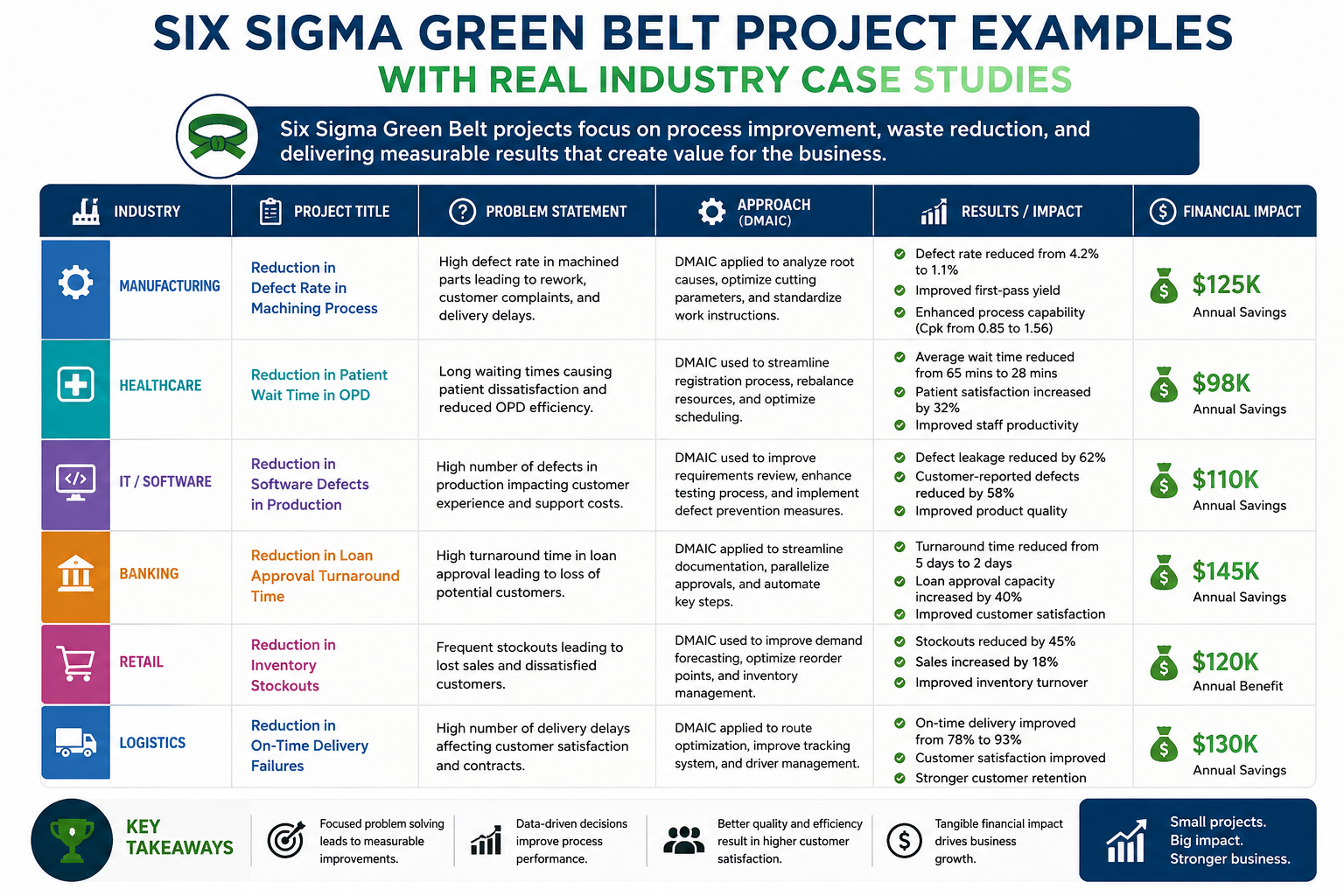
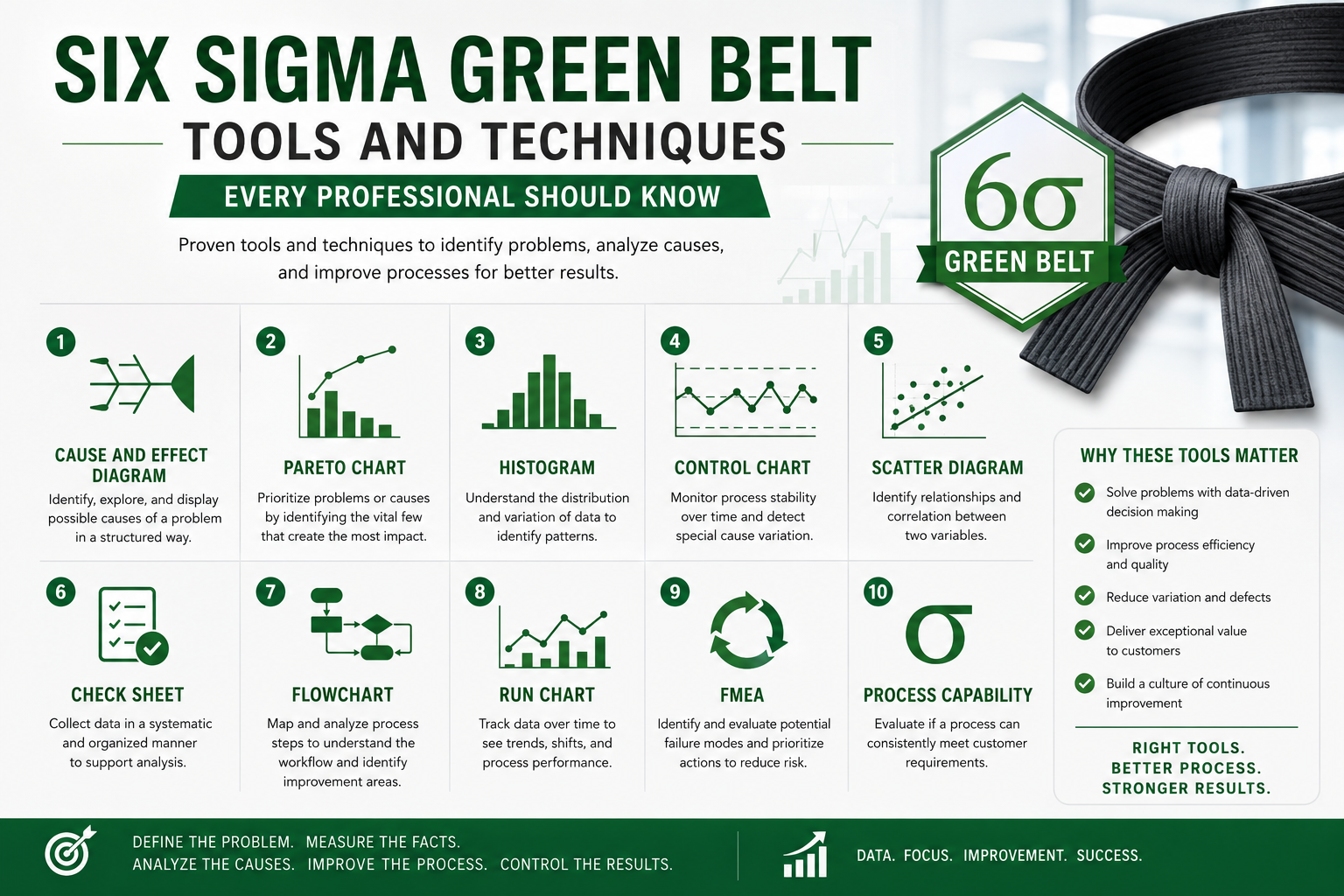
Six Sigma Training is a structured process improvement methodology that helps individuals and organizations reduce errors, improve quality, optimize operations, and achieve business efficiency. It includes different certification levels such as White Belt, Yellow Belt, Green Belt, Black Belt, and Master Black Belt, enabling professionals to build expertise in quality management and operational excellence.What is Six Sigma Training? Complete Beginner’s Guide to Certification, Levels & Career BenefitsIntroductionBusinesses today operate in highly competitive environments where quality, efficiency, customer satisfaction, and cost optimization directly influence growth. Organizations are constantly looking for ways to eliminate waste, improve processes, and enhance productivity. This is where Six Sigma Training plays an important role.Originally developed by Motorola in the 1980s and later adopted globally by companies such as General Electric, Amazon, Ford, and healthcare institutions, Six Sigma has evolved into one of the most recognized methodologies for process improvement and quality management.Whether you are a student exploring career options, a working professional aiming for growth, an HR leader building workforce capability, or a business owner seeking operational excellence, understanding Six Sigma can create long-term value.This beginner’s guide explains Six Sigma Certification, levels, methodologies, career opportunities, and practical business applications.What is Six Sigma Training?Six Sigma Training is a structured learning program designed to teach professionals how to identify inefficiencies, reduce process variation, eliminate defects, and improve business performance using data-driven methods.The goal of Six Sigma is simple:Improve quality while reducing errors and costs.The methodology focuses on achieving near-perfect process performance by limiting defects to approximately 3.4 defects per million opportunities (DPMO).Definition Table: Key Six Sigma TermsTermDefinitionSix SigmaMethodology focused on quality improvement and defect reductionLean Six SigmaCombination of Lean principles and Six Sigma techniquesDMAICFramework used for process improvementDPMODefects Per Million OpportunitiesProcess VariationInconsistency in outputs or operationsOperational ExcellenceContinuous improvement for business efficiencySix Sigma Training usually forms part of broader Quality Management Training and Business Process Improvement initiatives within organizations.Why Six Sigma Training MattersModern businesses face challenges including:Process delaysCustomer complaintsProduction defectsIncreased operational costsInefficient workflowsResource wastageSix Sigma helps address these problems systematically.For example:A manufacturing company experiencing frequent production defects can use Six Sigma tools to identify root causes and reduce rework costs.Similarly, a hospital facing long patient waiting times may apply Lean Six Sigma methods to improve service delivery.Short Answer for Featured Snippets:Why is Six Sigma important?Six Sigma improves quality, reduces defects, enhances productivity, lowers costs, and supports data-driven decision-making across industries.Key Benefits of Six Sigma Training1. Improves Process EfficiencySix Sigma enables organizations to streamline workflows and eliminate unnecessary activities.Result:Faster executionReduced delaysBetter resource utilization2. Enhances Career OpportunitiesProfessionals with Six Sigma Certification often gain advantages in:Operations managementQuality assuranceProject managementManufacturingConsultingSupply chain managementMany employers consider Six Sigma Certification an added competency.3. Supports Data-Driven Decision MakingUnlike assumption-based approaches, Six Sigma relies on measurable data.Professionals learn:Statistical analysisRoot cause identificationProcess mappingPerformance measurement4. Reduces Business CostsProcess inefficiencies create hidden costs.Six Sigma reduces:WasteReworkDowntimeDefectsCustomer complaints5. Drives Operational ExcellenceOrganizations implementing Six Sigma often integrate it into long-term Operational Excellence strategies.The outcome includes:Better qualityImproved customer satisfactionHigher profitabilitySix Sigma Certification Levels ExplainedSix Sigma follows a belt-based learning structure similar to martial arts.Comparison Table: Six Sigma Certification LevelsLevelSuitable ForFocus AreaWhite BeltBeginnersBasic conceptsYellow BeltTeam membersProcess participationGreen BeltProfessionalsProject executionBlack BeltLeadersAdvanced analyticsMaster Black BeltExpertsStrategy and mentoringWhite BeltWhite Belt introduces fundamental concepts of Six Sigma.Topics include:Process improvement basicsQuality awarenessOverview of DMAIC MethodologyBest for:Students and beginners.Yellow BeltYellow Belt professionals participate in improvement projects.Training covers:Process mappingProblem-solving methodsTeam collaborationSuitable for:Operations teams and entry-level professionals.Green BeltGreen Belt is one of the most popular Six Sigma Certification levels.Professionals learn:DMAIC implementationStatistical toolsRoot cause analysisProject managementGreen Belt holders often lead small improvement initiatives.Black BeltBlack Belt professionals handle larger transformation projects.Skills include:Advanced statisticsLeadershipChange managementProject executionBlack Belts frequently work with senior management.Master Black BeltThis is the highest level.Responsibilities include:Strategy developmentTraining teamsMentoring Black BeltsEnterprise-level improvementsStep-by-Step Process: Understanding DMAIC MethodologyDMAIC Methodology is the foundation of Six Sigma.DMAIC stands for:D – DefineIdentify:Problem statementCustomer requirementsProject goalsExample:A company notices delivery delays.Problem:Late shipments affecting customer satisfaction.M – MeasureCollect process data.Questions asked:What is current performance?Where are inefficiencies?Metrics include:Defect ratesTurnaround timeCostsA – AnalyzeIdentify root causes.Tools used:Fishbone DiagramPareto AnalysisCause-and-effect mappingExample:Delivery delays traced to warehouse bottlenecks.I – ImproveImplement solutions.Actions may include:Process redesignAutomationWorkflow optimizationC – ControlMaintain improvements.Methods:Monitoring KPIsDashboardsAuditsGoal:Prevent process regression.Real Industry Examples of Six Sigma ApplicationsManufacturing IndustryProblem:High defect rates in production.Solution:Six Sigma project identifies machine calibration issues.Outcome:Reduced defects and lower costs.Healthcare IndustryProblem:Long patient waiting times.Solution:Lean Six Sigma process redesign.Result:Faster service delivery.IT IndustryProblem:Repeated software deployment errors.Solution:Root cause analysis and workflow improvement.Outcome:Reduced incidents and improved release quality.Logistics and Supply ChainProblem:Shipment delays.Solution:Process mapping and bottleneck elimination.Result:Improved delivery performance.Tools, Frameworks and Methodologies Used in Six Sigma TrainingSix Sigma Courses include various analytical tools.Common Six Sigma ToolsToolPurposePareto ChartPrioritize issuesFishbone DiagramRoot cause analysisControl ChartsMonitor processesSIPOC DiagramProcess mappingHistogramData distributionFMEARisk analysisLean Six Sigma FrameworkLean Six Sigma combines:Lean PrinciplesFocus on:Waste reductionFaster workflowsValue creationSix Sigma PrinciplesFocus on:QualityVariation reductionStatistical controlTogether they create comprehensive Process Improvement Training systems.Who Should Take Six Sigma Training?Six Sigma Training benefits professionals across industries.Ideal candidates include:Students and Fresh GraduatesGain additional credentials before entering the workforce.Corporate EmployeesUseful for:Operations teamsQuality departmentsSupply chain professionalsManagers and LeadersSupports:Strategic decision makingProcess transformationBusiness OwnersHelps improve profitability through Business Process Improvement initiatives.Common Challenges in Six Sigma Implementation and SolutionsChallenge 1: Resistance to ChangeEmployees may resist process changes.Solution:Provide training and involve teams early.Challenge 2: Lack of Leadership SupportWithout management buy-in, projects struggle.Solution:Align Six Sigma initiatives with business objectives.Challenge 3: Insufficient DataPoor data quality affects analysis.Solution:Improve data collection systems.Challenge 4: Unrealistic ExpectationsSome organizations expect immediate results.Solution:Focus on continuous improvement rather than quick wins.Career Benefits of Six Sigma CertificationHigher EmployabilityRecruiters value process improvement expertise.Common job roles include:Quality AnalystOperations ManagerProcess ConsultantContinuous Improvement SpecialistProject ManagerSalary GrowthProfessionals with Six Sigma Certification often command better compensation due to specialized skills.Cross-Industry RelevanceIndustries using Six Sigma include:ManufacturingHealthcareAutomotiveITBankingLogisticsRetailEducationLeadership DevelopmentSix Sigma develops:Analytical thinkingProblem-solving skillsProject leadershipThese skills remain valuable across roles.Frequently Asked Questions (People Also Ask)What is Six Sigma?Six Sigma is a process improvement methodology focused on reducing defects and improving quality using data-driven techniques.Who should take Six Sigma Training?Students, professionals, managers, HR teams, business owners, and quality specialists can benefit from Six Sigma Training.Is Six Sigma Certification worth it?Yes. Six Sigma Certification improves career opportunities, enhances analytical skills, and supports business process improvement initiatives.Which Six Sigma level is best?Green Belt is often considered the best starting point for professionals because it balances theory and practical application.How long does Six Sigma Training take?Training duration varies:White Belt: Few hoursYellow Belt: 1–2 daysGreen Belt: Several weeksBlack Belt: Few monthsWhat industries use Six Sigma?Manufacturing, healthcare, IT, logistics, banking, retail, automotive, and service industries widely use Six Sigma.What is Lean Six Sigma?Lean Six Sigma combines Lean methods for waste reduction with Six Sigma methodologies for quality improvement.What is DMAIC Methodology?DMAIC stands for Define, Measure, Analyze, Improve, and Control. It is the core framework used in Six Sigma projects.Can beginners learn Six Sigma?Yes. Beginners can start with White Belt or Yellow Belt certification programs.ConclusionSix Sigma Training has become much more than a quality management technique. Today, it serves as a strategic framework for operational excellence, process optimization, and business growth.From manufacturing plants and healthcare institutions to IT organizations and service companies, Six Sigma continues to help businesses improve efficiency, reduce waste, and enhance customer satisfaction.For professionals, Six Sigma Certification offers more than a credential. It builds practical problem-solving skills, strengthens leadership abilities, and opens career opportunities across industries.Whether you are beginning your career or leading organizational transformation, learning Six Sigma can be a valuable investment in long-term growth.Looking for professional Six Sigma Training and Certification? Explore expert-led programs designed to help individuals and organizations achieve operational excellence and process improvement.