

In today's competitive business environment, organizations are constantly seeking ways to improve their processes, reduce waste, and enhance customer satisfaction. One of the most effective methodologies for achieving these goals is Six Sigma. Among its various levels, the Six Sigma Black Belt Certification stands out as a prestigious qualification that equips professionals with the skills needed to lead quality improvement projects. In this blog, we will delve into what Six Sigma Black Belt certification entails, the roles and responsibilities associated with it, and the promising career growth opportunities it offers in India.
Understanding Six Sigma and Black Belt Certification
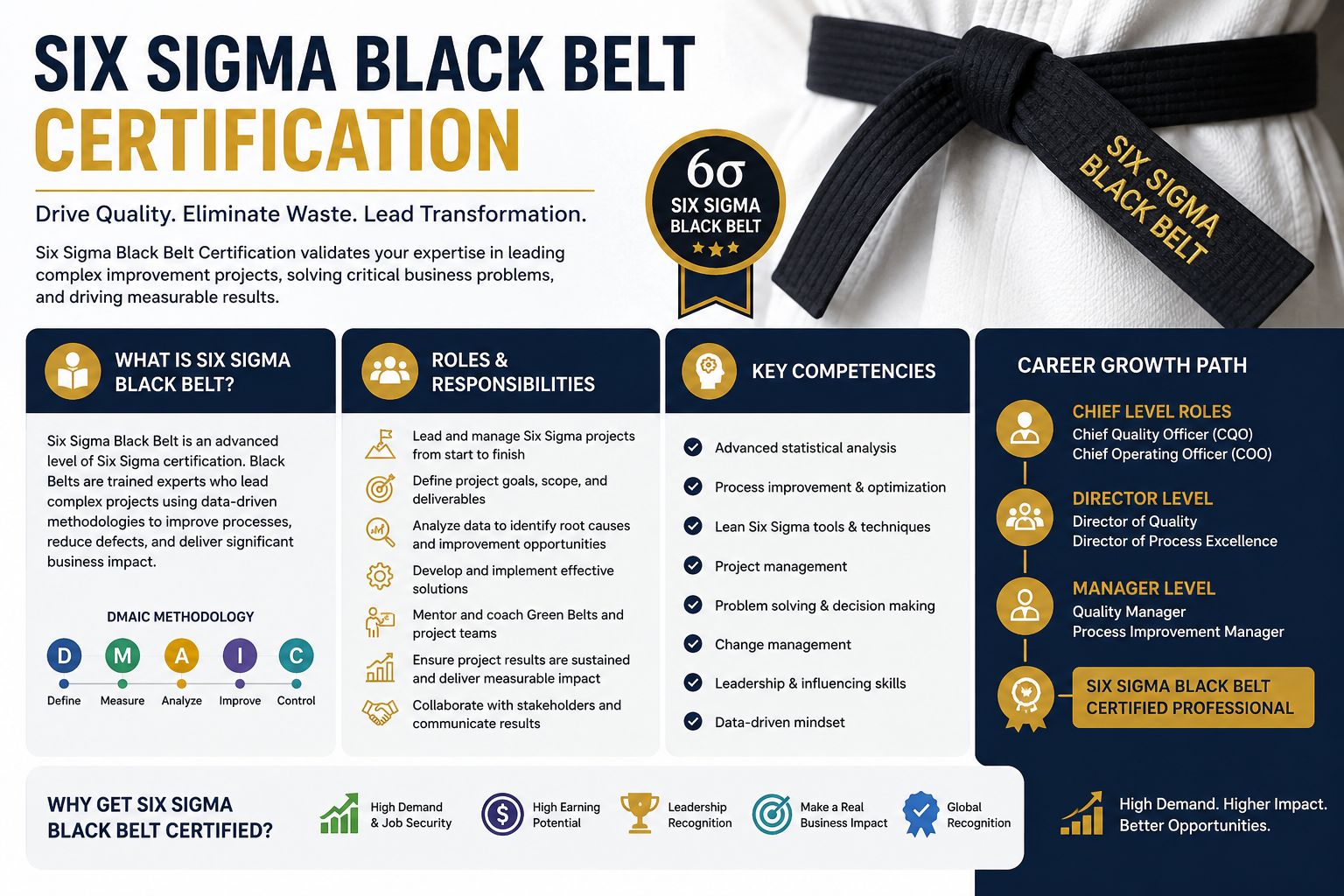
Six Sigma is a data-driven methodology that aims to eliminate defects in any process, whether in manufacturing or service delivery. It uses statistical tools and techniques to analyze and improve processes, ultimately leading to increased efficiency and customer satisfaction. The Six Sigma methodology is structured around five key phases: Define, Measure, Analyze, Improve, and Control (DMAIC).
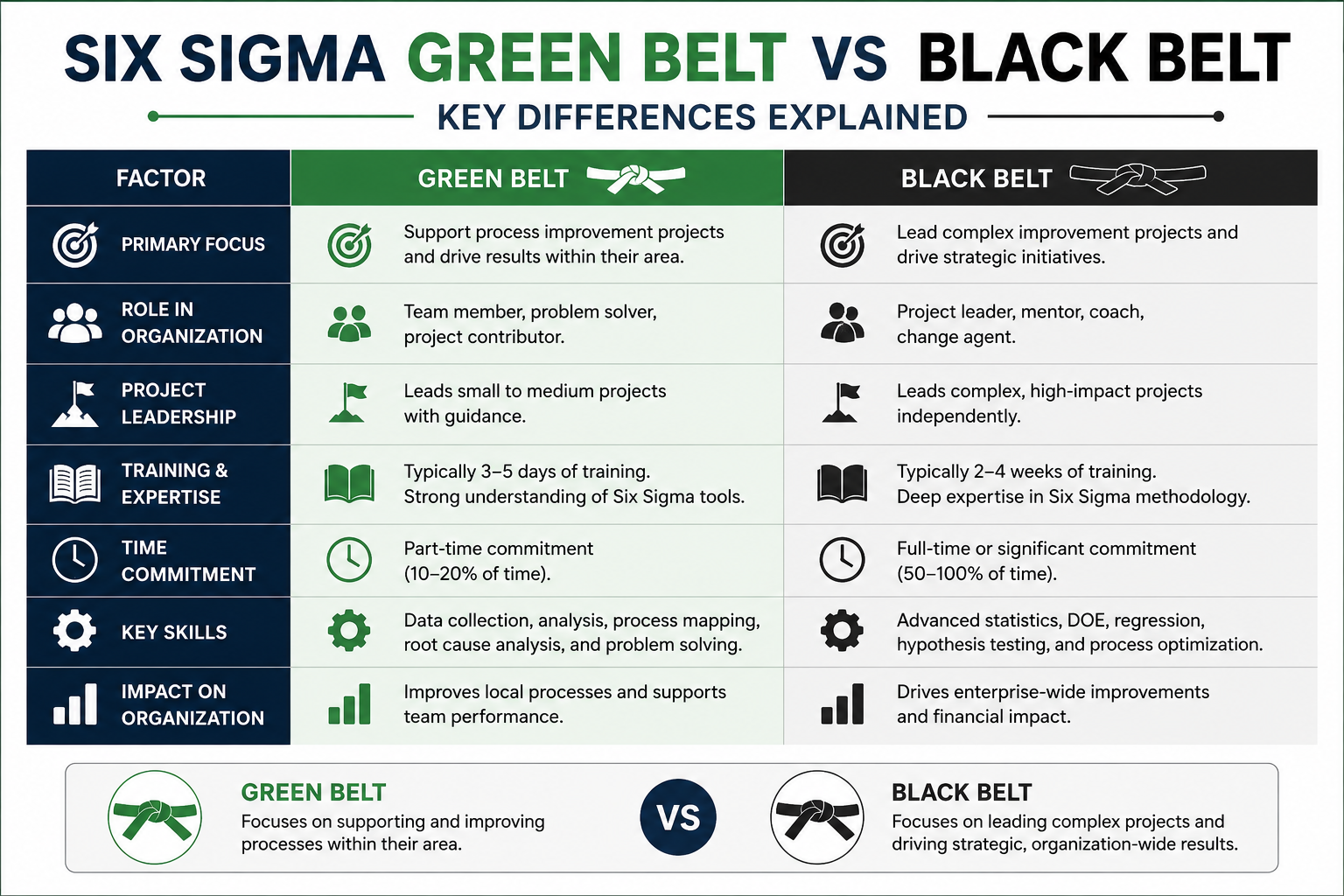
The Six Sigma Black Belt Certification is a professional credential awarded to individuals who have demonstrated a thorough understanding of Six Sigma principles and can lead complex projects. Black Belts are expected to possess advanced knowledge of statistical analysis, project management, and leadership skills, enabling them to drive process improvements effectively.
Roles and Responsibilities of a Six Sigma Black Belt
As a Six Sigma Black Belt, your role extends beyond just understanding the tools and techniques of Six Sigma. Here are some of the key responsibilities:
1. Leading Improvement Projects
A Black Belt is responsible for leading cross-functional teams in improvement projects. They define project goals, develop project plans, and ensure that project deliverables are met on time and within budget.
2. Data Collection and Analysis
Data is at the heart of Six Sigma. Black Belts are responsible for collecting and analyzing data to identify process inefficiencies and defects. They use various statistical tools to interpret data and derive actionable insights.
3. Mentoring Green Belts
In addition to leading projects, Black Belts often mentor Green Belts, who are typically less experienced in Six Sigma methodologies. This mentorship involves guiding them through their projects and helping them develop their skills.
4. Training and Development
Black Belts frequently conduct training sessions for team members and other stakeholders to instill a culture of continuous improvement within the organization.
5. Stakeholder Engagement
Effective communication with stakeholders is crucial. Black Belts must engage with various departments to ensure alignment on project goals and gather support for initiatives.
How to Obtain Six Sigma Black Belt Certification
To achieve the Six Sigma Black Belt Certification, candidates typically need to follow these steps:
1. Prerequisites
While specific prerequisites may vary by certifying body, candidates are generally expected to have a basic understanding of Six Sigma concepts, often acquired through Six Sigma Black Belt training or prior experience.
2. Training Program
Enrolling in a reputable training program is essential. Many institutes in India offer Six Sigma Black Belt courses that cover advanced statistical tools, project management, and team dynamics.
3. Examination
After completing the training, candidates must pass a rigorous examination that tests their knowledge and understanding of Six Sigma principles and practices.
4. Practical Experience
Most certification bodies require candidates to demonstrate practical experience by leading or participating in Six Sigma projects. This hands-on experience is crucial for applying theoretical knowledge to real-world situations.
Career Growth Opportunities with Six Sigma Black Belt Certification
A Black Belt certification opens up numerous career advancement opportunities across various industries. Here are some of the potential career paths:
1. Quality Manager
As a Quality Manager, you will be responsible for overseeing quality assurance processes and ensuring compliance with industry standards. Your expertise in Six Sigma will be invaluable in this role.
2. Process Improvement Consultant
Many companies seek consultants with Six Sigma expertise to help them identify inefficiencies and implement process improvements. This role often involves working with multiple clients across different industries.
3. Operations Manager
Operations Managers focus on optimizing processes and ensuring that operations run smoothly. A Black Belt certification provides the skills needed to implement effective strategies for operational excellence.
4. Project Manager
Project Managers are responsible for planning, executing, and closing projects. With a Black Belt certification, you can lead projects focused on quality improvement and process efficiency.
5. Continuous Improvement Manager
In this role, you will be tasked with creating and implementing strategies for continuous improvement within the organization. Your Six Sigma training will help you identify areas for enhancement.
FAQs About Six Sigma Black Belt Certification
1. What is the duration of Six Sigma Black Belt training?
The duration of Six Sigma Black Belt training programs can vary, typically ranging from a few weeks to several months, depending on the institute and the format of the course (online or in-person).
2. Is Six Sigma Black Belt certification recognized globally?
Yes, Six Sigma Black Belt certification is recognized worldwide. Various organizations and institutes offer certification, and many companies value this qualification when hiring for quality management positions.
3. Can I pursue Six Sigma Black Belt certification online?
Absolutely! Many reputable organizations offer online Six Sigma Black Belt training and certification programs, making it accessible for professionals across India and beyond.
4. What is the average salary for a Six Sigma Black Belt in India?
The average salary for a Six Sigma Black Belt in India varies by industry and experience level but typically ranges from ₹8 to ₹20 lakhs per annum, with potential for higher earnings in senior roles.
5. Do I need to have a specific educational background to pursue Six Sigma Black Belt certification?
While a technical or engineering background can be beneficial, it is not mandatory. Candidates from various educational backgrounds can pursue Six Sigma Black Belt certification, provided they have a basic understanding of quality management principles.
Conclusion
The Six Sigma Black Belt certification is a valuable asset for professionals looking to enhance their career in quality management and process improvement. With the skills gained through training and practical experience, Black Belts play a crucial role in driving organizational excellence. If you are considering a career in this field, investing in Six Sigma Black Belt training can provide you with the knowledge and credentials to advance your career significantly.
Ready to take your career to the next level? Explore our Six Sigma Black Belt certification courses today and become a leader in quality improvement!