

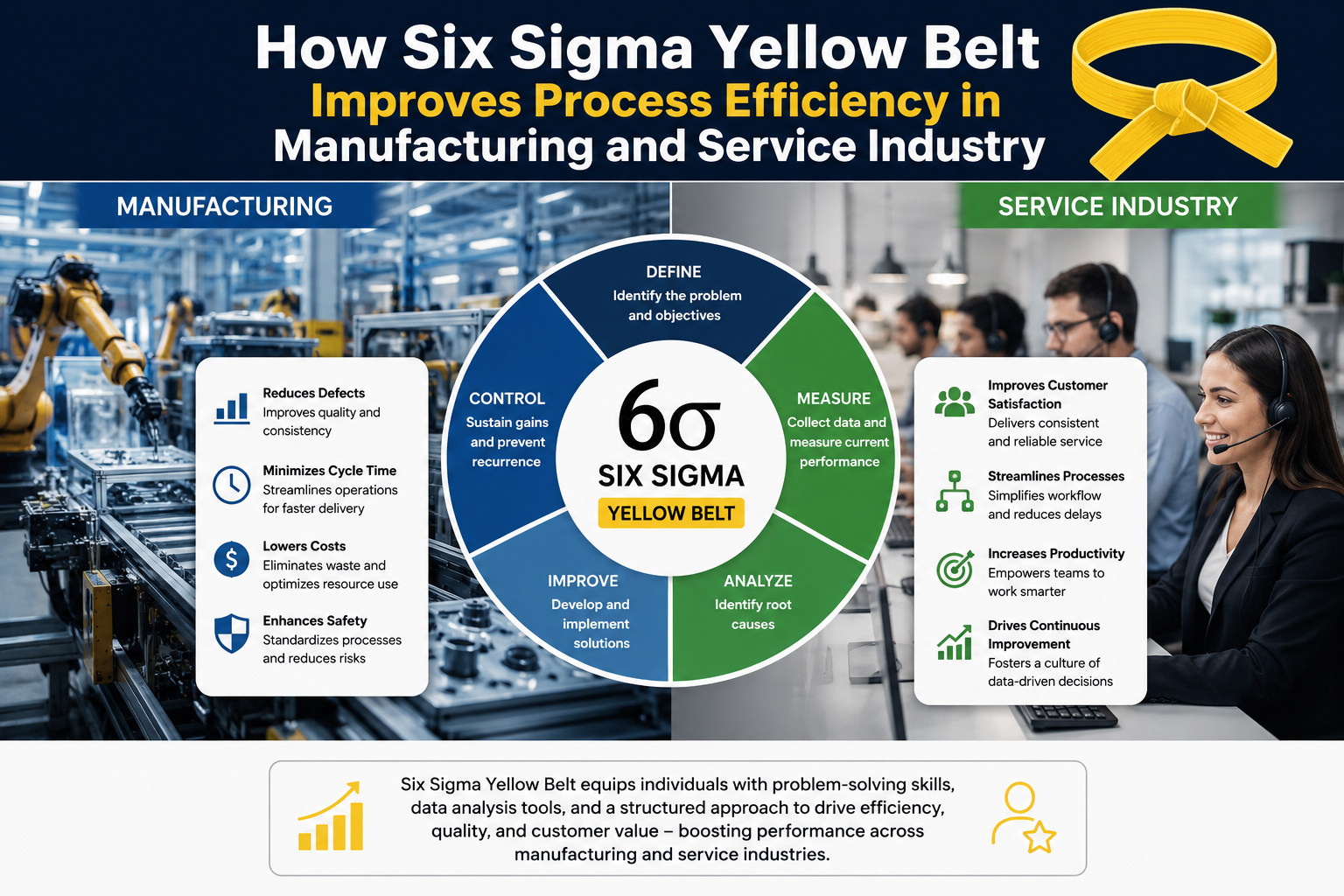

In today's competitive landscape, businesses in India are increasingly seeking ways to enhance their operational efficiency. One of the most effective methodologies to achieve this is through Six Sigma, particularly the Six Sigma Yellow Belt. This article delves into how Six Sigma Yellow Belt applications can significantly improve process efficiency in both the manufacturing and service industries.
Understanding Six Sigma and Its Importance
Six Sigma is a data-driven methodology that aims to eliminate defects and improve processes across various industries. The concept revolves around identifying and removing the causes of errors in manufacturing and service processes. The ultimate goal is to achieve a level of quality that results in fewer than 3.4 defects per million opportunities.
Six Sigma employs a set of quality management methods, including both statistical and non-statistical techniques. The methodology is divided into different belt levels, including White, Yellow, Green, Black, and Master Black Belts, each representing a different level of expertise and responsibility. The Yellow Belt is often the first step for individuals looking to delve into Six Sigma process improvement.
What is a Six Sigma Yellow Belt?
A Six Sigma Yellow Belt is an individual who has a basic understanding of Six Sigma principles and tools. These professionals typically participate as project team members and support Green and Black Belts in their projects. They are trained to identify problems, collect data, and assist in the implementation of solutions that lead to process efficiency improvement.
Six Sigma Yellow Belt Applications
The applications of a Six Sigma Yellow Belt are vast and impactful. Here are some notable areas where Yellow Belts can make a difference:
Why Six Sigma Yellow Belt is Essential for Process Efficiency Improvement
Implementing Six Sigma methodologies can lead to significant process efficiency improvements in both manufacturing and service industries. Here’s how a Six Sigma Yellow Belt contributes to this goal:
1. Streamlining Processes
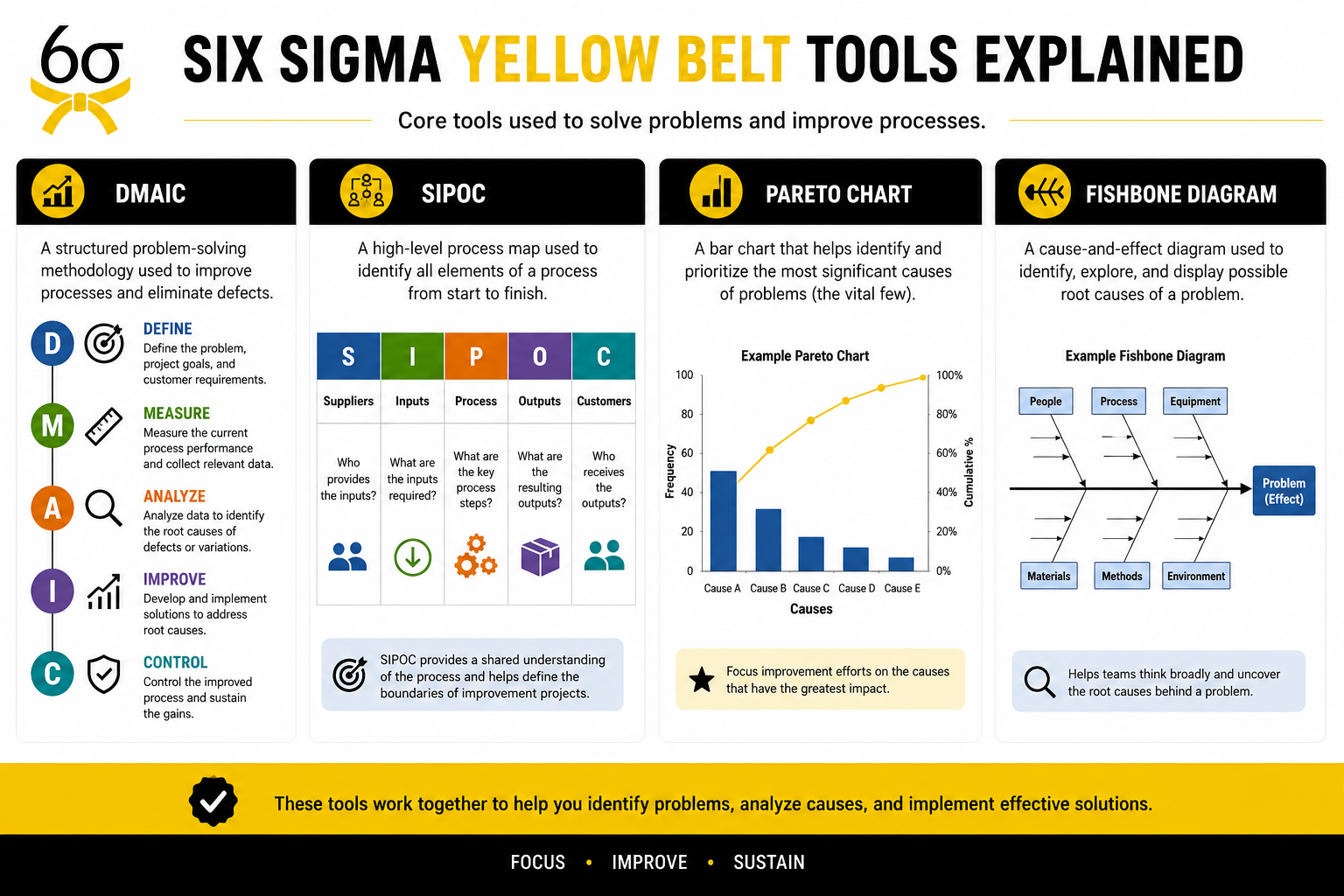
One of the primary objectives of Six Sigma is to streamline processes by reducing variability and waste. Yellow Belts use tools like DMAIC (Define, Measure, Analyze, Improve, Control) to identify inefficiencies and recommend changes that can lead to smoother operations.
2. Enhancing Quality
Six Sigma focuses on quality improvement. A Yellow Belt can help teams implement quality control measures, leading to reduced defects and improved product or service quality. In the manufacturing sector, this could mean fewer defective products, while in the service industry, it translates to higher customer satisfaction.
3. Cost Reduction
By improving process efficiency, businesses can significantly reduce costs. Yellow Belts identify processes that consume unnecessary resources and suggest more efficient alternatives. This cost-saving aspect is critical in India’s competitive market, where margins can be thin.
4. Data-Driven Decision Making
One of the cornerstones of Six Sigma is its reliance on data. Yellow Belts are trained to interpret data effectively, enabling organizations to make informed decisions based on empirical evidence rather than assumptions. This data-centric approach helps in identifying trends and making proactive adjustments to processes.
5. Employee Engagement
Involving employees at all levels in process improvement initiatives fosters a sense of ownership and accountability. Yellow Belts become champions of change within their teams, encouraging collaboration and innovation. This engagement not only improves morale but also drives the success of Six Sigma initiatives.
Lean Six Sigma Implementation in India
Lean Six Sigma combines the principles of Lean manufacturing, which focuses on eliminating waste, with Six Sigma’s emphasis on quality. The integration of these methodologies can provide comprehensive solutions to improve process efficiency.
1. Cultural Shift towards Continuous Improvement
In India, where traditional practices are prevalent, implementing Lean Six Sigma requires a cultural shift. Yellow Belts can pave the way for this change by promoting the importance of process improvement and encouraging a mindset focused on efficiency.
2. Training and Development
Investing in Yellow Belt training is essential for organizations looking to implement Lean Six Sigma. It equips employees with the necessary skills to contribute effectively to process improvement projects, ensuring successful implementation.
3. Cross-Functional Collaboration
Lean Six Sigma thrives on collaboration between departments. Yellow Belts can facilitate communication and teamwork, breaking down silos and ensuring that all parts of the organization work together towards common goals.
Case Studies: Success Stories of Six Sigma Yellow Belt in India
Many Indian companies have successfully implemented Six Sigma methodologies, showcasing the effectiveness of Yellow Belts in driving process efficiency. Here are a couple of examples:
1. Tata Steel
Tata Steel has leveraged Six Sigma principles to improve operational efficiency. By training employees as Yellow Belts, they have successfully identified bottlenecks in production, resulting in significant cost savings and enhanced product quality.
2. Infosys
In the IT sector, Infosys has utilized Six Sigma Yellow Belts to refine its service delivery processes. By focusing on quality and customer satisfaction, they have managed to improve their service offerings, leading to increased client retention and growth.
FAQs about Six Sigma Yellow Belt
What is the difference between a Yellow Belt and a Green Belt?
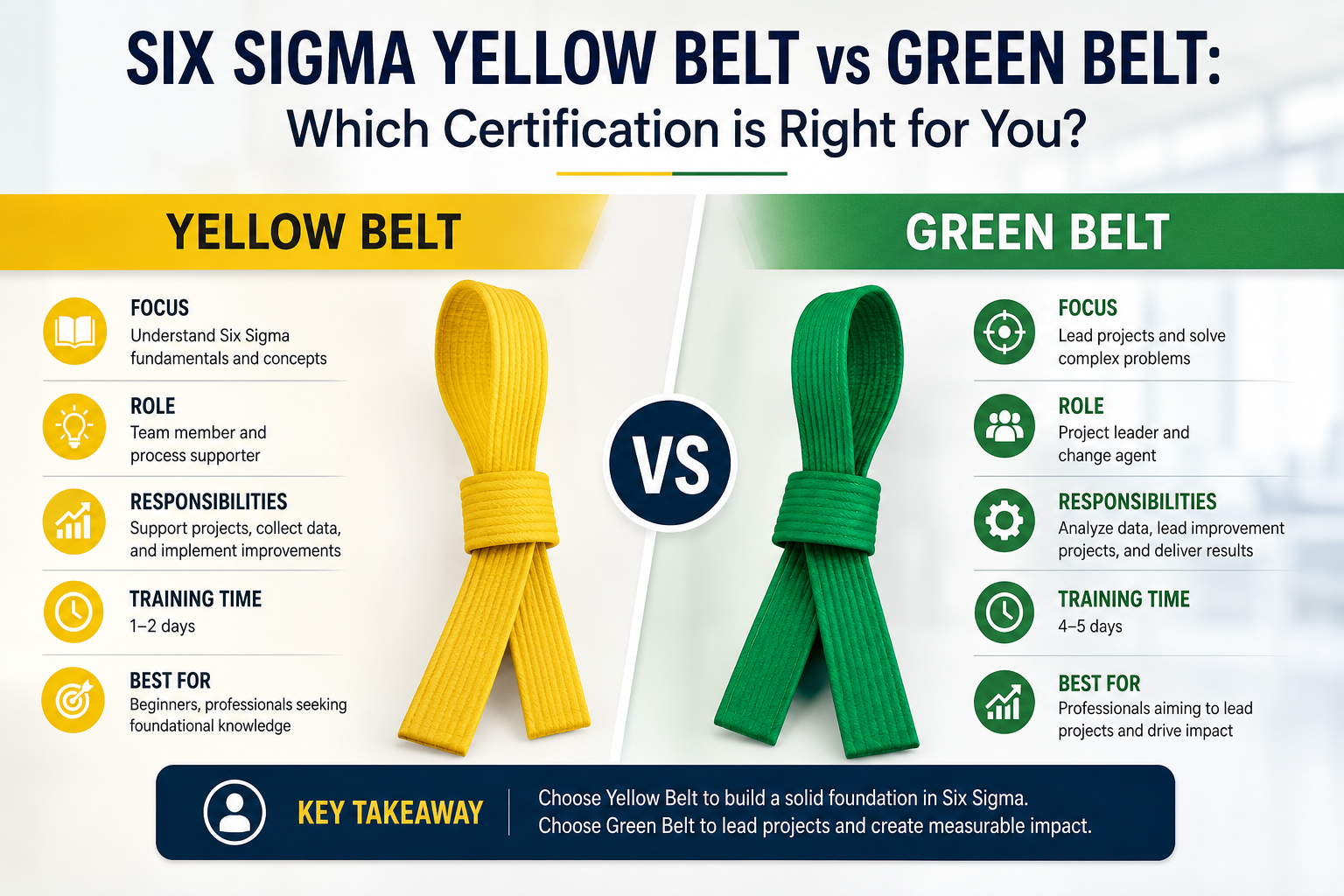
A Yellow Belt has a basic understanding of Six Sigma principles and typically works under the guidance of Green and Black Belts, who have more advanced training and responsibilities.
How long does it take to become a Six Sigma Yellow Belt?
The duration of Yellow Belt training can vary, but most programs take about 2 to 5 days to complete, depending on the organization and the depth of the curriculum.
Can a Six Sigma Yellow Belt lead a project?
While Yellow Belts can lead smaller projects or assist in larger ones, they typically don’t lead major Six Sigma projects, which are usually managed by Green or Black Belts.
Is Six Sigma certification worth it in India?
Yes, Six Sigma certification, including Yellow Belt, is highly regarded in India across various industries. It enhances employability and provides valuable skills that are applicable in many operational roles.
Conclusion
In conclusion, the role of a Six Sigma Yellow Belt is crucial in driving process efficiency improvements in both manufacturing and service industries. By understanding the principles of Six Sigma and applying them effectively, organizations in India can achieve significant operational gains. Investing in Yellow Belt training not only equips employees with valuable skills but also fosters a culture of continuous improvement. If you're looking to enhance your organization's efficiency, consider implementing Six Sigma methodologies today!
Ready to get started with Six Sigma training? Contact us today to learn more about our Six Sigma Yellow Belt certification programs and how they can benefit your organization!