

In today’s competitive job market, having the right skill set can set you apart from the crowd. One of the most sought-after certifications in the realm of process improvement is Six Sigma. However, the Six Sigma certification levels can be confusing, especially when it comes to understanding the differences between the Yellow Belt and Green Belt certifications. In this blog, we’ll explore the key distinctions between the yellow belt vs green belt and help you determine which Six Sigma certification is right for you.
What is Six Sigma?
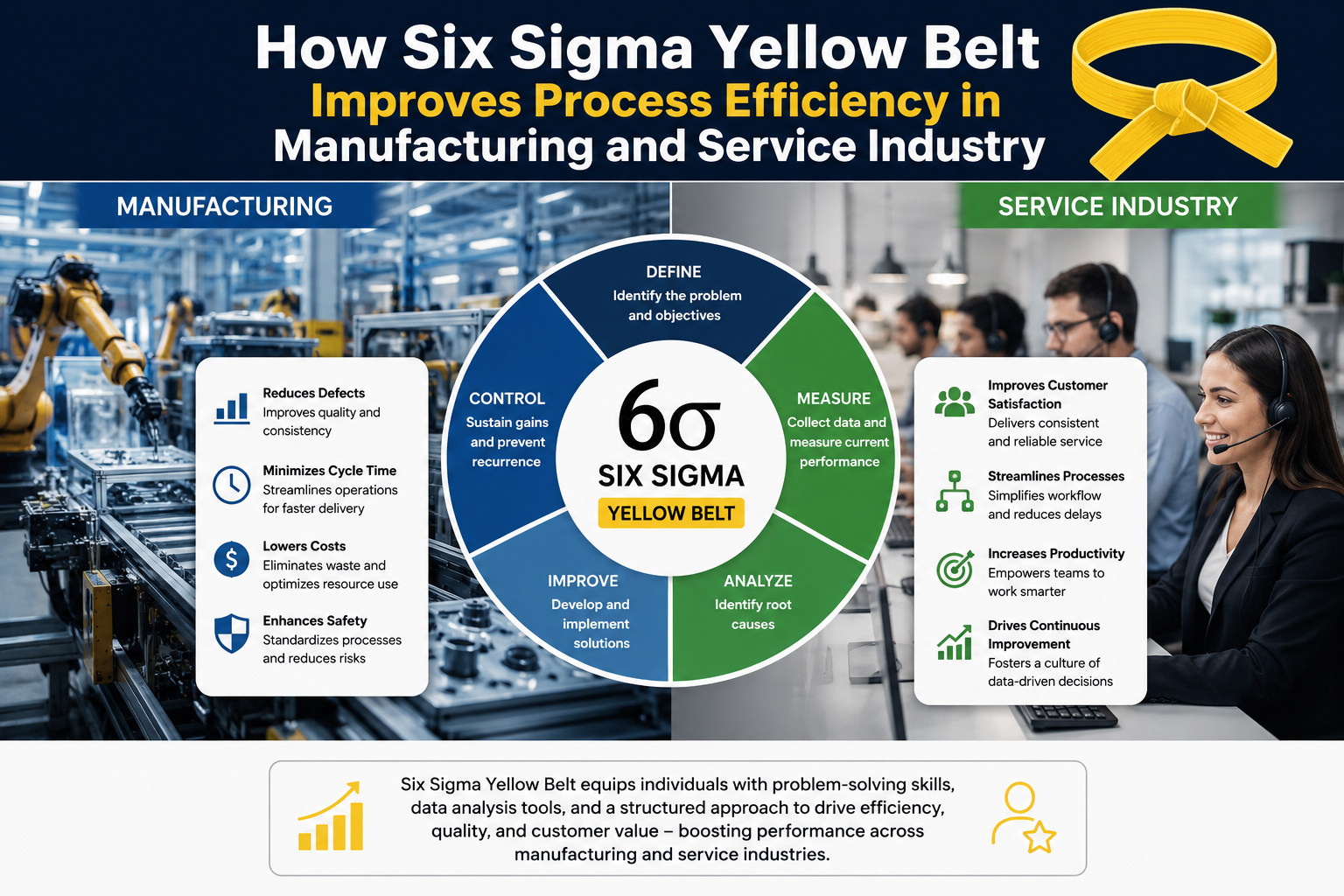
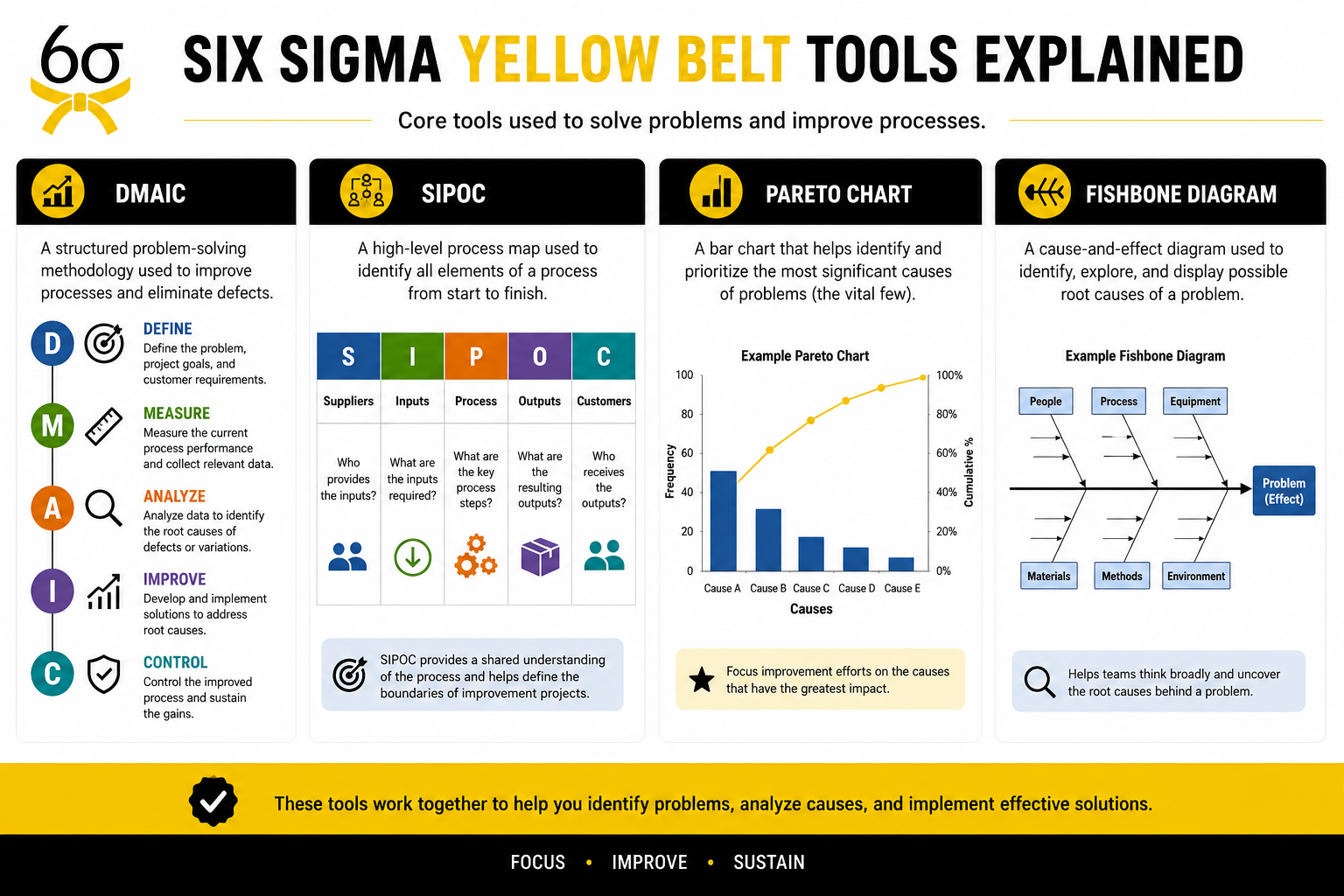
Six Sigma is a data-driven methodology that aims to improve business processes by identifying and eliminating defects. The goal is to achieve near perfection in performance, resulting in higher customer satisfaction and lower operational costs. This is achieved through a variety of tools and techniques that are taught at different levels of Six Sigma certification.
Understanding Six Sigma Certification Levels
Six Sigma certifications are categorized into various belts, similar to martial arts. Each belt represents a different level of expertise and responsibility within the Six Sigma framework. The primary Six Sigma certification levels include:
In this blog post, we will focus specifically on the yellow belt vs green belt distinctions.
Six Sigma Yellow Belt: An Overview
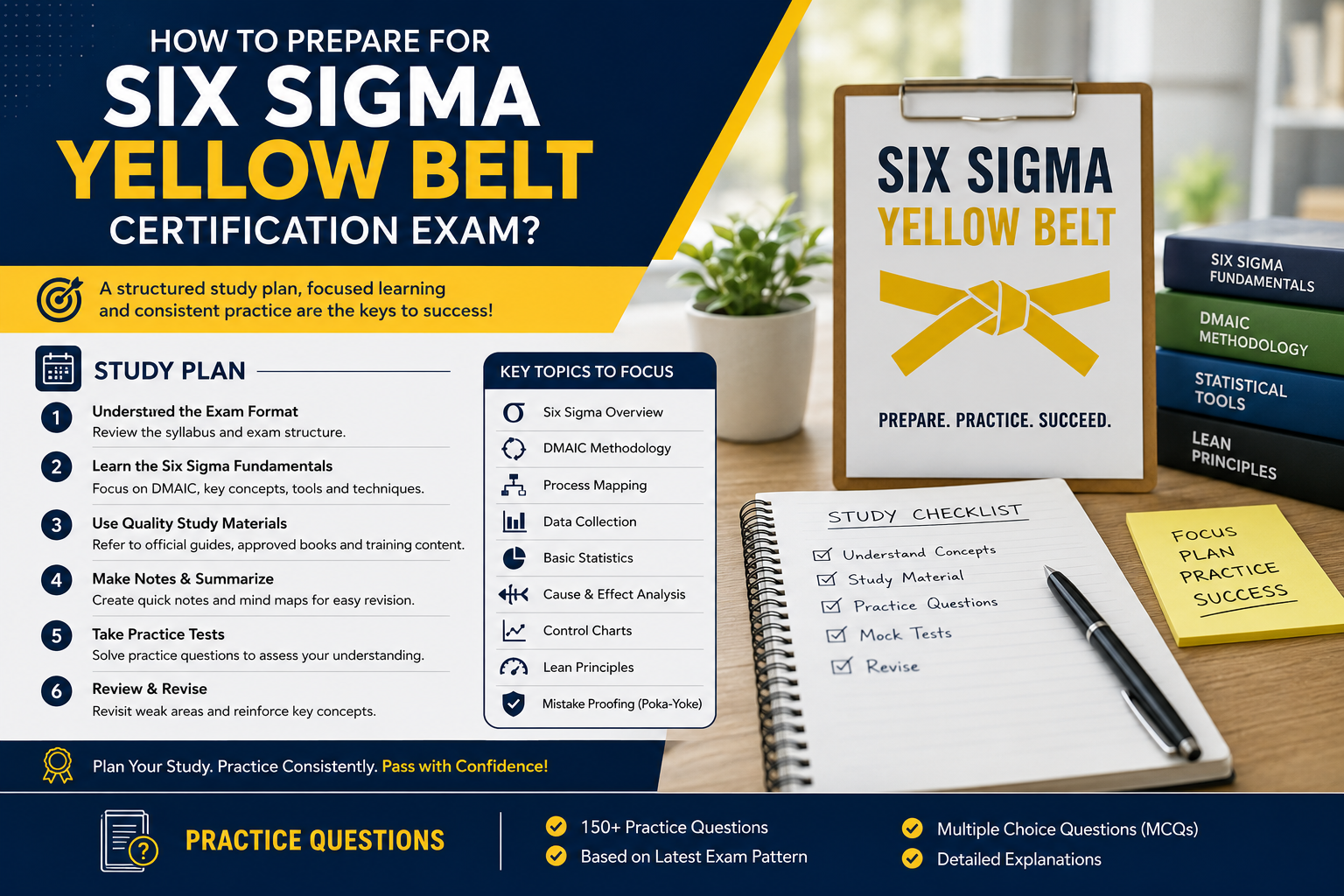
The Yellow Belt is the entry-level certification in Six Sigma. This certification is designed for individuals who are new to the Six Sigma methodology and want to understand the basics of process improvement. Here are some key aspects of the Yellow Belt certification:
Who Should Pursue a Yellow Belt Certification?
The Yellow Belt certification is ideal for:
What You Will Learn as a Yellow Belt
As a Yellow Belt, you will learn the following:
Six Sigma Green Belt: An Overview
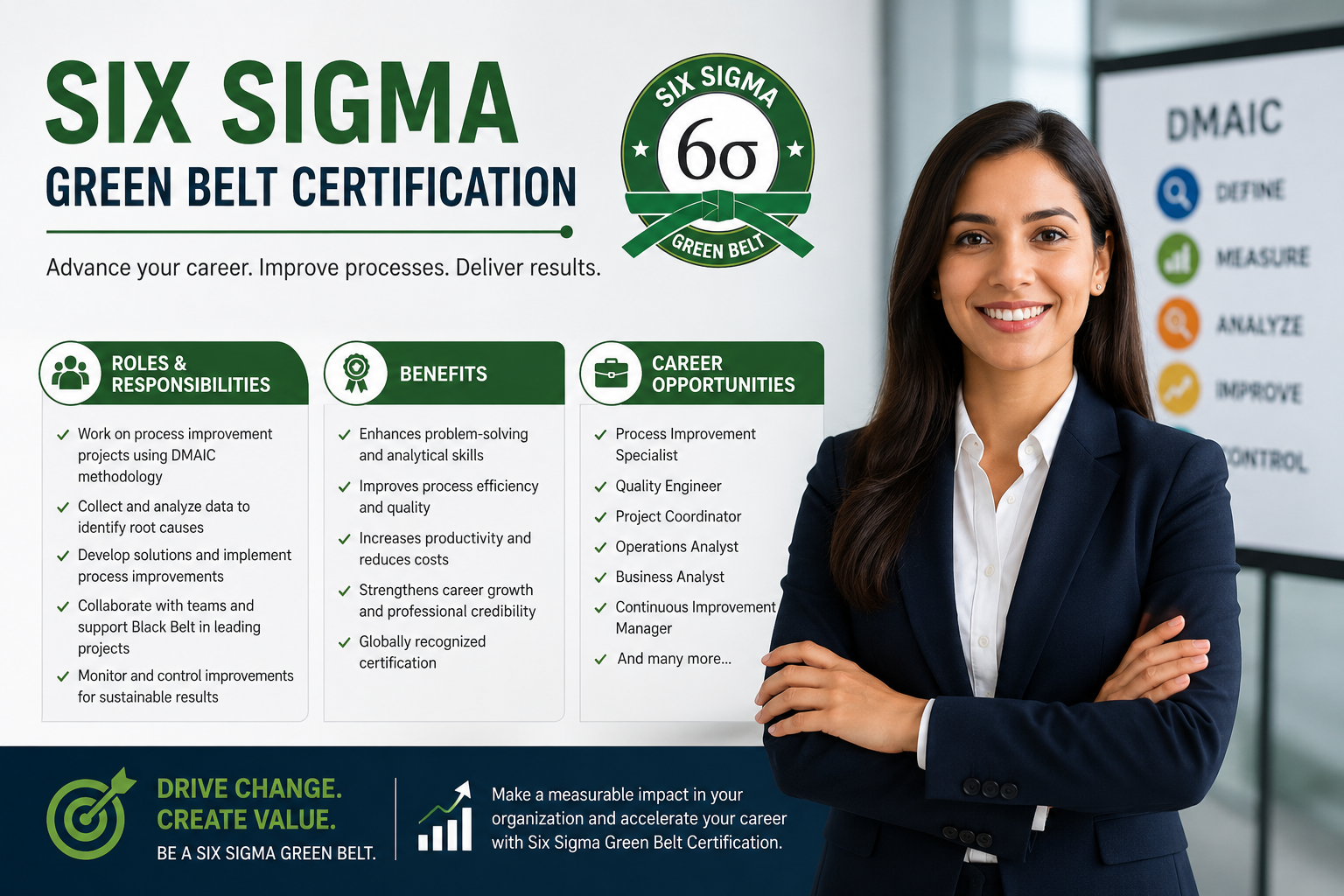
The Green Belt certification is a step up from the Yellow Belt. It is designed for professionals who want to take on more responsibility in process improvement initiatives. Here are the key aspects of the Green Belt certification:
Who Should Pursue a Green Belt Certification?
The Green Belt certification is suitable for:
What You Will Learn as a Green Belt
As a Green Belt, you will learn the following:
Key Differences Between Yellow Belt and Green Belt
Now that we have a basic understanding of both certifications, let’s break down the key differences between yellow belt vs green belt:
1. Level of Knowledge and Expertise
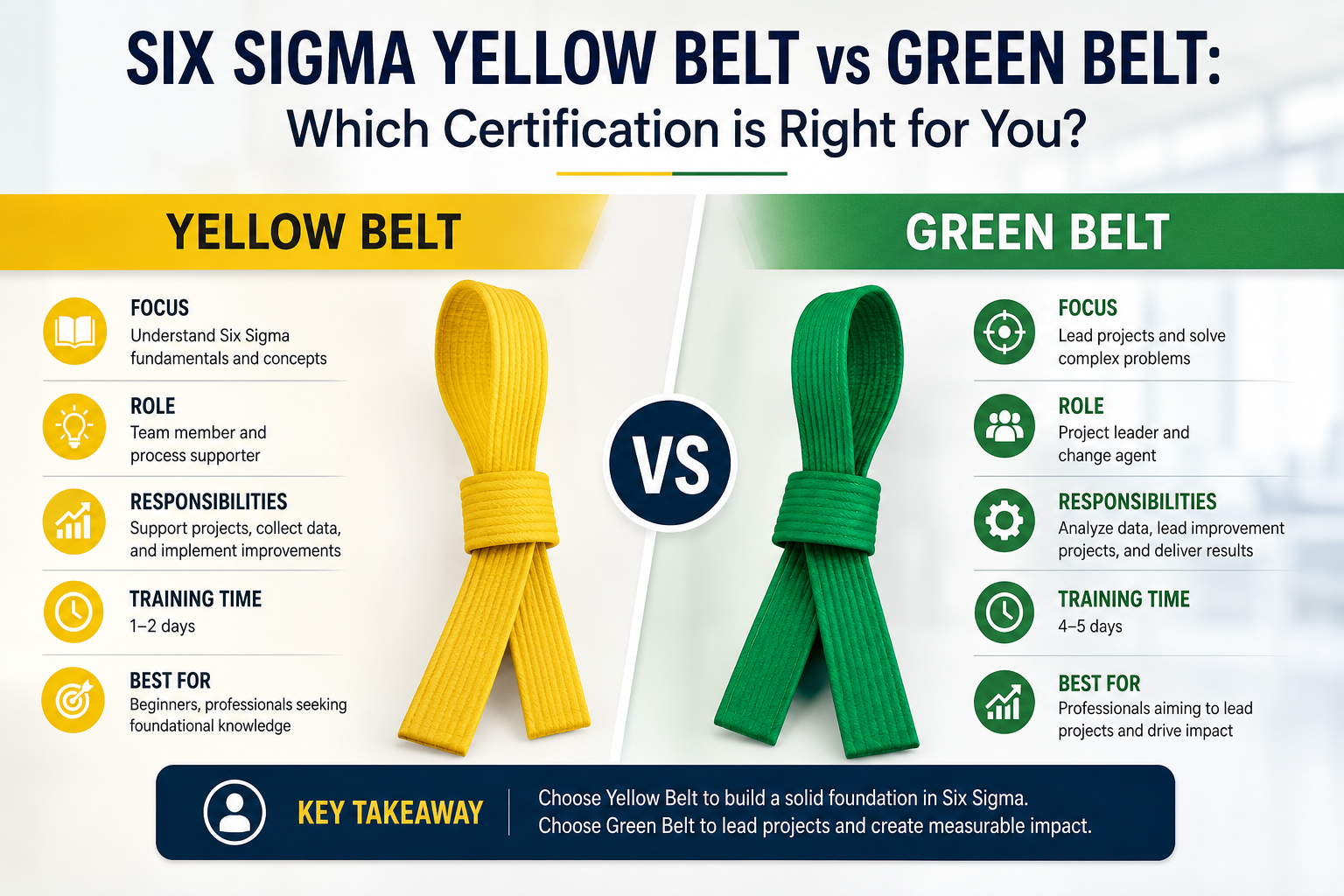
The Yellow Belt certification focuses on foundational knowledge, while the Green Belt dives deeper into advanced tools and methodologies. If you are looking to just understand Six Sigma, the Yellow Belt is sufficient. However, if you wish to lead projects and implement solutions, the Green Belt is necessary.
2. Roles and Responsibilities
Yellow Belts typically support project teams and contribute to process improvement efforts, while Green Belts often lead projects and are responsible for identifying and analyzing problems. If you are looking for a leadership role in Six Sigma projects, the Green Belt is the better option.
3. Course Duration and Depth
Yellow Belt training programs usually take around 2-3 days, whereas Green Belt programs can last from 5-10 days, depending on the institution. This time difference reflects the depth of the material covered and the complexity of the skills learned.
4. Career Opportunities
While both certifications enhance your resume, having a Green Belt can open more doors. Companies often prefer candidates with Green Belt certification for roles that involve process improvement and project management.
Which Certification Should You Choose?
Choosing between the Yellow Belt and Green Belt certifications ultimately depends on your career goals and current responsibilities. Here are some questions to ask yourself:
If you are just starting your journey in Six Sigma, the Yellow Belt may be the right choice. However, if you have a solid understanding of the fundamentals and wish to take on more significant responsibilities, the Green Belt is an excellent option.
FAQs
1. Can I start with a Green Belt certification without a Yellow Belt?
Yes, it is possible to pursue a Green Belt certification without having a Yellow Belt. However, it is advisable to have a basic understanding of Six Sigma concepts to make the most of the training.
2. How long does it take to get certified?
The duration to get certified varies by institution. Generally, Yellow Belt training takes about 2-3 days, while Green Belt training can take 5-10 days.
3. What are the costs associated with these certifications?
The costs can vary significantly based on the training provider. Typically, Yellow Belt certification may range from INR 10,000 to INR 20,000, while Green Belt certification can cost between INR 25,000 and INR 50,000.
4. Is Six Sigma certification recognized in India?
Yes, Six Sigma certifications are widely recognized across various industries in India, including manufacturing, healthcare, IT, and finance. They can enhance your career prospects.
Conclusion
Deciding between the Yellow Belt and Green Belt certifications is an important step in your professional development. By understanding the differences between these two Six Sigma certification levels, you can make an informed choice that aligns with your career goals. Whether you choose to start with a Yellow Belt or leap directly into a Green Belt, both certifications offer valuable skills that can enhance your employability and contribute to your organization’s success.
If you're ready to take the next step in your career, explore our Six Sigma certification courses today! Invest in your future and become a valuable asset to your organization.
Call to Action
Are you ready to enhance your skills and career prospects? Sign up for our Six Sigma Yellow Belt and Green Belt certification courses today! Gain the knowledge and confidence you need to lead process improvement initiatives in your organization.