
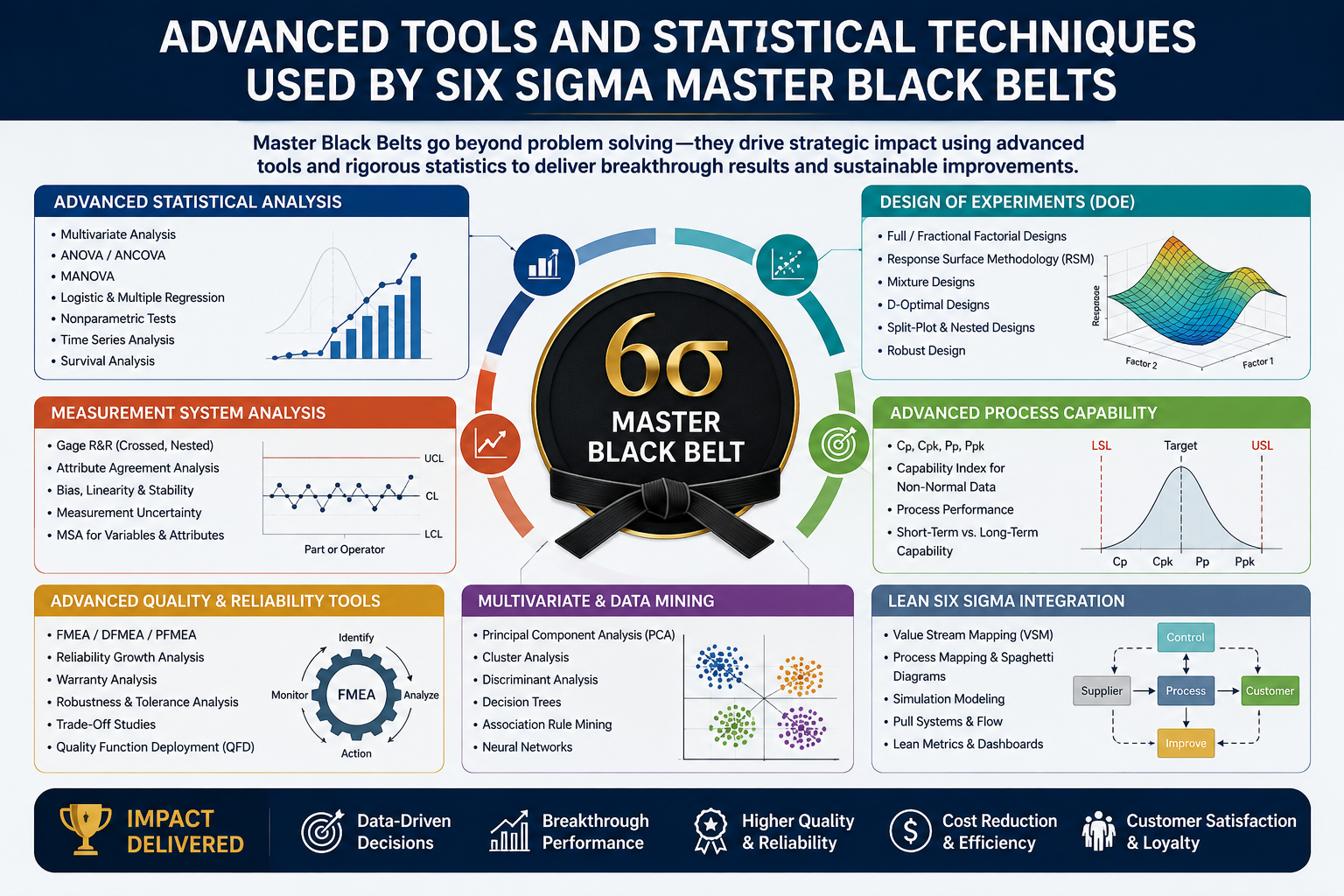



In today's competitive landscape, organizations are on the lookout for ways to improve efficiency, reduce waste, and enhance customer satisfaction. One of the most effective methodologies in achieving these goals is the Six Sigma Master Black Belt methodology. This blog will delve into how enterprise process transformation can be achieved through Six Sigma, integrating it with lean principles to create a robust operational excellence strategy.
Understanding Enterprise Process Transformation
Enterprise process transformation refers to the comprehensive overhaul of a company's processes to enhance efficiency and effectiveness. This transformation is not just about adopting new technologies but involves rethinking the way work is done across the organization. The goal is to streamline operations, improve quality, reduce costs, and ultimately provide better value to customers.
Why Six Sigma for Enterprise Process Transformation?
Six Sigma is a data-driven methodology that focuses on eliminating defects and improving processes. Its structured approach is ideal for organizations looking to achieve significant improvements in their operational performance. By employing the Six Sigma Master Black Belt methodology, companies can gain expert guidance in implementing these strategies effectively.
Key Components of Six Sigma Transformation
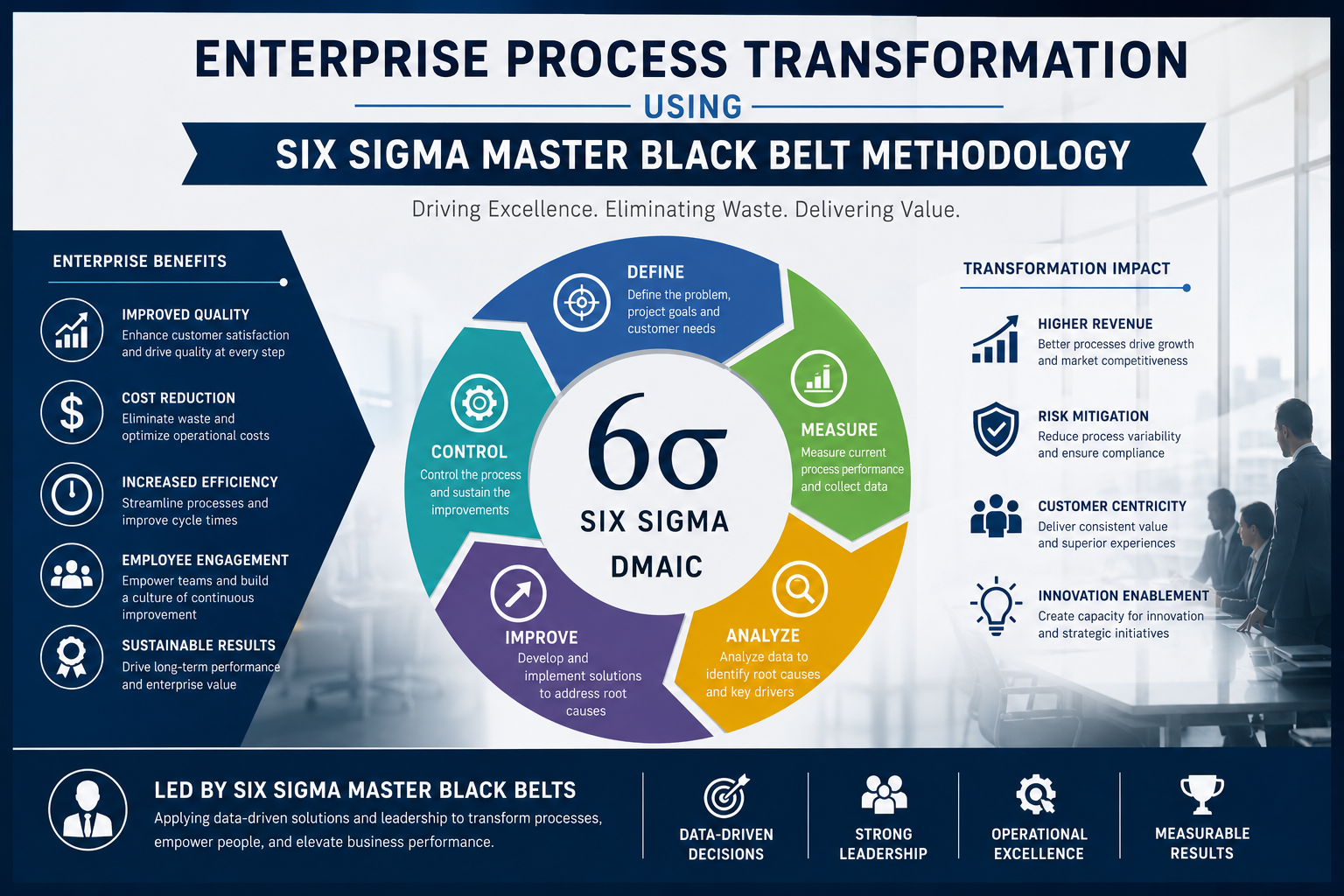
1. Define
The first phase in the Six Sigma process is defining the problem or opportunity for improvement. This involves identifying the goals of the transformation and understanding customer requirements. Clear definitions set the foundation for successful implementation.
2. Measure
In this phase, organizations collect data to measure current performance. This involves identifying key performance indicators (KPIs) and gathering relevant data to establish a baseline. Understanding where the organization currently stands is crucial for measuring the impact of changes.
3. Analyze
Once data is collected, the next step is to analyze it to identify root causes of defects and inefficiencies. Various statistical tools and techniques are employed during this phase to uncover insights that will guide the transformation process.
4. Improve
With a clear understanding of the issues, organizations can move to the improvement phase. This involves brainstorming and implementing solutions that address the identified root causes. The focus is on developing strategies that will lead to measurable improvements in performance.
5. Control
The final phase of the Six Sigma process is ensuring that improvements are sustained over time. This requires establishing control measures and monitoring systems to maintain the gains achieved during the improvement phase.
Integrating Lean Principles with Six Sigma
While Six Sigma focuses on reducing variation and eliminating defects, Lean principles emphasize maximizing value by minimizing waste. By integrating lean six sigma implementation with Six Sigma, organizations can achieve a holistic approach to process transformation. This integration fosters a culture of continuous improvement, where employees are empowered to identify issues and suggest improvements proactively.
The Role of a Six Sigma Master Black Belt
A Six Sigma Master Black Belt is an expert in the Six Sigma methodology, with extensive experience in leading projects and mentoring others. Their role in enterprise process transformation is vital. They not only guide project teams through the Six Sigma phases but also train and coach Green Belts and Yellow Belts in the organization.
Benefits of Having a Six Sigma Master Black Belt
Implementing Six Sigma as an Operational Excellence Strategy
For organizations in India looking to adopt a Six Sigma transformation as part of their operational excellence strategy, several steps can be taken to ensure successful implementation:
1. Commitment from Leadership
Leadership buy-in is crucial for any transformation initiative. When top management supports Six Sigma initiatives, it sets the tone for the entire organization and encourages employee engagement.
2. Training and Development
Investing in training programs is essential for equipping employees with the necessary skills and knowledge to implement Six Sigma principles effectively. Offering certification programs for different belts (Yellow, Green, Black, and Master Black Belt) can enhance overall competency within the organization.
3. Create a Culture of Continuous Improvement
Encouraging a culture where employees feel empowered to suggest changes and improvements is vital. This culture fosters innovation and can lead to significant enhancements in operational efficiency.
4. Use of Technology
Leveraging technology can significantly enhance Six Sigma initiatives. Data analytics tools can help in measuring performance, while project management software can streamline collaboration and communication among teams.
5. Regular Monitoring and Evaluation
To sustain improvements, organizations must regularly monitor their processes and evaluate the effectiveness of Six Sigma initiatives. This can be achieved through periodic reviews and adjustments based on performance metrics.
Challenges in Six Sigma Implementation
Despite its effectiveness, implementing Six Sigma can come with challenges:
FAQs
1. What is Six Sigma?
Six Sigma is a data-driven methodology aimed at improving processes by eliminating defects and reducing variation. It uses a structured approach known as DMAIC (Define, Measure, Analyze, Improve, Control).
2. How does Lean Six Sigma differ from Six Sigma?
While Six Sigma focuses on reducing defects, Lean Six Sigma combines the principles of Lean (which emphasizes eliminating waste) with Six Sigma to create a more comprehensive approach to process improvement.
3. What are the benefits of Six Sigma implementation in organizations?
Implementing Six Sigma can lead to improved quality, reduced costs, increased efficiency, and enhanced customer satisfaction. It fosters a culture of continuous improvement and drives operational excellence.
4. How can I become a Six Sigma Master Black Belt?
To become a Six Sigma Master Black Belt, individuals typically need to have significant experience in Six Sigma projects, complete advanced training, and demonstrate their ability to lead projects and mentor others.
Conclusion
Enterprise process transformation through Six Sigma Master Black Belt methodology is a powerful strategy for organizations striving for operational excellence. By integrating Six Sigma with lean principles, companies can achieve significant improvements in efficiency, quality, and overall performance. Investing in training and fostering a culture of continuous improvement will ensure that these initiatives are not just one-off projects but part of a long-term strategy for success.
Are you ready to embark on your journey towards operational excellence through Six Sigma? Contact us today to learn how we can assist your organization in achieving successful enterprise process transformation!