
The Certified Associate in Project Management (CAPM) certification, offered by the Project Management Institute (PMI), is your gateway to understanding the fundamental principles of project management. For aspiring project managers in India, grasping the CAPM knowledge areas, CAPM syllabus, and project management concepts is vital for professional growth and successful project execution.
Understanding CAPM Knowledge Areas
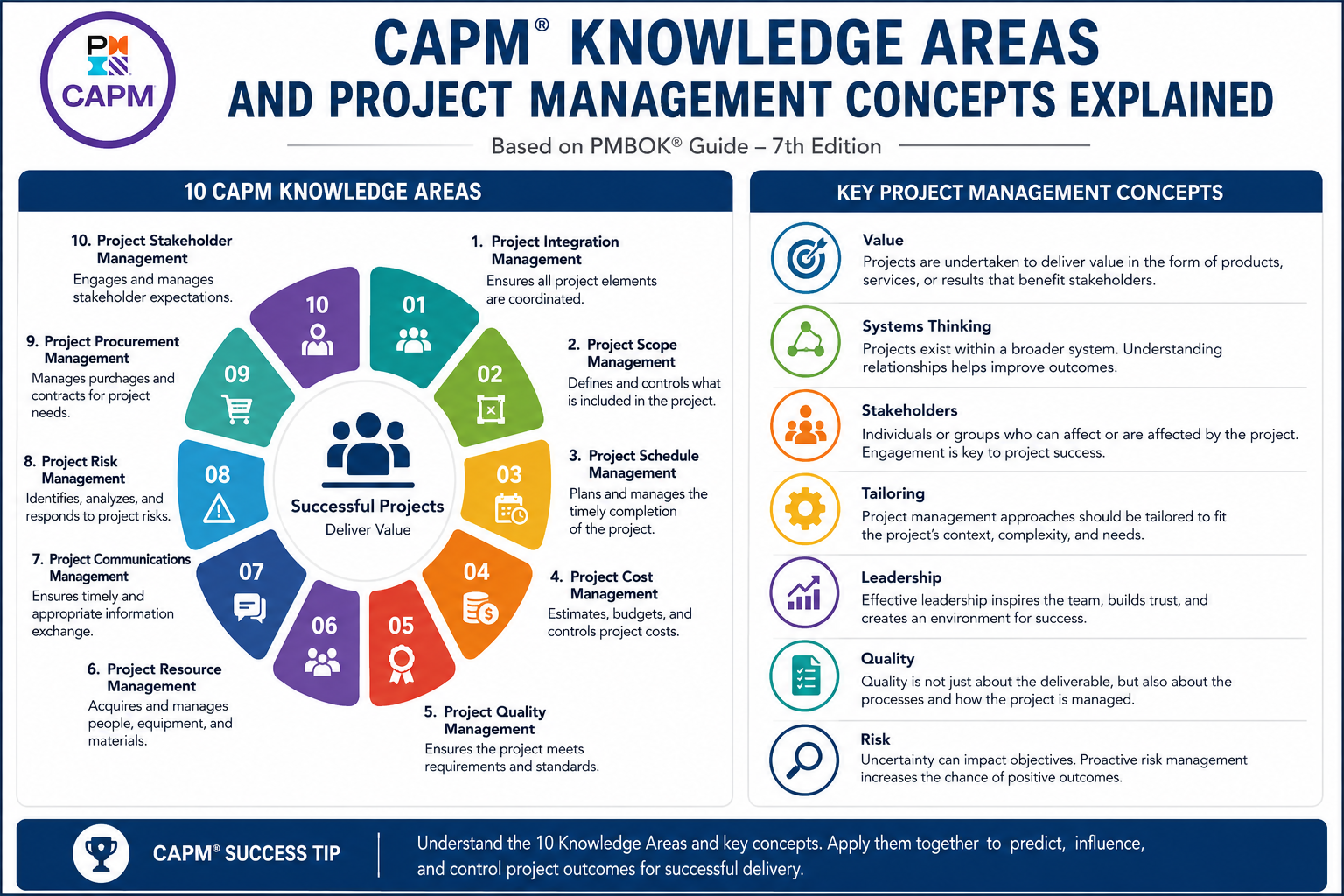
The CAPM knowledge areas encompass essential components that project managers need to master for effective project delivery. According to the PMBOK (Project Management Body of Knowledge), there are ten knowledge areas that form the core of project management.
1. Project Integration Management
This area focuses on ensuring that all aspects of the project are coordinated. It involves developing the project charter, project management plan, and managing project execution, monitoring, and closure. Effective integration is crucial for aligning project objectives with organizational goals.
2. Project Scope Management
Defining and managing project scope is critical for preventing scope creep. This knowledge area covers requirements gathering, scope definition, scope validation, and scope control. Clear documentation and stakeholder involvement are key to successful scope management.
3. Project Schedule Management
This area involves planning and controlling the project timeline. Key activities include defining activities, sequencing them, estimating durations, and developing a project schedule. Effective schedule management ensures timely project delivery.
4. Project Cost Management
Managing project costs is vital for maintaining budgetary constraints. This knowledge area includes estimating costs, determining budget, and controlling costs. Understanding cost management helps project managers make informed financial decisions.
5. Project Quality Management
Quality management ensures that project deliverables meet the required standards. This area covers quality planning, quality assurance, and quality control. A focus on quality enhances customer satisfaction and reduces rework.
6. Project Resource Management
This knowledge area deals with identifying, acquiring, and managing project resources, including human resources and materials. Effective resource management leads to improved team performance and project efficiency.
7. Project Communication Management
Clear communication is essential for project success. This area focuses on planning communications, managing stakeholder engagement, and ensuring that project information is effectively disseminated. Good communication enhances collaboration and reduces misunderstandings.
8. Project Risk Management
Identifying and managing risks is crucial for minimizing project uncertainties. This knowledge area involves risk identification, risk analysis, and risk response planning. A proactive approach to risk management can save time and resources.
9. Project Procurement Management
Procurement involves acquiring goods and services needed for the project. This area covers planning procurements, conducting procurements, and controlling procurements. Understanding procurement processes helps ensure that project resources are obtained efficiently.
10. Project Stakeholder Management
Engaging stakeholders is critical for project success. This knowledge area focuses on identifying stakeholders, analyzing their needs, and managing their expectations. Effective stakeholder management fosters support and reduces resistance to change.
CAPM Syllabus Overview
The CAPM syllabus is designed to provide a comprehensive understanding of project management principles. It includes both theoretical and practical aspects, ensuring candidates are well-prepared for the certification exam.
Key Components of the CAPM Syllabus
CAPM Process Groups Explained
In addition to the knowledge areas, the CAPM syllabus emphasizes the importance of understanding process groups. These groups represent the phases of a project lifecycle and help project managers organize their work effectively.
1. Initiating Process Group
This phase involves defining the project at a high level and obtaining authorization to proceed. It includes developing the project charter and identifying stakeholders.
2. Planning Process Group
In this phase, detailed planning takes place. It involves defining project objectives, creating a project management plan, and establishing baselines for scope, schedule, and cost.
3. Executing Process Group
Execution involves implementing the project plan by coordinating people and resources. It also includes managing stakeholder engagement and ensuring quality deliverables.
4. Monitoring and Controlling Process Group
This phase focuses on tracking project performance to ensure it aligns with the project management plan. It involves measuring project progress, identifying variances, and implementing corrective actions.
5. Closing Process Group
The closing phase involves finalizing all project activities. It includes obtaining acceptance of deliverables, closing contracts, and documenting lessons learned.
Why CAPM Certification is Valuable for Indian Professionals
In India’s rapidly evolving business landscape, CAPM certification holds significant value for professionals seeking to enhance their project management skills. Here are a few reasons why pursuing CAPM is beneficial:
Frequently Asked Questions (FAQs)
1. What is the eligibility criteria for the CAPM exam?
To be eligible for the CAPM exam, candidates must have a secondary degree (high school diploma, associate’s degree, or global equivalent) and 23 hours of project management education completed before the exam.
2. How long is the CAPM certification valid?
The CAPM certification is valid for five years. To maintain your certification, you must retake the exam before it expires.
3. What resources can I use to prepare for the CAPM exam?
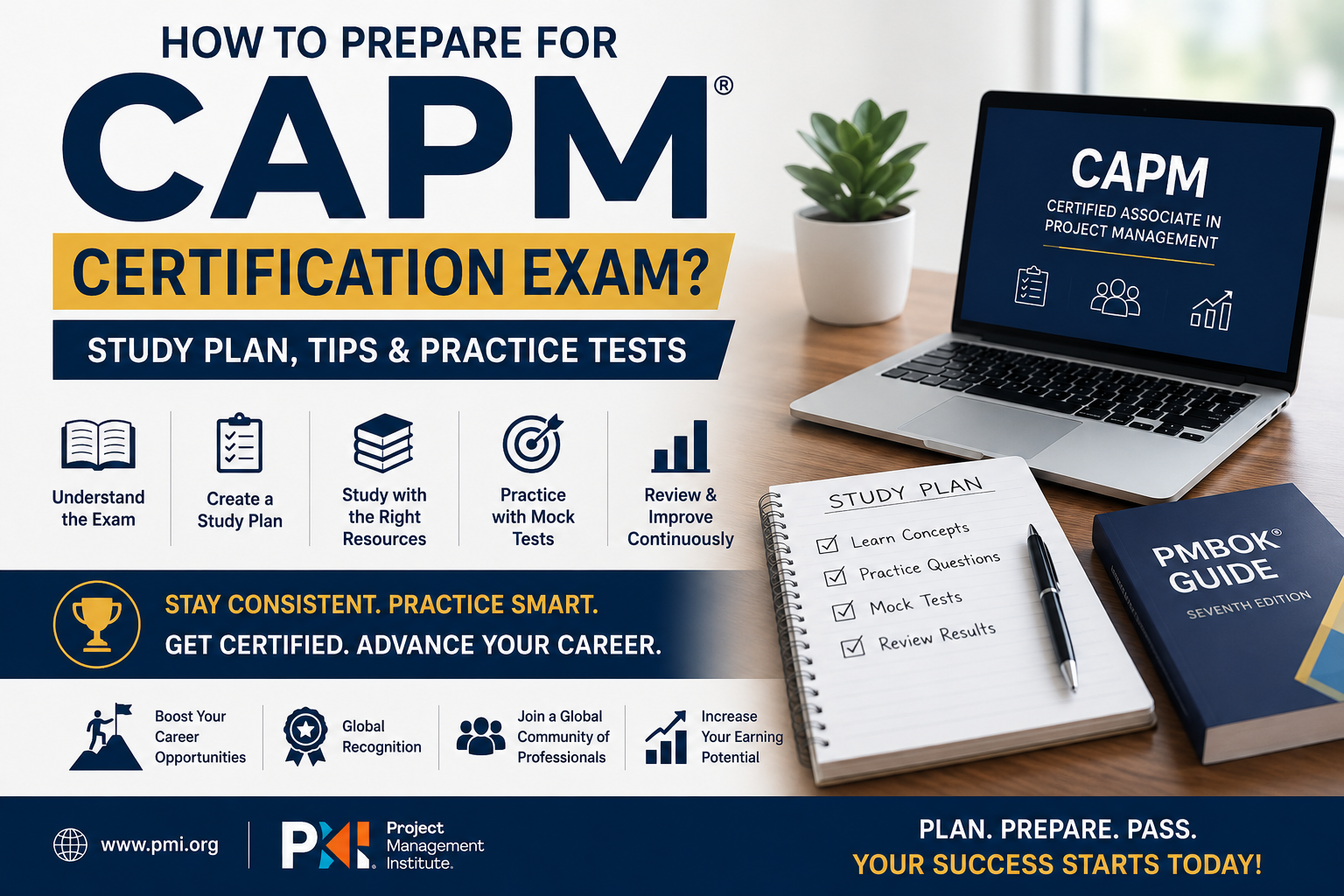
Several resources are available, including PMI’s PMBOK Guide, online courses, and study groups. Utilizing mock exams and practice questions can also enhance your preparation.
4. How can I apply for the CAPM exam?
You can apply for the CAPM exam by creating an account on the PMI website, filling out the application form, and paying the exam fee.
Conclusion
Understanding the CAPM knowledge areas, CAPM syllabus, and project management concepts is essential for anyone looking to pursue a career in project management. With the right preparation and commitment, you can successfully earn your CAPM certification and elevate your professional journey.
Are you ready to take the next step in your project management career? Explore CAPM certification and unlock new opportunities today!
Call to Action: For more information about CAPM certification and to access valuable resources, visit the PMI website or enroll in a comprehensive CAPM preparation course today!