
In the fast-paced world of project management, obtaining the right certification can significantly enhance your career prospects. Among the most sought-after certifications are the CAPM (Certified Associate in Project Management) and PMP (Project Management Professional). But which one should you pursue? In this detailed guide, we will explore the differences between the CAPM certification and the PMP project management certification, providing a comprehensive CAPM vs PMP certification comparison to help you make an informed decision.
Understanding CAPM and PMP Certifications
The CAPM and PMP certifications are both offered by the Project Management Institute (PMI), a globally recognized authority in project management. However, they cater to different audiences and have distinct requirements.
What is CAPM Certification?
The CAPM certification is designed for individuals who are new to project management or have limited experience. It serves as an entry-level certification, providing foundational knowledge of project management principles and practices. The CAPM is ideal for:
To qualify for the CAPM, candidates must have a secondary degree (high school diploma or equivalent) and either 23 hours of project management education or a project management course completed before the exam.
What is PMP Certification?
The PMP certification is aimed at experienced project managers. It demonstrates that you have the necessary skills and knowledge to lead and direct projects effectively. The PMP is ideal for:
To qualify for the PMP, candidates must have either a four-year degree and at least 36 months of leading projects, or a secondary degree with 60 months of leading projects. Additionally, candidates must have 35 hours of project management education.
CAPM vs PMP: Key Differences
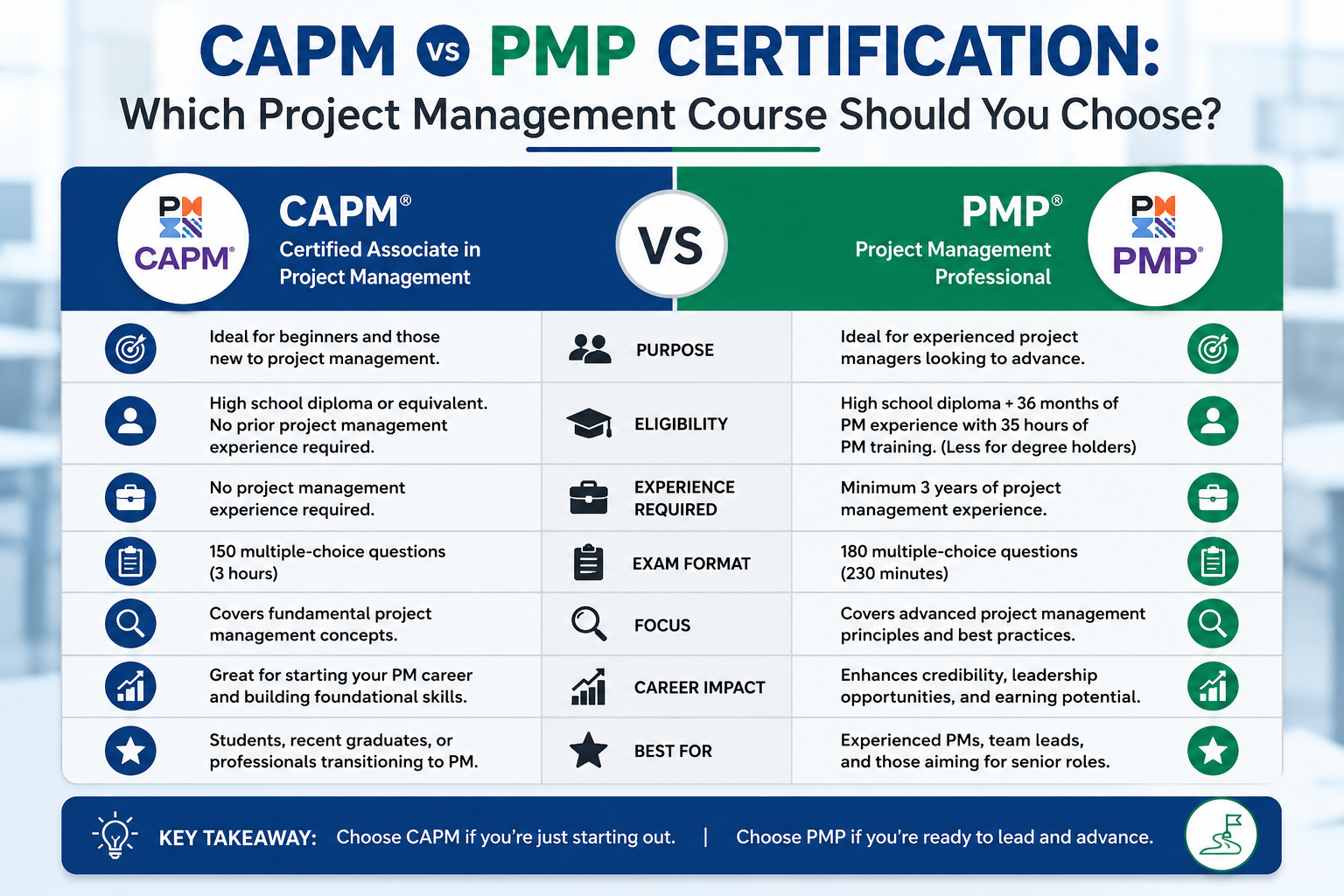
Understanding the differences between the CAPM and PMP certifications is crucial for making the right choice for your career path. Below are the key distinctions:
1. Target Audience
The CAPM is targeted towards individuals who are just starting their careers in project management. On the other hand, the PMP is aimed at seasoned professionals who have substantial project management experience.
2. Experience Requirements
As mentioned above, the CAPM requires no prior project management experience, making it accessible for beginners. Conversely, the PMP necessitates significant project management experience, thus catering to a more experienced audience.
3. Exam Content and Structure
The CAPM exam consists of 150 multiple-choice questions covering the fundamentals of project management, based on the PMBOK (Project Management Body of Knowledge). The PMP exam, however, consists of 180 questions that test your ability to apply project management concepts in real-world scenarios.
4. Certification Cost
The cost for obtaining the CAPM certification is generally lower than that of the PMP certification. The CAPM exam fee is around INR 21,000 for PMI members and INR 29,000 for non-members. In contrast, the PMP exam fee is approximately INR 33,000 for members and INR 48,000 for non-members.
5. Maintenance and Renewal
Both certifications require ongoing education to maintain your status. The CAPM certification is valid for five years, after which you must retake the exam. The PMP certification, however, requires 60 PDUs (Professional Development Units) every three years for renewal.
Benefits of CAPM Certification
Choosing the CAPM certification offers several advantages:
Benefits of PMP Certification
The PMP certification also comes with its unique set of benefits:
Which Certification Should You Choose?
Your choice between the CAPM vs PMP certification should be guided by your current experience level, career goals, and the time you are willing to invest in preparation.
When to Choose CAPM Certification
If you are just starting out in project management, the CAPM is an excellent choice. It will provide you with the necessary knowledge and skills to begin your career in this field. Additionally, it can help you stand out in a competitive job market.
When to Choose PMP Certification
If you have several years of project management experience and are looking to advance your career, the PMP certification is the better option. It will validate your skills and knowledge, making you more attractive to employers.
Frequently Asked Questions (FAQs)
1. How long does it take to prepare for CAPM and PMP certifications?
Preparation time varies by individual, but generally, you can expect to spend around 2-3 months for CAPM and 3-6 months for PMP, depending on your prior knowledge and study habits.
2. Can I take both certifications?
Absolutely! Many professionals choose to pursue the CAPM certification first to build their foundational knowledge and then move on to the PMP as they gain experience.
3. What study materials are recommended for CAPM and PMP?
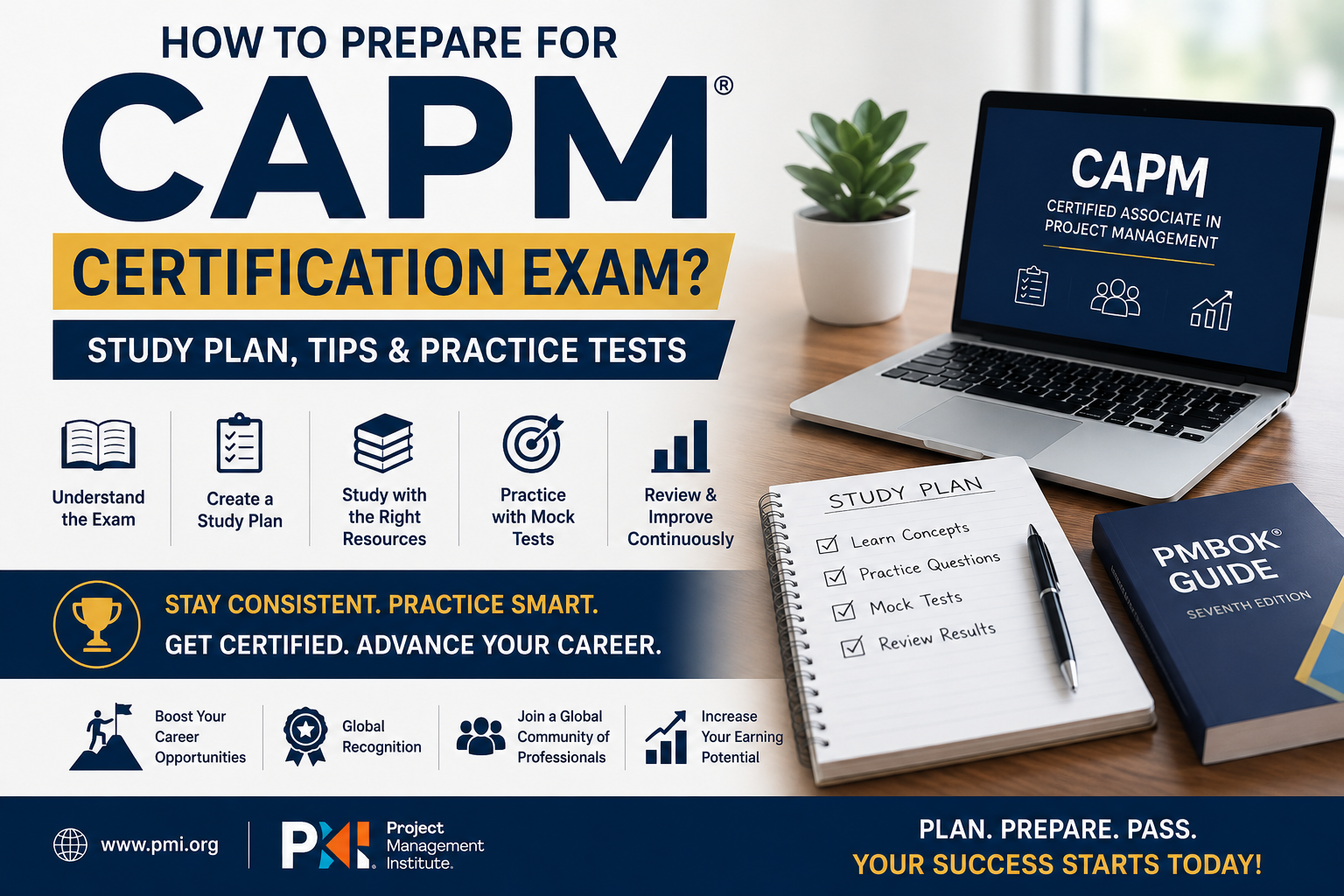
For both certifications, it is advisable to study the PMBOK guide, take practice exams, and consider enrolling in a formal training course or workshop.
4. Is there a significant difference in job opportunities with CAPM vs PMP?
Yes, PMP certification typically opens more advanced job opportunities and higher salaries compared to CAPM. However, CAPM can still be a valuable stepping stone into the project management field.
Conclusion
In summary, both the CAPM and PMP certifications have their distinct advantages and cater to different audiences. If you are starting your career in project management, the CAPM certification can provide you with a strong foundation. However, if you are an experienced project manager looking to validate your skills and increase your earning potential, the PMP certification is the way to go.
Whichever path you choose, investing in your education and certification will undoubtedly pay off in the long run. Start your journey today and take your first step towards becoming a certified project management professional!
Call to Action
Ready to take the next step in your project management career? Whether you choose the CAPM or PMP certification, we can help you prepare! Visit our website for comprehensive study materials, expert guidance, and training courses tailored for Indian professionals. Don’t wait—secure your future in project management today!