




In today's competitive business landscape, organizations are constantly seeking ways to enhance their processes, reduce waste, and improve quality. One effective approach that has gained immense popularity is the DMAIC methodology in Six Sigma. This systematic and data-driven framework is designed to help businesses identify and rectify inefficiencies, leading to improved performance and customer satisfaction. In this blog, we will delve into the five key stages of the DMAIC process: Define, Measure, Analyze, Improve, and Control.
What is DMAIC?
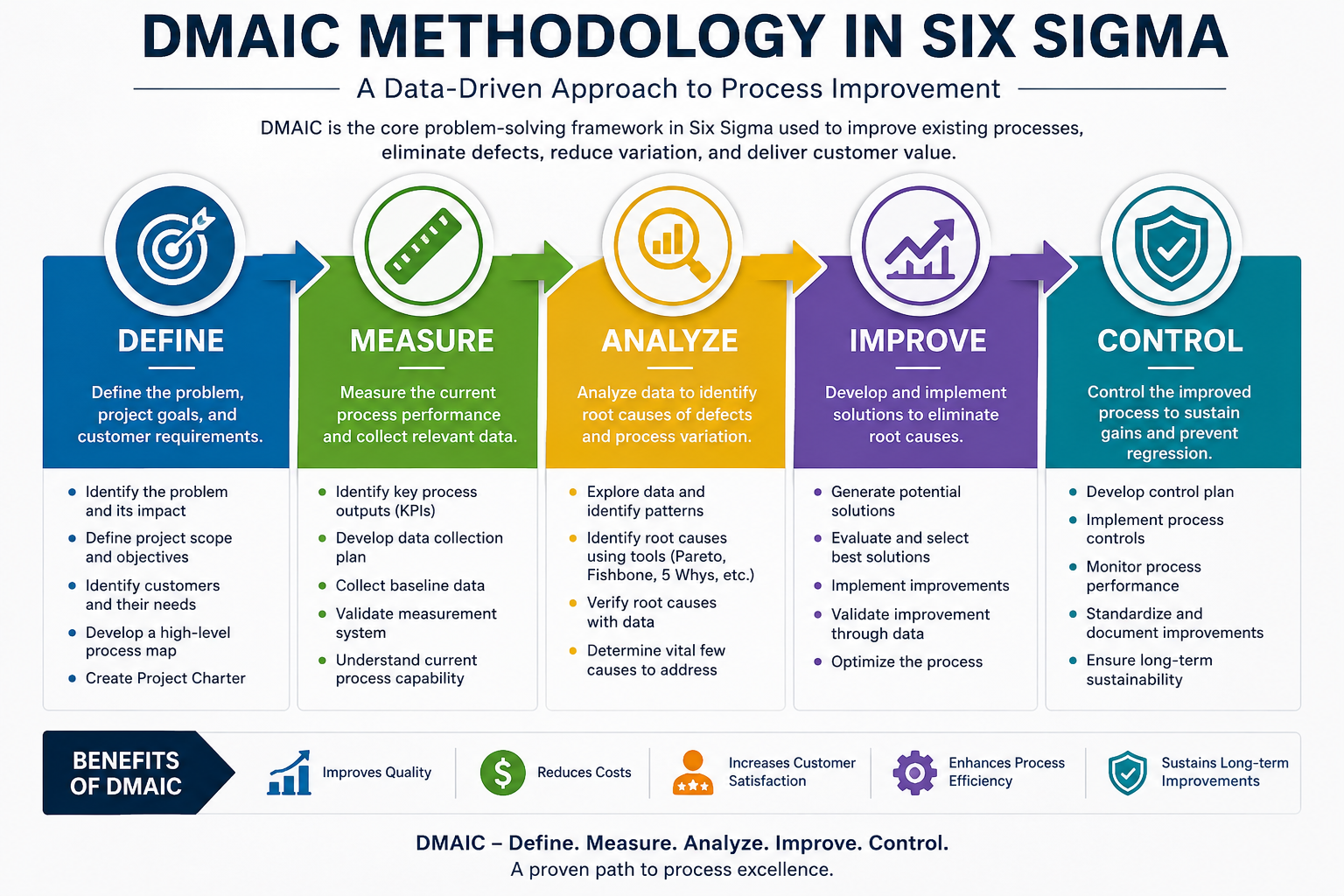
The DMAIC methodology is a structured problem-solving process used in Six Sigma to improve existing processes. It provides a disciplined way to identify and eliminate defects, ensuring that organizations can deliver products and services that meet customer expectations. The acronym DMAIC stands for:
1. Define
The first phase of the DMAIC process is to define the problem or opportunity for improvement. This step is crucial as it sets the foundation for the entire project. During this phase, teams must clarify the project goals, identify stakeholders, and understand the customer's needs. Key activities in the define stage include:
By clearly defining the problem, teams can ensure that everyone is aligned on the project's purpose and direction, which is vital for success in the subsequent stages.
2. Measure
Once the problem is defined, the next step is to measure the current process to gather relevant data. This phase involves identifying key performance indicators (KPIs) and collecting data to establish baselines. The measure phase includes:
Data collected during the measure phase provides insight into the current state of the process and helps identify areas of improvement. It is essential to ensure that the data is accurate and reliable, as this will influence the analysis in the next step.
3. Analyze
In the analyze phase, teams delve into the data collected during the measure phase to identify the root causes of defects. This step is critical for understanding why problems occur and for developing effective solutions. Key activities in the analyze phase include:
The analysis should lead to a clear understanding of the underlying factors contributing to the problem, allowing teams to target their improvement efforts effectively.
4. Improve
With the root causes identified, the next step is to improve the process. This phase involves brainstorming, developing, and implementing solutions to address the root causes of defects. Key activities during the improve phase include:
The goal of the improve phase is to create effective and sustainable solutions that lead to measurable performance improvements. It's crucial to engage stakeholders and team members during this phase to ensure buy-in and successful implementation.
5. Control
The final phase of the DMAIC process is control. This step focuses on maintaining the improvements achieved and ensuring that the process remains stable over time. Key activities in the control phase include:
By establishing control mechanisms, organizations can sustain the gains made during the improvement phase and continue to drive performance excellence. This phase also helps in identifying any new issues that may arise and necessitates further action.
Benefits of DMAIC Methodology
The DMAIC methodology offers numerous benefits for organizations in India and beyond, including:
FAQs about DMAIC Methodology
1. What industries can benefit from the DMAIC methodology?
DMAIC can be applied across various industries, including manufacturing, healthcare, finance, and service sectors. Any organization looking to improve its processes and quality can benefit from this approach.
2. How long does the DMAIC process take?
The duration of the DMAIC process varies depending on the complexity of the problem and the organization's size. It can range from a few weeks to several months.
3. Do I need specialized training to implement DMAIC?
While specialized training is not mandatory, it is highly beneficial. Many organizations invest in Six Sigma training for employees, enabling them to effectively apply the DMAIC methodology.
4. Can DMAIC be used for non-manufacturing processes?
Absolutely! DMAIC is applicable to any process, whether in manufacturing, service delivery, or administrative functions. Its structured approach can drive improvement in various contexts.
Conclusion
The DMAIC methodology is a powerful tool for organizations looking to improve their processes and achieve higher levels of quality and efficiency. By following the structured approach of define, measure, analyze, improve, and control, businesses can systematically identify and eliminate defects, leading to better outcomes for their customers and stakeholders.
If you're interested in implementing the DMAIC methodology in your organization, consider investing in Six Sigma training for your team. Empower your employees with the skills and knowledge they need to drive continuous improvement and operational excellence. For more information or to get started, contact us today!