





In today's fast-paced business environment, organizations are continually seeking ways to improve processes, enhance efficiency, and reduce waste. One of the most effective methodologies for achieving these goals is Six Sigma. For those new to this concept, particularly in India, understanding Six Sigma white belt tools and the fundamental Six Sigma basics is essential. This article will guide you through the key tools and concepts that every beginner should learn in their white belt training.
Understanding Six Sigma
Six Sigma is a data-driven approach aimed at process improvement and quality management. It focuses on identifying and eliminating defects in any process, whether in manufacturing, service delivery, or administrative functions. By adopting Six Sigma principles, organizations can significantly enhance their productivity and customer satisfaction.
What is a White Belt in Six Sigma?
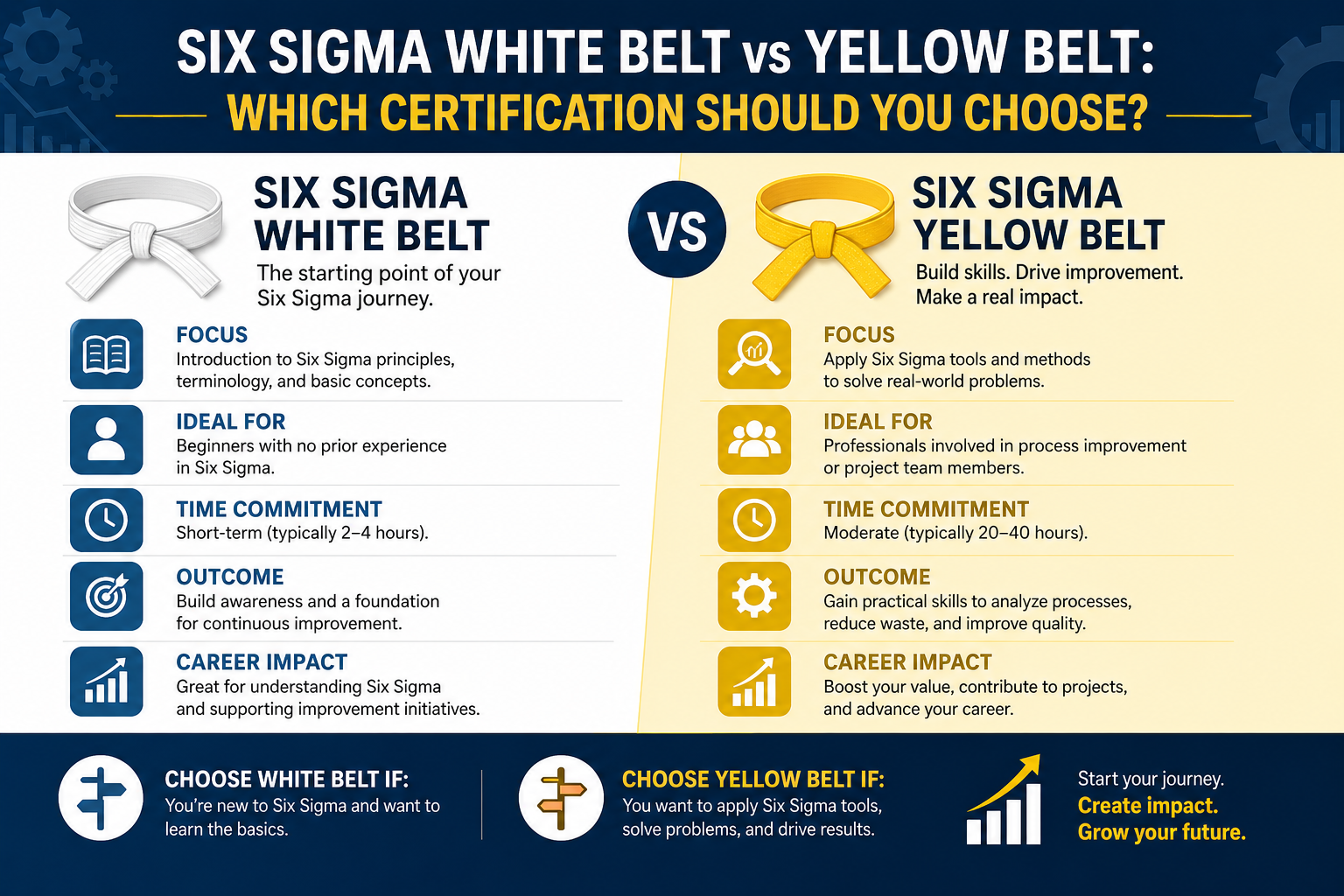
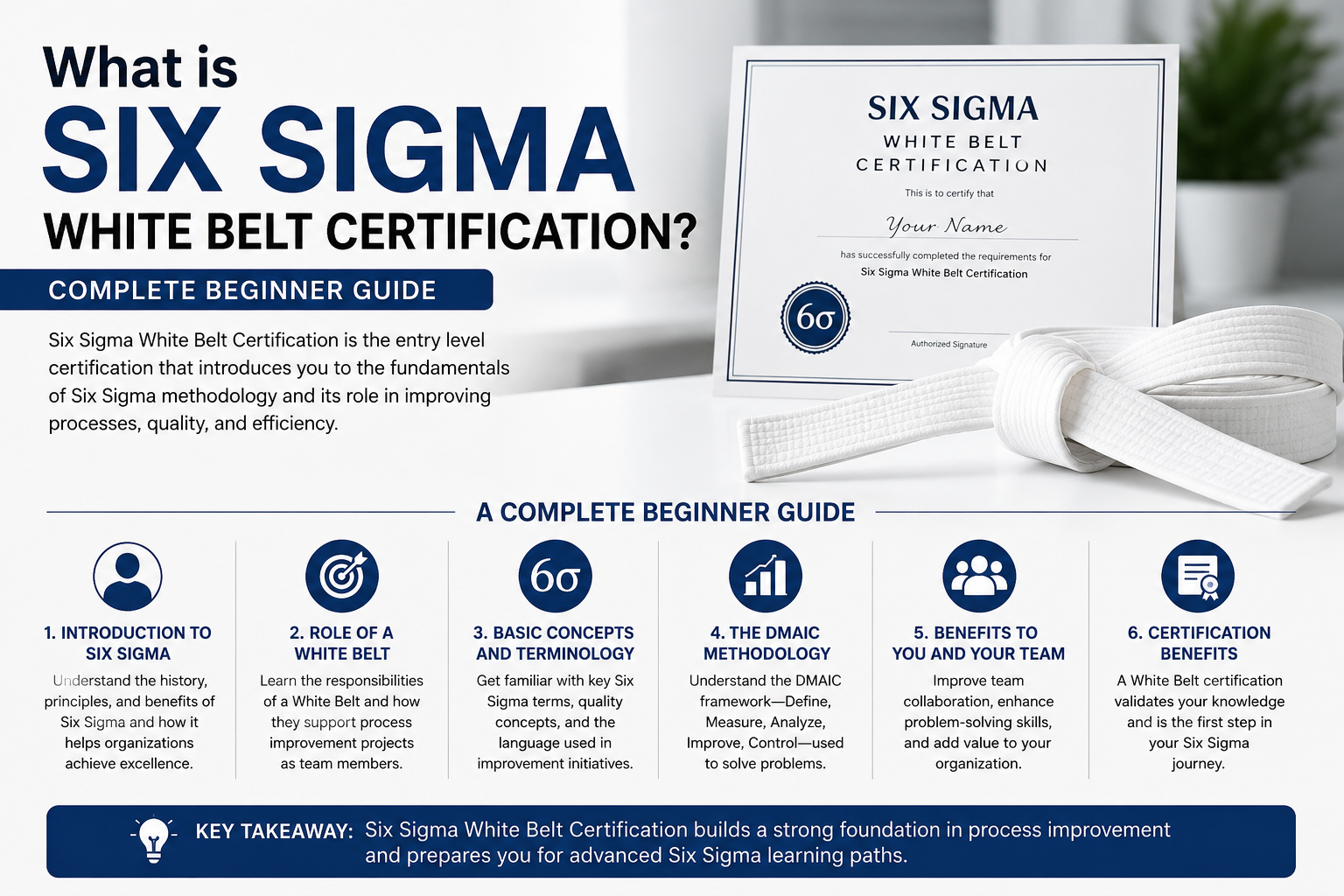
A Six Sigma White Belt is the first level of certification in the Six Sigma methodology. White belts gain a basic understanding of Six Sigma principles and tools. They often support project teams in implementing Six Sigma processes and play a crucial role in nurturing a culture of continuous improvement within their organizations.
Key Six Sigma Concepts Every White Belt Should Know
As a beginner in the Six Sigma journey, it’s important to familiarize yourself with some fundamental concepts:
1. DMAIC
The DMAIC framework is a core component of Six Sigma methodology. It stands for:
2. SIPOC Diagram
The SIPOC diagram is a high-level tool that captures the essence of a process. It stands for Suppliers, Inputs, Process, Outputs, and Customers. This tool helps in visualizing the key elements of a process and is especially useful during the Define phase of DMAIC.
3. The 5 Whys
The 5 Whys technique is a simple yet effective tool for root cause analysis. It involves asking "Why?" five times in succession to peel away the layers of symptoms and reach the underlying cause of a problem. This technique promotes a deeper understanding of issues, enabling teams to address them effectively.
4. Fishbone Diagram
Also known as the Ishikawa or cause-and-effect diagram, the Fishbone diagram helps teams visualize the various causes of a problem. By categorizing potential causes into different branches, teams can systematically explore all possible factors contributing to an issue.
5. Control Charts
Control charts are graphical tools used to monitor process variability over time. They help teams understand whether a process is in a state of control or if there are variations that need to be addressed. Control charts are crucial in the Control phase of DMAIC.
Essential Six Sigma White Belt Tools
In addition to the concepts mentioned above, there are several key tools that every Six Sigma White Belt should become familiar with:
1. Pareto Chart
A Pareto chart is a bar graph that represents the frequency of problems in descending order. This tool is based on the Pareto principle, which states that roughly 80% of effects come from 20% of the causes. By using a Pareto chart, teams can identify the most significant issues to address, leading to more impactful improvements.
2. Process Mapping
Process mapping involves creating a visual representation of a process to understand its flow and identify areas for improvement. This tool is essential for identifying bottlenecks and inefficiencies within a process.
3. Histogram
A histogram is a graphical representation of the distribution of numerical data. It helps teams understand the frequency of data points within specific ranges and is useful for identifying trends and patterns in process performance.
4. Scatter Plot
A scatter plot displays the relationship between two variables, helping teams identify correlations or patterns. This tool can be instrumental in the Analyze phase of DMAIC, as it aids in understanding potential causes of variation.
5. Brainstorming
While not a formal tool, brainstorming is an essential technique for generating ideas and solutions. It encourages team members to share their thoughts freely, fostering a collaborative environment for problem-solving.
Importance of White Belt Training
White Belt training serves as the foundation for understanding Six Sigma principles and practices. It equips individuals with the knowledge and skills needed to contribute effectively to Six Sigma projects. Moreover, it fosters a culture of continuous improvement, ensuring that every employee is aligned with the organization’s quality goals.
Benefits of Six Sigma White Belt Training
Frequently Asked Questions (FAQs)
1. What is the difference between a White Belt and a Green Belt in Six Sigma?
A White Belt has a basic understanding of Six Sigma concepts and tools, while a Green Belt has a more advanced knowledge and is often responsible for leading projects. Green Belts typically undergo more extensive training and certification.
2. How long does it take to complete Six Sigma White Belt training?
White Belt training typically takes a few hours to a couple of days, depending on the training provider. It can be completed online or in-person.
3. Is Six Sigma certification necessary for career advancement?
While not mandatory, Six Sigma certification can enhance your employability and career prospects, especially in industries focused on quality management and process improvement.
4. Can I skip the White Belt training and directly pursue a higher certification?
While it’s possible to pursue higher certifications like Green or Black Belt, having a solid foundation through White Belt training is beneficial for understanding advanced concepts and tools.
5. Where can I find Six Sigma White Belt training programs in India?
Many organizations and online platforms offer Six Sigma White Belt training in India. Look for reputable institutes and platforms that provide certification upon completion.
Conclusion
Embarking on your Six Sigma journey with a White Belt certification is an excellent step towards mastering process improvement and quality management. By understanding the essential Six Sigma white belt tools and the fundamental Six Sigma basics, you will be well-prepared to contribute to your organization’s success. Whether you’re in manufacturing, services, or any other sector, the knowledge gained from White Belt training is invaluable. Start your journey today and become a vital part of the continuous improvement culture in your organization!
Ready to take the first step in your Six Sigma journey? Enroll in a Six Sigma White Belt training program today and unlock the potential for process improvement in your workplace!