



In today’s competitive business landscape, organizations are always on the lookout for methods to enhance efficiency and improve quality. One of the most recognized methodologies in this regard is Six Sigma. If you're new to this concept, you might be wondering, what is Six Sigma White Belt certification? This comprehensive guide will provide you with all the information you need about Six Sigma White Belt certification, its significance, and how to get started.
Understanding Six Sigma
Before diving into the specifics of the Six Sigma White Belt certification, let's first understand what Six Sigma itself is. Developed by Motorola in the 1980s, Six Sigma is a set of techniques and tools aimed at process improvement. The primary goal is to identify and eliminate defects in processes, thereby enhancing quality and efficiency.
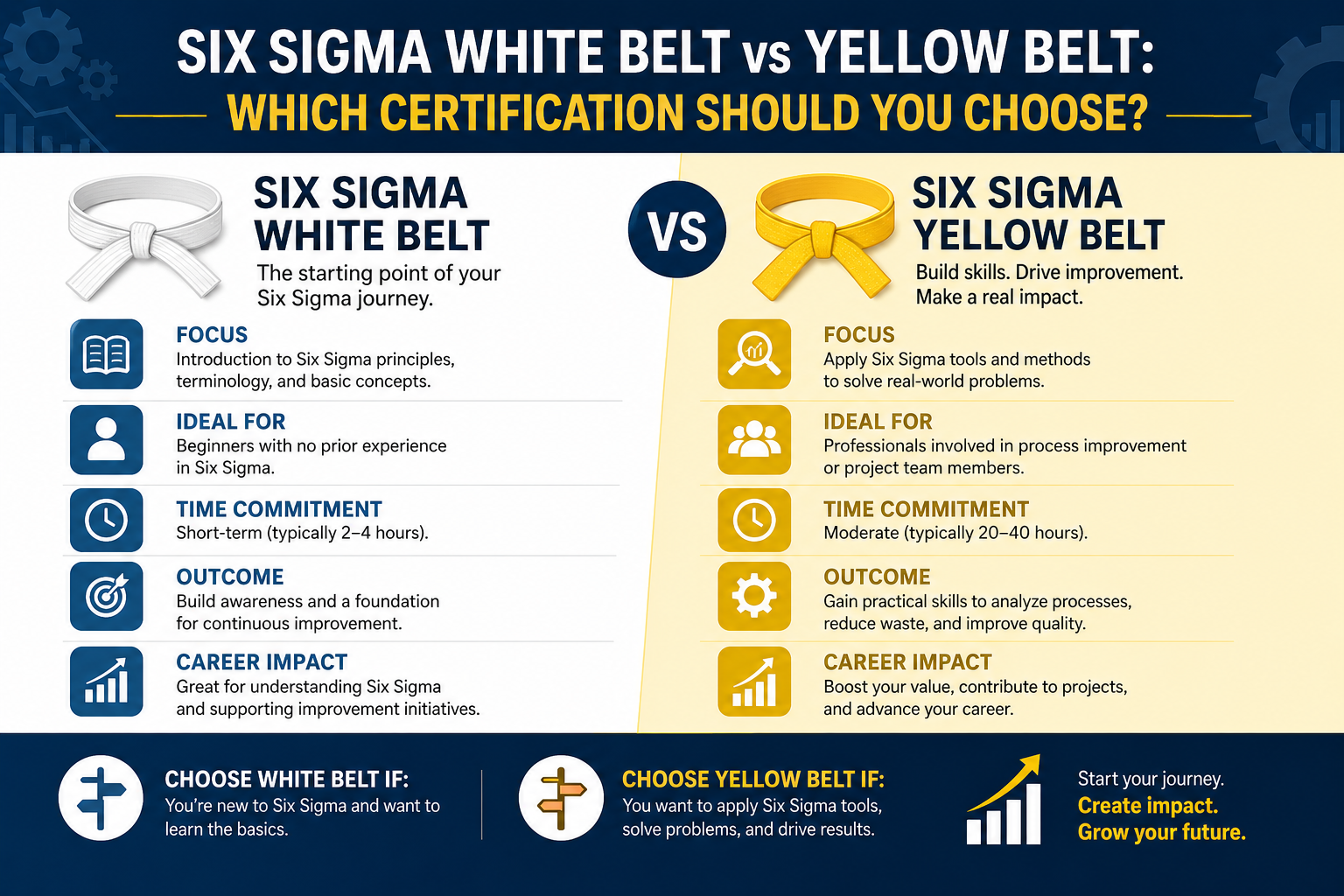
Six Sigma employs a data-driven approach and utilizes various statistical tools to analyze processes. It is widely used across industries, from manufacturing to services, to minimize variation and improve outcomes. The methodology is divided into different levels of certification: White Belt, Yellow Belt, Green Belt, Black Belt, and Master Black Belt, each representing a deeper understanding of Six Sigma principles.
What is Six Sigma White Belt Certification?
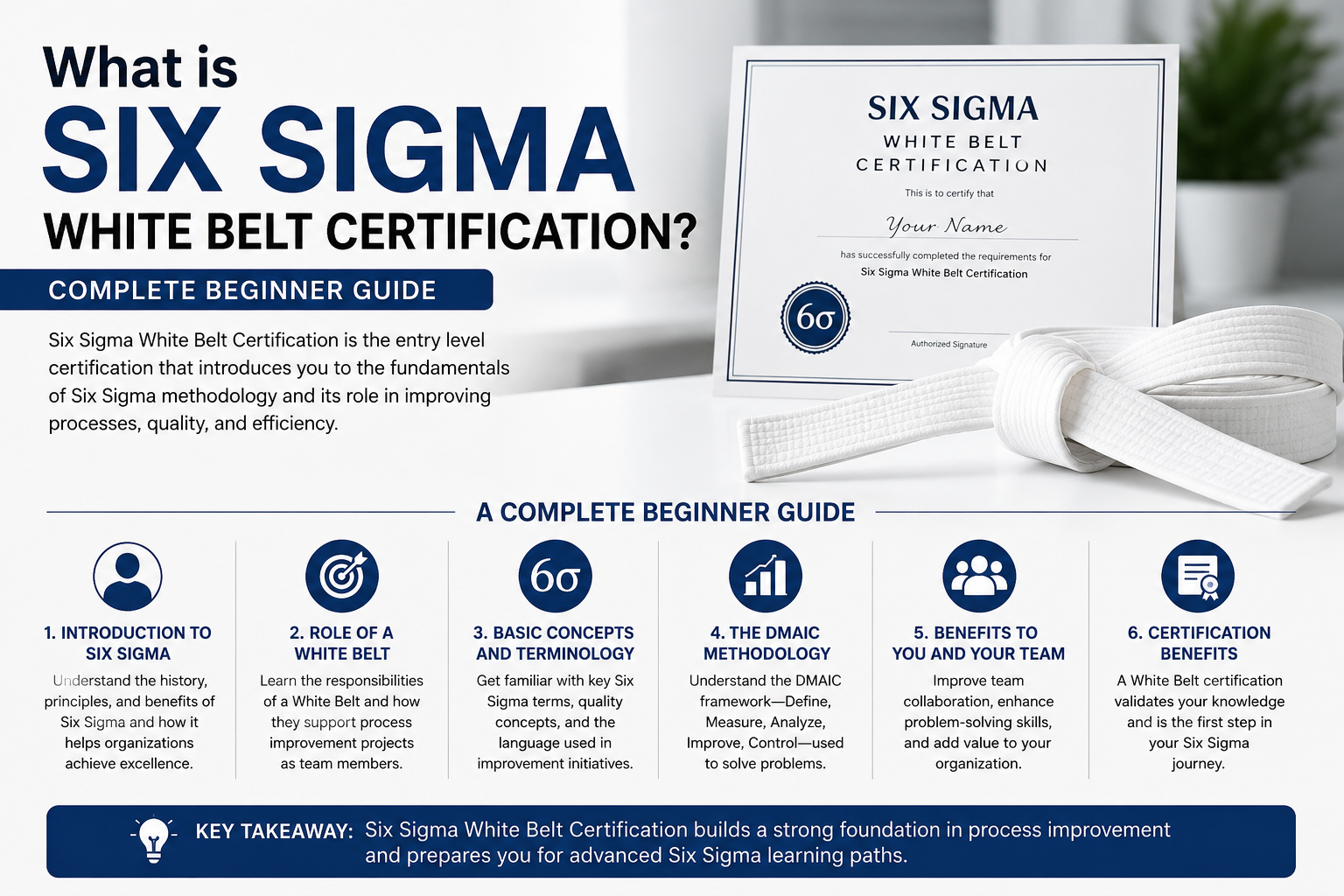
The Six Sigma White Belt certification is the entry-level certification in the Six Sigma hierarchy. It is designed for individuals who want a fundamental understanding of Six Sigma concepts and tools. This certification is particularly beneficial for those who are starting their journey in process improvement, as well as for team members who support project teams within an organization.
Who Should Pursue Six Sigma White Belt Certification?
The White Belt Six Sigma certification is suitable for:
The Benefits of Six Sigma White Belt Certification
Obtaining a White Belt Six Sigma certification offers numerous advantages:
1. Foundation in Six Sigma Principles
As a White Belt, you will gain a foundational understanding of Six Sigma methodologies, which will help you grasp more complex concepts in the future.
2. Enhanced Problem-Solving Skills
The training equips you with basic problem-solving tools that can be applied in real-world scenarios, improving your ability to address workplace challenges.
3. Career Advancement Opportunities
Having a Six Sigma certification on your resume can make you a more attractive candidate for job opportunities and promotions, especially in quality management and process improvement roles.
4. Contribution to Organizational Success
With your new knowledge, you can contribute to your organization’s goals of reducing waste, enhancing quality, and improving overall efficiency.
What Does the Six Sigma White Belt Course Cover?
The Six Sigma White Belt course is designed to provide a comprehensive overview of Six Sigma concepts. Typically, the course covers the following topics:
How to Get Certified?
Getting your Six Sigma White Belt certification is a straightforward process. Here’s how you can do it:
1. Choose a Reputable Training Provider
Look for accredited institutions or organizations that offer Six Sigma training programs. Ensure they have a good reputation and positive reviews from past participants.
2. Enroll in the Course
Once you’ve found a suitable provider, enroll in their White Belt course. These courses can be conducted in-person or online, providing flexibility based on your schedule.
3. Complete the Training
Participate actively in the training sessions, complete any assigned tasks, and engage with instructors and classmates to enhance your understanding.
4. Pass the Certification Exam
Many training providers require you to pass a certification exam to earn your White Belt. This exam typically consists of multiple-choice questions covering the material taught in the course.
5. Receive Your Certification
Upon passing the exam, you will receive your Six Sigma White Belt certification, which you can proudly showcase on your resume and LinkedIn profile.
FAQs About Six Sigma White Belt Certification
1. What is the duration of the Six Sigma White Belt course?
The duration of the course varies by provider, typically ranging from a few hours to a couple of days.
2. Is Six Sigma White Belt certification recognized in India?
Yes, Six Sigma certifications, including the White Belt, are recognized and respected in various industries across India.
3. Can I pursue higher-level Six Sigma certifications after White Belt?
Absolutely! The White Belt certification serves as a foundation for advancing to Yellow Belt, Green Belt, and beyond.
4. What is the cost of Six Sigma White Belt certification?
The cost can vary based on the training provider, but it generally ranges from INR 5,000 to INR 15,000 in India.
5. How long is the Six Sigma White Belt certification valid?
Six Sigma White Belt certification does not typically expire, but it’s advisable to stay updated with Six Sigma practices and advancements.
Conclusion
Embarking on your journey with Six Sigma White Belt certification is a smart decision for anyone looking to enhance their career and contribute positively to their organization. With a solid understanding of Six Sigma principles, you can become an integral part of process improvement initiatives in your workplace.
If you're ready to take the first step towards mastering Six Sigma, consider enrolling in a Six Sigma White Belt course today. Equip yourself with the skills to make a difference!
Call to Action: Want to learn more about Six Sigma and how it can benefit your career? Contact us today to find the right Six Sigma training program for you!