
Are you gearing up for the PMP certification exam? If so, you’re not alone. The Project Management Professional (PMP) certification is a globally recognized credential that can significantly enhance your career in project management. However, the journey to successfully passing the PMP exam requires diligent preparation, a structured PMP study plan, and practical insights.
Understanding the PMP Certification Exam
The PMP certification, offered by the Project Management Institute (PMI), is designed to validate your skills and knowledge in project management. The exam tests your ability to manage projects effectively, covering various domains such as initiating, planning, executing, monitoring, and closing projects.
Eligibility Criteria
Before embarking on your PMP exam preparation, ensure you meet the eligibility criteria:
Creating an Effective PMP Study Plan
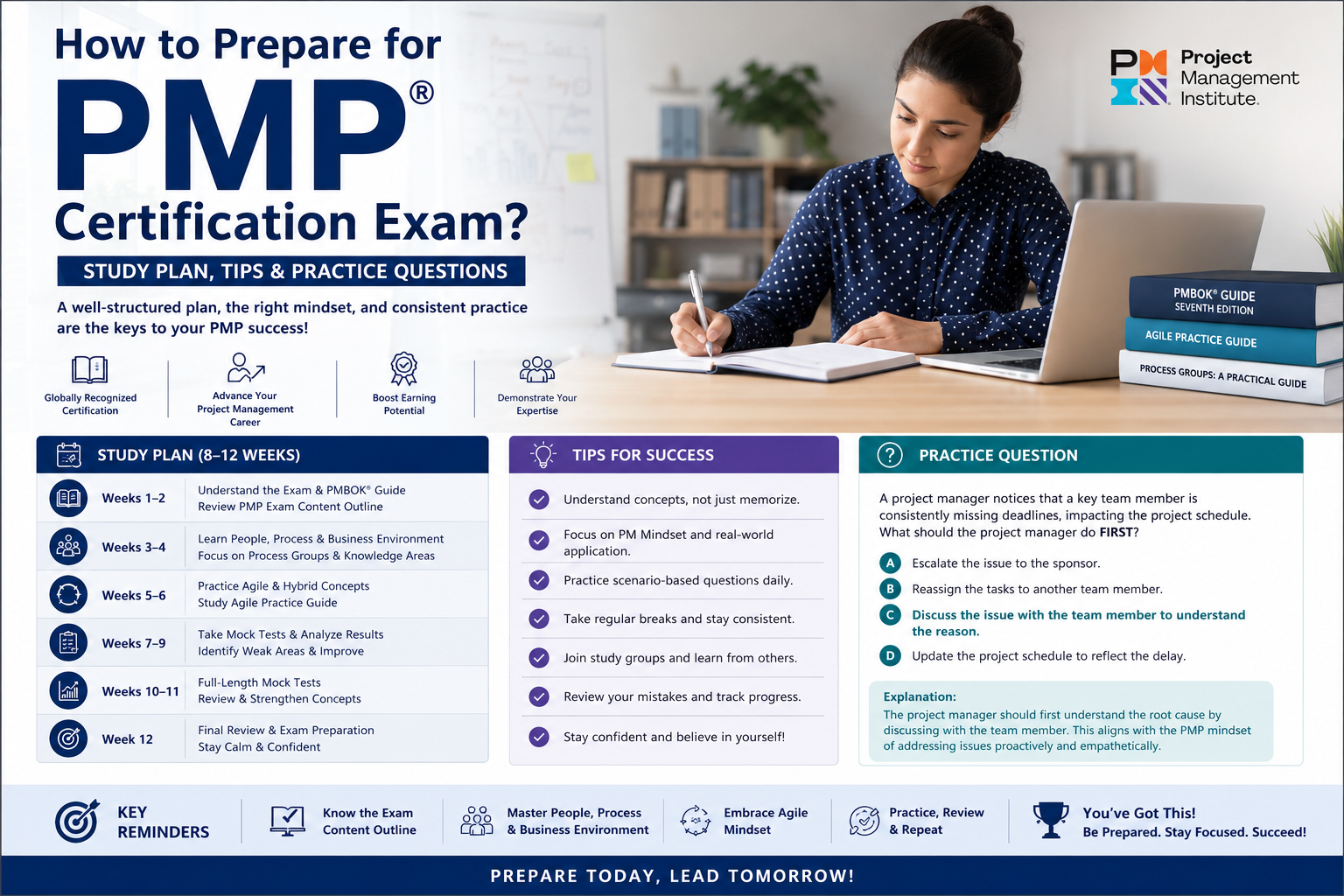
A well-structured PMP study plan is essential for your exam preparation. Here’s a step-by-step guide to help you create your personalized study plan.
1. Assess Your Current Knowledge
Start by evaluating your current understanding of project management concepts. Take a practice test or use online resources to identify your strengths and weaknesses. This assessment will guide your study focus.
2. Set a Study Timeline
Decide how much time you can dedicate to studying each week. A typical study plan spans 8-12 weeks, depending on your familiarity with the material. Ensure to allocate more time to challenging topics.
3. Gather Study Materials
Invest in the right study materials, including:
4. Create a Study Schedule
Draft a weekly study schedule that includes:
5. Join a Study Group
Collaborating with others can be beneficial. Join a local study group or an online community where you can share insights, resources, and practice questions. Engaging with others can enhance your understanding and keep you motivated.
Tips for Success in PMP Exam Preparation
Here are some practical tips to enhance your PMP exam preparation:
1. Understand the Exam Format
The PMP exam consists of 180 multiple-choice questions, and you have 230 minutes to complete it. Familiarize yourself with the exam format and practice time management.
2. Focus on Key Concepts
Pay attention to the key concepts outlined in the PMBOK® Guide. Make sure you understand the processes, knowledge areas, and the interrelationship between them. This understanding is crucial for answering situational questions on the exam.
3. Practice with PMP Mock Tests
Regularly take PMP mock tests to assess your progress. Mock tests help you become accustomed to the exam format and identify areas that need improvement. Aim to complete a few full-length practice exams before exam day.
4. Use Flashcards
Flashcards are an excellent tool for memorizing key terms, formulas, and concepts. Create your own or use digital flashcards to study on the go.
5. Stay Updated
The field of project management is continually evolving. Stay updated with the latest trends, tools, and best practices through webinars, articles, and forums. This knowledge can give you an edge in the exam.
Practice Questions for the PMP Exam
Practicing with real exam-style questions is vital for your success. Here are a few sample questions to get you started:
Sample Question 1
Which of the following is a tool used in the Monitor and Control Project Work process?
Sample Question 2
What is the primary purpose of the project charter?
Make sure to review the answers to these questions thoroughly and understand the reasoning behind them.
Frequently Asked Questions (FAQs)
1. What is the passing score for the PMP exam?
The passing score for the PMP exam is not publicly disclosed. However, PMI uses a criterion-referenced scoring approach, meaning the score reflects your performance against a set standard.
2. How long is the PMP certification valid?
The PMP certification is valid for three years. To maintain your certification, you must earn 60 PDUs (Professional Development Units) during this period.
3. Can I take the PMP exam online?
Yes, PMI offers an online proctored option for the PMP exam, allowing you to take the exam from the comfort of your home or office.
4. What resources are recommended for PMP exam preparation?
Recommended resources include the PMBOK® Guide, online courses, study guides, and PMP exam prep books. Additionally, consider joining PMP forums and study groups for peer support.
Conclusion and Call to Action
Preparing for the PMP certification exam can be a daunting task, but with a structured PMP study plan and the right preparation strategies, you can significantly increase your chances of success. Remember to take practice tests, collaborate with peers, and stay focused on your study goals.
Ready to take the plunge into project management excellence? Start your PMP exam preparation today! For more resources, tips, and guidance, follow our blog or reach out to us for personalized coaching. Let’s embark on this journey together!