
Project Management Professional (PMP) certification is a prestigious credential that validates your skills and knowledge in project management. One of the fundamental components of PMP is understanding the PMP knowledge areas and PMP process groups. These concepts are essential for effective project management and are outlined in the PMBOK Guide (Project Management Body of Knowledge). In this blog, we will break down these concepts, provide examples, and help you grasp their importance in the Indian context.
Understanding PMP Knowledge Areas
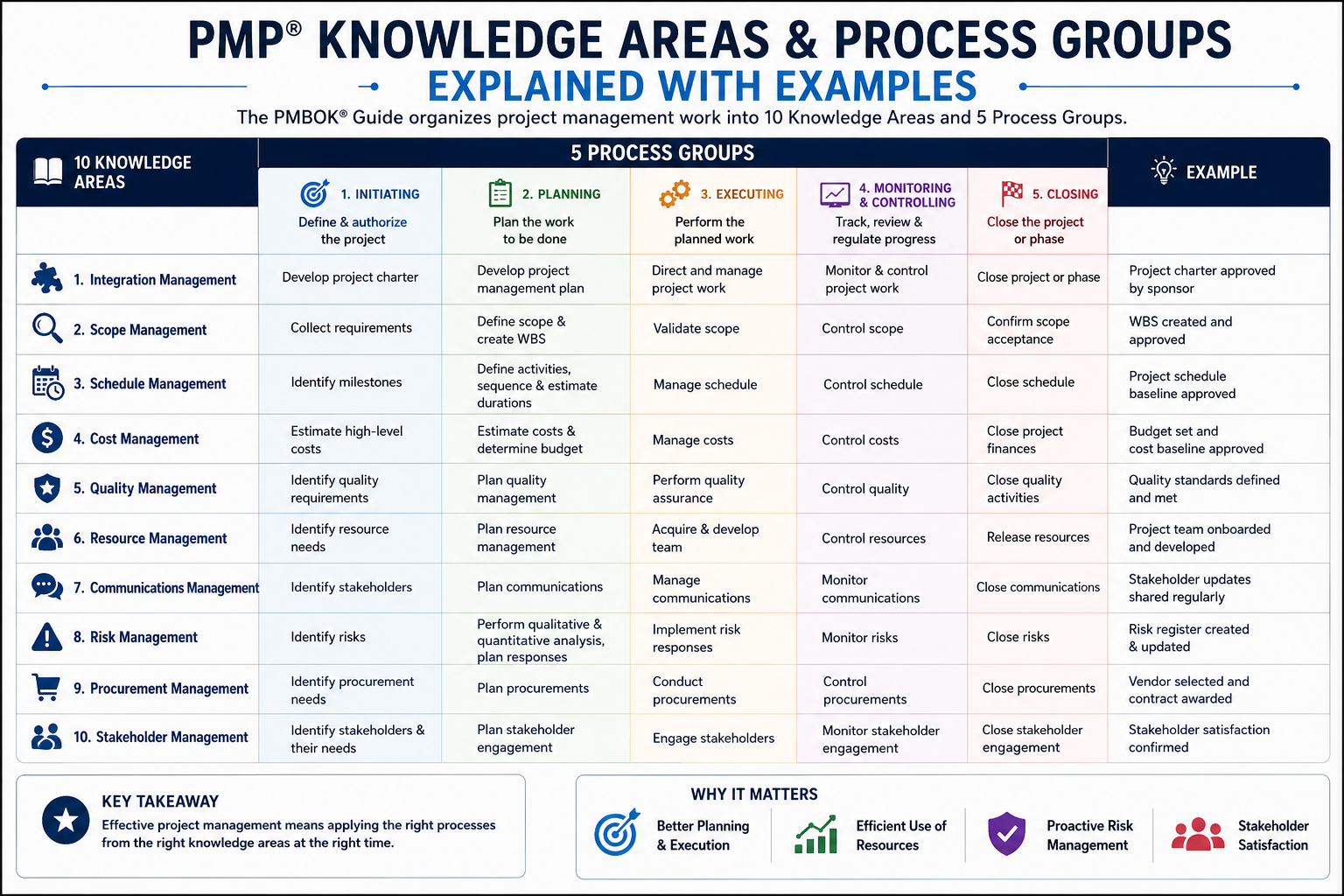
The PMP knowledge areas encompass the various domains of project management that a project manager should master to ensure project success. There are ten key knowledge areas identified by the PMBOK, each representing a specific aspect of project management.
1. Project Integration Management
This area focuses on ensuring that all project components are coordinated effectively. It includes developing the project charter, project management plan, and managing project execution. For example, when launching a new mobile application, a project manager must integrate various teams, such as development, marketing, and customer support, to ensure a cohesive launch.
2. Project Scope Management
Scope management involves defining and controlling what is included and excluded from the project. For instance, in a construction project, scope management ensures that only agreed-upon features—like the number of floors or the type of materials—are included, preventing scope creep.
3. Project Schedule Management
This knowledge area involves planning and controlling the project timeline. It includes defining activities, sequencing them, estimating resource durations, and controlling the schedule. For example, in an event management project, creating a detailed timeline for venue booking, catering, and marketing is crucial for successful execution.
4. Project Cost Management
Cost management ensures that the project is completed within the approved budget. This includes estimating costs, determining the budget, and controlling costs. For instance, in a software development project, accurate cost estimation prevents overspending on resources and tools.
5. Project Quality Management
Quality management focuses on ensuring that the project meets the required standards and stakeholders' expectations. For example, in a manufacturing project, implementing quality control measures ensures that the final product is defect-free and meets safety regulations.
6. Project Resource Management
This area covers the processes related to planning, acquiring, and managing project resources. For instance, in a marketing campaign, effective resource management ensures that the right team members, tools, and budget are allocated for maximum impact.
7. Project Communication Management
Communication management involves ensuring timely and appropriate generation, collection, dissemination, and storage of project information. For example, in a cross-border IT project, clear communication channels are vital to avoid misunderstandings and ensure alignment among team members.
8. Project Risk Management
Risk management identifies, analyzes, and responds to project risks. For instance, in a real estate development project, understanding market fluctuations is important to mitigate financial risks and ensure project viability.
9. Project Procurement Management
This knowledge area deals with the acquisition of goods and services from external sources. For example, in an infrastructure project, procurement management involves selecting contractors and suppliers to ensure timely delivery of materials.
10. Project Stakeholder Management
Stakeholder management focuses on identifying and engaging all stakeholders. For instance, in a community development project, understanding the needs and expectations of local residents ensures their support and involvement.
Exploring PMP Process Groups
The PMP process groups are the phases that project managers follow throughout the project life cycle. These groups help in organizing the various processes involved in project management. There are five main process groups:
1. Initiating Process Group
This group includes processes that define and authorize the project. For example, when starting a new software project, the project manager creates a project charter that outlines the project's objectives and stakeholders.
2. Planning Process Group
Planning is crucial for setting a roadmap for the project. It involves creating detailed plans for scope, schedule, cost, quality, and more. For instance, in organizing a wedding, meticulous planning includes timelines, budgets, and vendor coordination.
3. Executing Process Group
This phase focuses on carrying out the project plan. All tasks and activities are performed in this group. For instance, in a product launch, the execution phase includes marketing campaigns, production, and distribution.
4. Monitoring and Controlling Process Group
This group ensures that the project remains on track. It involves tracking progress, performance, and making necessary adjustments. For instance, in a research project, regular progress reviews help in identifying any deviations from the plan and addressing them promptly.
5. Closing Process Group
The closing phase wraps up the project and ensures that all deliverables are met. For example, in an educational project, this phase involves finalizing reports, obtaining stakeholder feedback, and archiving project documents.
Integrating Knowledge Areas and Process Groups
Understanding how PMP knowledge areas and PMP process groups interrelate is crucial for effective project management. Each knowledge area consists of processes that fall under the different process groups. For example:
Real-World Examples in the Indian Context
To better understand the application of PMP knowledge areas and process groups, let's look at a few examples from the Indian context:
Example 1: IT Industry
In an IT project for a banking application, the project manager uses Project Scope Management to define features like online banking, fund transfers, and customer support. During the Monitoring and Controlling phase, they track user feedback to make necessary adjustments, ensuring the final product meets client expectations.
Example 2: Infrastructure Development
In a metro rail project in Mumbai, Project Procurement Management plays a vital role in selecting contractors and suppliers for materials. The project manager must also engage stakeholders throughout the project lifecycle to ensure community support and compliance with regulations.
FAQs
1. What are the key PMP knowledge areas?
The key PMP knowledge areas include Project Integration, Scope, Schedule, Cost, Quality, Resource, Communication, Risk, Procurement, and Stakeholder Management.
2. How do PMP process groups work together?
PMP process groups work together by providing a structured approach to project management, ensuring that every aspect of the project is planned, executed, monitored, and closed effectively.
3. Is PMP certification valuable in India?
Yes, PMP certification is highly valued in India as it demonstrates a professional's capability in managing projects effectively, enhancing career opportunities and earning potential.
Conclusion
Understanding PMP knowledge areas and PMP process groups is crucial for any aspiring project manager. These concepts form the backbone of effective project management and are essential for achieving project success. Whether you are in the IT, construction, or any other industry, mastering these areas will significantly enhance your project management skills.
If you are looking to advance your career in project management, consider pursuing PMP certification. It will not only provide you with the necessary knowledge but also open doors to numerous opportunities in India and beyond.
Ready to take your project management skills to the next level? Enroll in a PMP course today and join the ranks of successful project managers!