


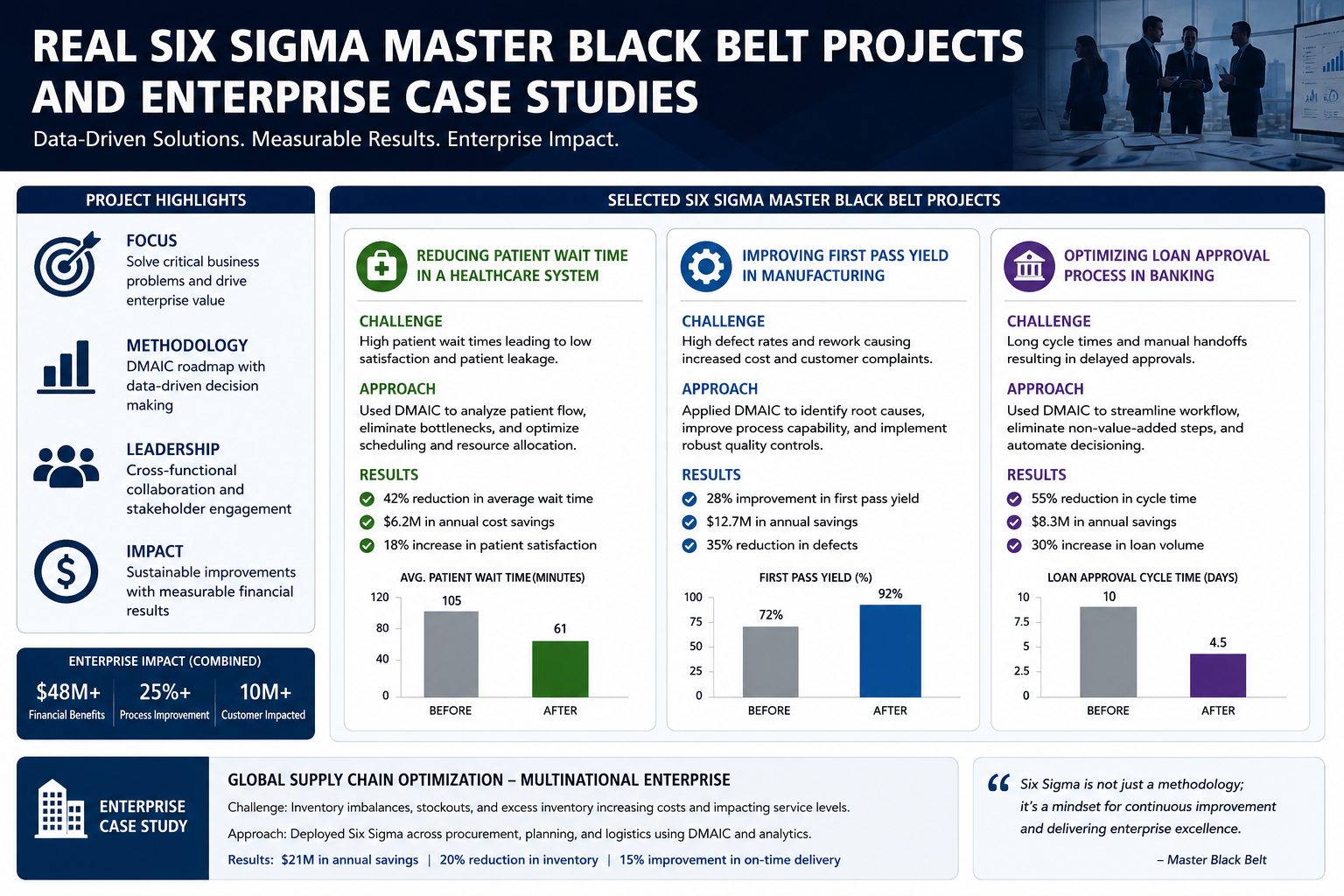

In today's competitive business landscape, organizations are constantly striving for operational excellence and customer satisfaction. One effective approach to achieving these goals is through Six Sigma methodologies. Among the various levels of Six Sigma professionals, the Master Black Belt stands out as an expert who leads and drives complex improvement projects. In this blog, we will explore real Six Sigma Master Black Belt projects, enterprise case studies, and success stories that highlight the effectiveness of Six Sigma in driving process improvement.
Understanding Six Sigma and the Role of a Master Black Belt
Six Sigma is a data-driven methodology that seeks to improve business processes by identifying and eliminating defects, thereby enhancing quality and performance. It employs a range of statistical tools and techniques to analyze processes, identify areas for improvement, and implement sustainable solutions.
A Master Black Belt (MBB) is a seasoned Six Sigma practitioner who possesses an in-depth understanding of Six Sigma principles, tools, and techniques. They not only lead large-scale improvement projects but also mentor and train other Six Sigma practitioners, including Black Belts and Green Belts. In the Indian context, the role of a Master Black Belt is crucial for organizations aiming to adopt a culture of continuous improvement.
Real Six Sigma Master Black Belt Projects and Case Studies
1. Manufacturing Excellence: A Case Study from the Automotive Industry
One of the prominent success stories in the Indian automotive sector involved a leading manufacturer that faced challenges with production defects and inefficiencies on the assembly line. The Master Black Belt led a Six Sigma initiative that focused on reducing defect rates and enhancing overall productivity.
Through the Define, Measure, Analyze, Improve, and Control (DMAIC) methodology, the MBB and the team identified key areas of waste and variability. By implementing robust process controls and conducting root cause analysis, they successfully reduced defects by 30%, resulting in significant cost savings and improved customer satisfaction.
2. Healthcare Improvement: Enhancing Patient Care in a Hospital
In the healthcare sector, a renowned hospital in India sought to enhance patient care and reduce wait times in the emergency department. A Master Black Belt was brought on board to lead the Six Sigma project, focusing on streamlining processes and improving patient flow.
By mapping the existing processes and gathering data on patient wait times, the MBB identified bottlenecks and areas for improvement. The team implemented process changes, including better triage protocols and staff training, which led to a 40% reduction in patient wait times and a marked improvement in patient satisfaction scores.
3. Service Excellence: Optimizing Customer Support Operations
A leading telecom company in India faced challenges with customer support operations, resulting in high call drop rates and customer complaints. The organization engaged a Master Black Belt to spearhead a Six Sigma project aimed at optimizing call center processes.
Through detailed data analysis and process mapping, the MBB identified key drivers of customer dissatisfaction. The team implemented training programs for support staff and introduced performance metrics to monitor efficiency. As a result, the company achieved a 25% increase in first call resolution rates, significantly improving customer experience and retention.
Key Takeaways from Six Sigma Success Stories
The above case studies illustrate the transformative power of Six Sigma Master Black Belt projects in diverse industries. Here are some key takeaways:
Frequently Asked Questions (FAQs)
1. What is a Master Black Belt in Six Sigma?
A Master Black Belt is an expert in Six Sigma methodologies who leads and mentors projects, trains other Six Sigma practitioners, and drives organizational change towards continuous improvement.
2. How does Six Sigma benefit organizations?
Six Sigma helps organizations reduce defects, improve process efficiency, enhance customer satisfaction, and achieve significant cost savings through data-driven decision-making.
3. What industries can benefit from Six Sigma projects?
Six Sigma can be applied across various industries, including manufacturing, healthcare, finance, telecommunications, and service sectors, to drive process improvement and operational excellence.
4. How long does it take to see results from Six Sigma initiatives?
The timeline for results varies based on the complexity of the project and the organization's readiness for change. However, many organizations report measurable improvements within a few months of implementing Six Sigma projects.
Conclusion: Embracing Six Sigma for Enterprise Success
The success stories of Six Sigma Master Black Belt projects highlight the tangible benefits of adopting this methodology in Indian enterprises. From manufacturing to healthcare, the impact of data-driven process improvements is evident in enhanced efficiency, reduced costs, and improved customer satisfaction. Organizations looking to thrive in a competitive market should consider investing in Six Sigma training and projects to drive sustainable growth.
Ready to embark on your Six Sigma journey? Whether you’re looking to improve processes or train your team, our Six Sigma programs can help you achieve your goals. Contact us today to learn more about how we can assist you in implementing effective Six Sigma Master Black Belt projects!