

In today's competitive business landscape, organizations are constantly seeking ways to improve processes, increase efficiency, and enhance quality. Six Sigma has emerged as a leading methodology for achieving these objectives. Within this framework, the roles of Six Sigma Black Belt and Master Black Belt are crucial. However, many professionals often find themselves confused about the black belt vs master black belt distinction. In this blog, we will delve into the key differences between these two certification levels and explore the career paths available for each.
Understanding Six Sigma Certifications
Six Sigma is a data-driven approach that focuses on process improvement by identifying and eliminating defects. It is widely adopted across industries in India, from manufacturing to IT services, and is essential for professionals aiming for operational excellence. The Six Sigma certification levels include:
What is a Six Sigma Black Belt?
A Six Sigma Black Belt is a professional who has a deep understanding of Six Sigma principles and is skilled in leading project teams. They are responsible for implementing Six Sigma methodologies in their organizations and are often involved in mentoring Green Belts and Yellow Belts. Black Belts typically dedicate a significant portion of their time to projects aimed at improving quality and reducing costs.
Key Responsibilities of a Black Belt
Skills Required for a Six Sigma Black Belt
To excel as a Black Belt, individuals should possess the following skills:
What is a Master Black Belt?
A Master Black Belt is the highest level of Six Sigma certification. These professionals have extensive experience in Six Sigma methodologies and are responsible for strategic implementation within their organizations. They play a critical role in mentoring both Black Belts and Green Belts and are often involved in training programs.
Key Responsibilities of a Master Black Belt
Skills Required for a Master Black Belt
Master Black Belts should possess advanced skills, including:
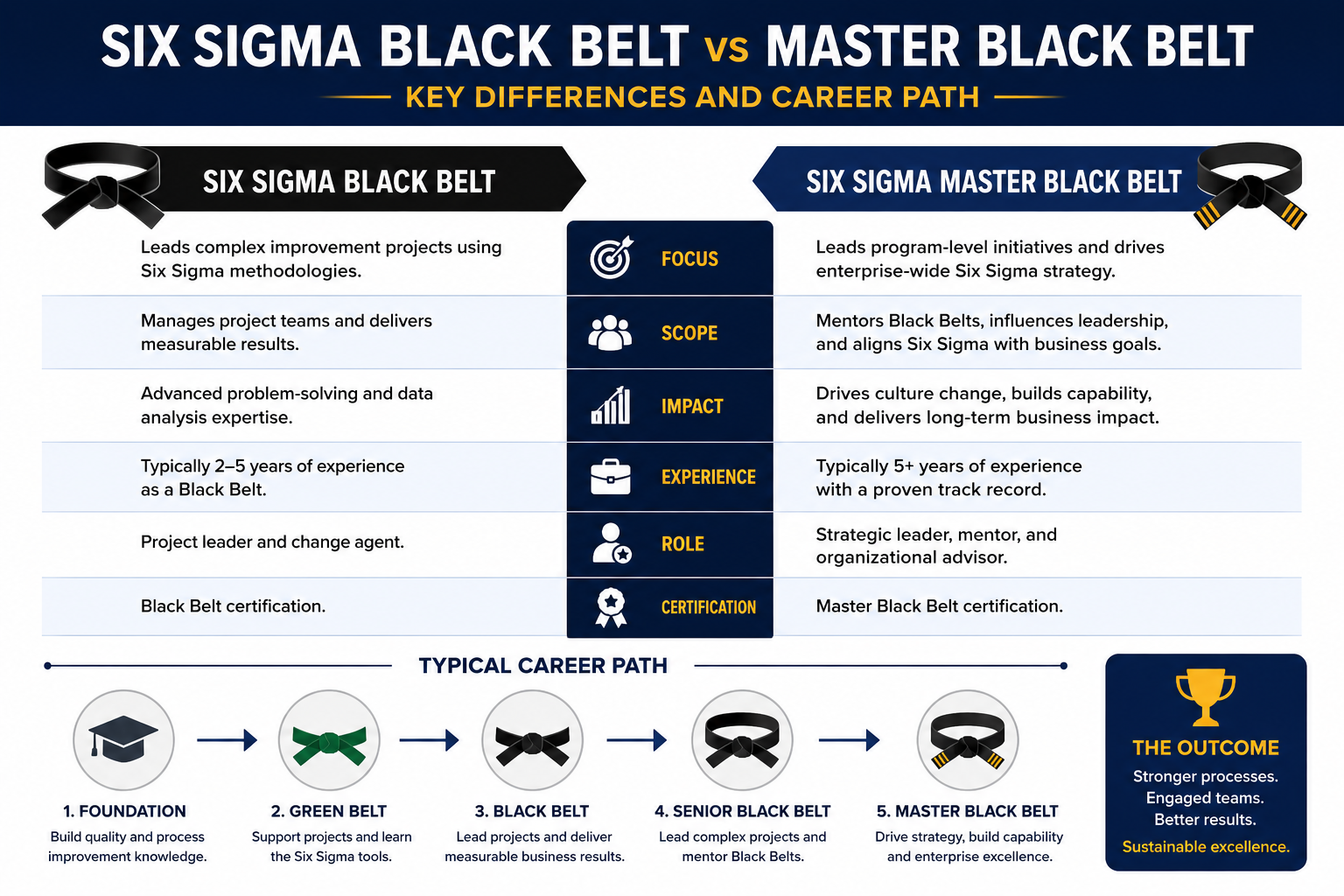
Black Belt vs Master Black Belt: Key Differences
Now that we have a clear understanding of what Black Belts and Master Black Belts do, let's highlight the key differences between them:
Career Path for Six Sigma Professionals in India
The career path for Six Sigma professionals can be rewarding, especially in a growing economy like India. Here’s a typical progression:
As you progress, you may also explore roles such as Six Sigma Consultant, Quality Manager, or operations leader, which can further enhance your career prospects.
FAQs about Six Sigma Certifications
1. What is the duration of Six Sigma Black Belt and Master Black Belt certifications?
The duration varies by program, but typically, Black Belt courses last 3 to 6 months, while Master Black Belt courses may take 6 months to a year.
2. Is Six Sigma certification necessary for career advancement?
While not mandatory, Six Sigma certification can significantly enhance your resume and career prospects in quality management and process improvement.
3. Can I pursue both Black Belt and Master Black Belt certifications simultaneously?
It is generally recommended to complete the Black Belt certification before pursuing Master Black Belt certification to build the necessary knowledge and experience.
4. How much can I earn as a Six Sigma Black Belt or Master Black Belt in India?
On average, a Six Sigma Black Belt can earn between ₹6 to ₹10 lakhs per annum, while Master Black Belts can command salaries upwards of ₹10 lakhs, depending on the industry and experience.
5. Where can I find Six Sigma certification programs in India?
There are numerous institutes and online platforms offering Six Sigma certification programs in India, including renowned institutions like ASQ, IIMs, and various online learning platforms.
Conclusion
Understanding the differences between black belt vs master black belt is crucial for anyone looking to advance their career in Six Sigma. Both certifications offer unique opportunities and responsibilities, and choosing the right path can significantly impact your professional growth. Whether you aim to lead projects as a Black Belt or drive strategic initiatives as a Master Black Belt, investing in Six Sigma certification can be a game-changer in your career.
Are you ready to take the next step in your Six Sigma journey? Contact us today to learn more about our Six Sigma certification programs and how they can propel your career forward!