



In today's competitive landscape, businesses across India and the globe are constantly seeking methods to enhance efficiency, reduce waste, and improve customer satisfaction. One powerful methodology that has gained traction in both the manufacturing and service sectors is Lean Six Sigma. This article delves into Lean Six Sigma, exploring its real applications, examples, and benefits in the manufacturing and service industries.
Understanding Lean Six Sigma
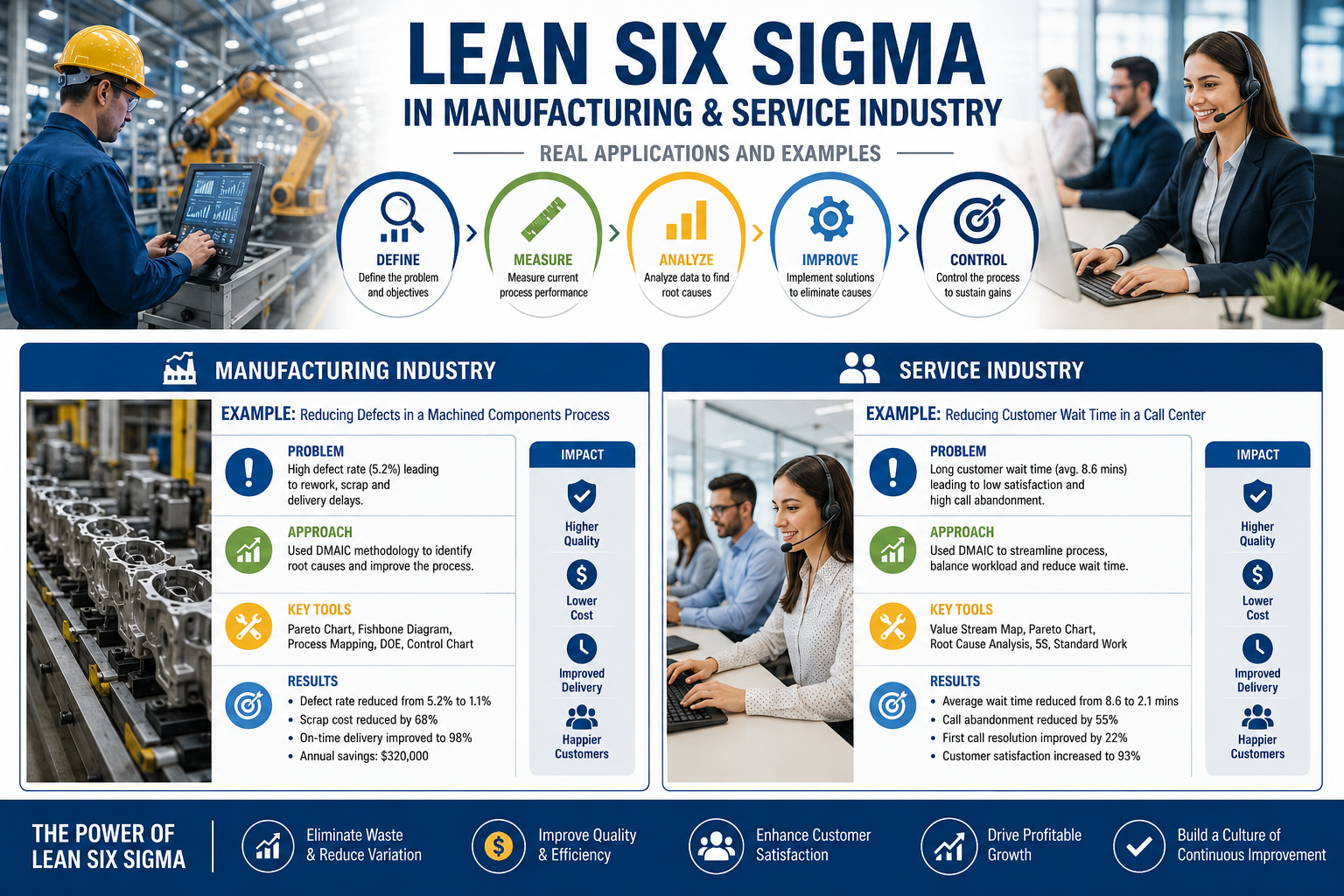
Lean Six Sigma is a synergistic approach that combines two powerful methodologies: Lean and Six Sigma. While Lean focuses on eliminating waste and enhancing process flow, Six Sigma emphasizes reducing variability and defects. The integration of these philosophies leads to streamlined operations and improved quality, making Lean Six Sigma a valuable framework for organizations aiming for operational excellence.
Why Lean Six Sigma Matters in Manufacturing
Manufacturing industries are often under immense pressure to optimize production, reduce costs, and deliver high-quality products. Lean Six Sigma in manufacturing provides the tools and strategies necessary to meet these challenges. By implementing Lean Six Sigma, manufacturers can:
Real Applications of Lean Six Sigma in Manufacturing
Example 1: Automotive Industry
The automotive sector in India has been significantly transformed by Lean Six Sigma. For instance, a prominent Indian car manufacturer implemented Lean Six Sigma principles to optimize its assembly line. By analyzing the production process, the company identified bottlenecks that were causing delays. Through data-driven decision-making, they restructured workstations, reduced cycle time, and ultimately improved throughput by 30%.
Example 2: Electronics Manufacturing
An electronics manufacturer faced a high defect rate in its product assembly line. By employing Six Sigma tools, they conducted a root cause analysis and discovered that improper handling of components was contributing to defects. Implementing standardized operating procedures and employee training led to a 40% reduction in defects, showcasing a successful Six Sigma implementation.
Example 3: Food and Beverage Industry
A large food processing company adopted Lean Six Sigma to enhance its production processes. They focused on waste reduction, particularly in inventory management. By applying Lean principles, they minimized excess inventory, improved production scheduling, and reduced lead times. As a result, the company achieved a 25% decrease in inventory holding costs while maintaining product quality.
Lean Six Sigma in the Service Industry
While Lean Six Sigma is often associated with manufacturing, its principles can be effectively applied to the service industry as well. Service organizations can benefit from improved efficiency, reduced wait times, and enhanced customer satisfaction.
Example 1: Healthcare Sector
In the healthcare industry, Lean Six Sigma methodologies have been utilized to streamline patient flow and reduce waiting times. A hospital in India implemented Lean Six Sigma to analyze patient admission processes. By mapping the patient journey, they identified delays caused by redundant paperwork and inefficient processes. Streamlining these processes resulted in a 20% reduction in patient waiting times and improved overall patient experience.
Example 2: Banking and Financial Services
In the banking sector, a leading Indian bank adopted Lean Six Sigma to enhance customer service operations. By applying Six Sigma tools, the bank analyzed customer feedback and service delivery metrics. They discovered that long transaction times were leading to customer dissatisfaction. By re-engineering their service processes and training staff, they achieved a 30% reduction in transaction times, significantly improving customer satisfaction ratings.
Implementing Lean Six Sigma: Steps to Success
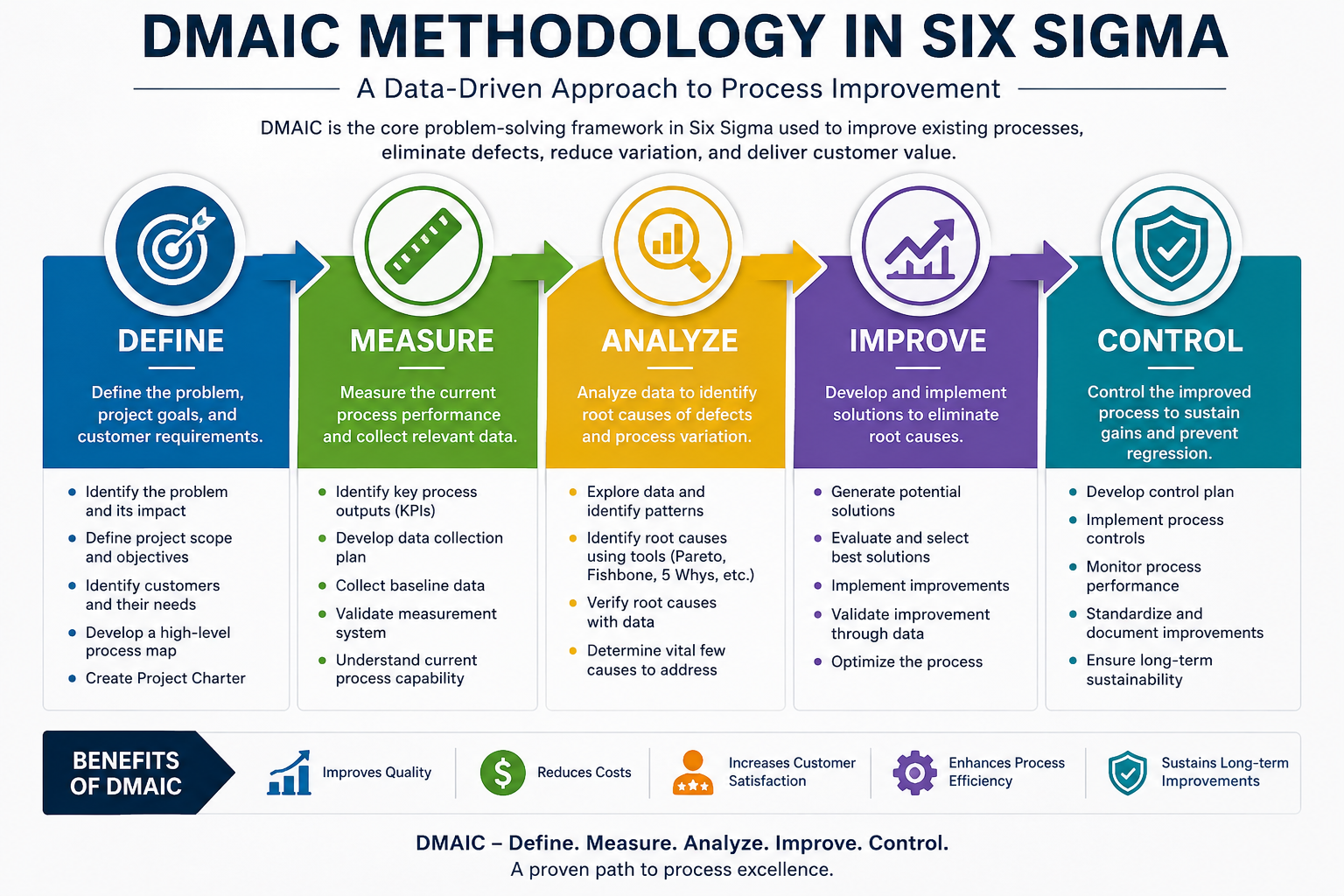
Implementing Lean Six Sigma effectively requires a systematic approach. Here are the key steps to consider:
1. Define Objectives
Clearly outline the goals you want to achieve with Lean Six Sigma, whether it's reducing defects, improving efficiency, or enhancing customer satisfaction.
2. Measure Current Performance
Utilize data collection methods to assess current performance levels. This includes identifying key performance indicators (KPIs) relevant to your industry.
3. Analyze Data
Use statistical tools to analyze the data collected. Identify root causes of issues and areas for improvement.
4. Implement Solutions
Develop and implement solutions based on the analysis. This may involve process redesign, employee training, or technology upgrades.
5. Control and Sustain
Establish control measures to sustain improvements over time. Regularly monitor performance and make adjustments as necessary.
Challenges in Lean Six Sigma Implementation
While Lean Six Sigma presents numerous benefits, organizations may face challenges during implementation. Common challenges include:
Overcoming these challenges requires effective change management strategies, employee engagement, and ongoing training.
FAQs about Lean Six Sigma
1. What is the primary goal of Lean Six Sigma?
The primary goal of Lean Six Sigma is to improve operational efficiency by reducing waste and variability, ultimately enhancing product quality and customer satisfaction.
2. Can Lean Six Sigma be applied to small businesses?
Yes, Lean Six Sigma can be effectively applied to small businesses. The principles can help streamline operations and improve processes, leading to cost savings and increased competitiveness.
3. How long does it take to see results from Lean Six Sigma implementation?
The time frame for seeing results can vary depending on the complexity of the processes being improved. Some organizations may notice improvements within a few months, while others may take longer to achieve significant results.
4. What industries benefit most from Lean Six Sigma?
While Lean Six Sigma is widely used in manufacturing, industries such as healthcare, finance, and logistics also benefit greatly from its implementation.
Conclusion
Lean Six Sigma represents a powerful methodology for organizations in both the manufacturing and service sectors. By focusing on waste reduction, quality improvement, and customer satisfaction, businesses can achieve remarkable results. With numerous real-world applications and examples across various industries, the benefits of Lean Six Sigma are clear. For organizations in India looking to enhance their operations and competitive edge, the adoption of Lean Six Sigma strategies is a step towards operational excellence.
If you're ready to take your organization to the next level with Lean Six Sigma, contact us today for expert guidance and support in implementing these powerful methodologies!