About iQS

Empowering learners and educators with a comprehensive platform that bridges the gap between traditional and modern education. iQS inspires excellence in education and fosters growth for a brighter future.

Follow Us

Home Blogs
Pravin sahani
May 31, 2026
PRINCE2 vs PMP vs Agile: Which Project Management Certification Should You Choose?

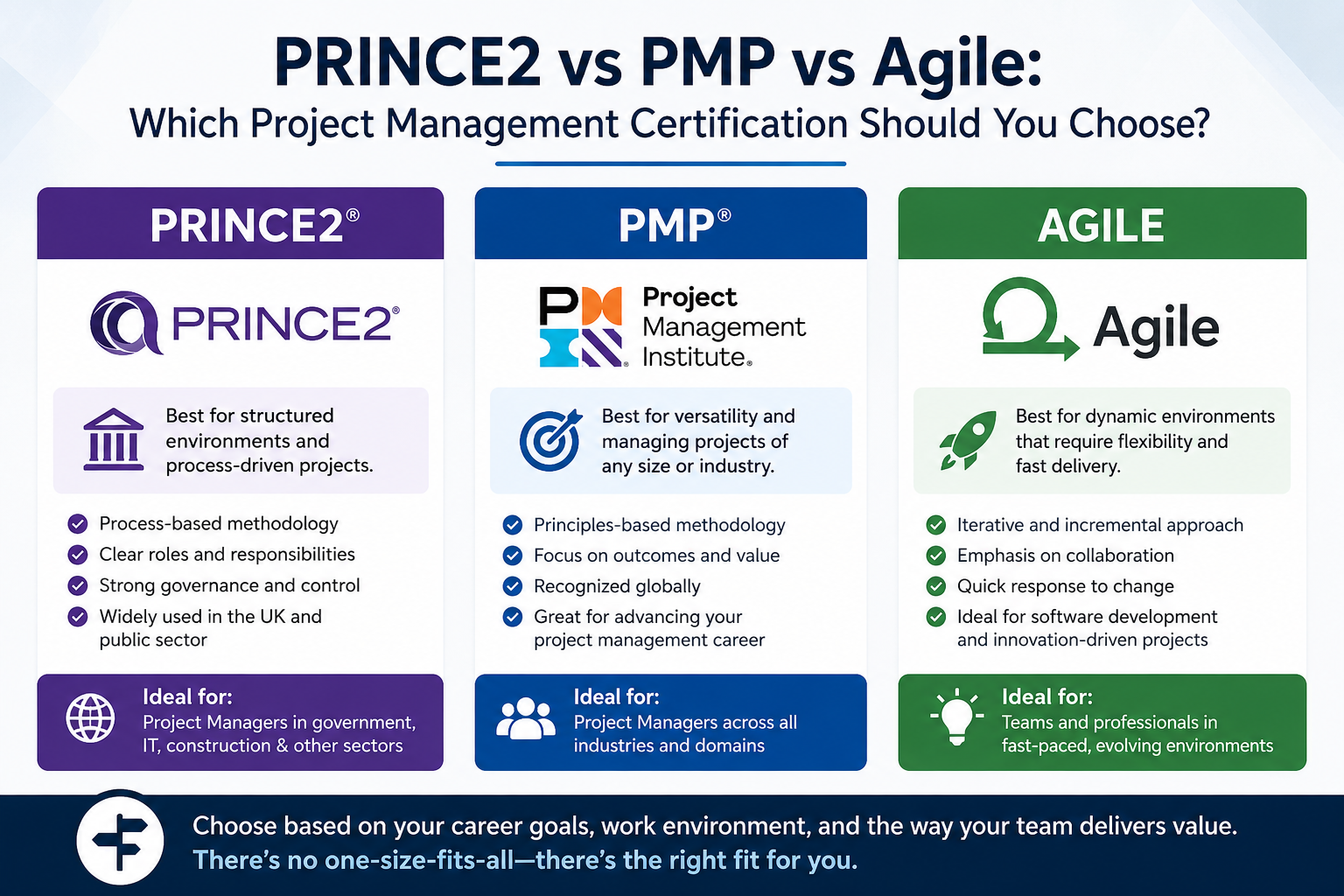
In today's dynamic business environment, project management certifications have become crucial for professionals aiming to enhance their careers. With a plethora of certifications available, deciding which one to pursue can be daunting. Among the most recognized certifications are PRINCE2, PMP, and Agile. This article will provide a comprehensive comparison of PRINCE2 vs PMP vs Agile project management certifications, helping you make an informed choice. Understanding Project Management Certifications Project management certifications validate your skills and knowledge in managing projects effectively. They provide a competitive edge in the job market and are highly regarded by employers. Let's delve into the three prominent certifications: PRINCE2, PMP, and Agile. What is PRINCE2? PRINCE2 (PRojects IN Controlled Environments) is a structured project management method widely used in the UK and internationally. It focuses on organization, control, and quality in projects, making it suitable for various industries. The PRINCE2 certification is divided into two levels: Foundation and Practitioner. The Foundation level introduces the basics, while the Practitioner level covers advanced concepts. What is PMP? The Project Management Professional (PMP) certification, offered by the Project Management Institute (PMI), is one of the most recognized certifications globally. It emphasizes knowledge and experience in project management. The PMP certification is based on the PMBOK (Project Management Body of Knowledge) guidelines, covering various knowledge areas and process groups. To obtain the PMP certification, candidates must meet specific educational and professional experience requirements. What is Agile? Agile is a project management methodology that promotes iterative progress, collaboration, and flexibility. It is particularly popular in software development but has been adopted in various industries due to its adaptive nature. Agile certifications, such as Certified ScrumMaster (CSM) and PMI-ACP (Agile Certified Practitioner), focus on Agile principles, practices, and frameworks. PRINCE2 vs PMP vs Agile: A Detailed Comparison 1. Structure and Approach PRINCE2 is process-driven, emphasizing clear roles and responsibilities, stages, and plans. It provides a detailed framework for managing projects, making it ideal for projects with a defined scope and timeline. PMP is knowledge-based and focuses on best practices, tools, and techniques. It provides a broad understanding of project management principles applicable across various industries. Agile, on the other hand, is adaptive and emphasizes collaboration and flexibility. It is best suited for projects that require rapid changes and a high level of stakeholder involvement. 2. Certification Requirements To obtain the PRINCE2 certification, candidates must pass exams and demonstrate an understanding of PRINCE2 principles. No prior experience is required for the Foundation level, but it's recommended for the Practitioner level. The PMP certification requires candidates to have a secondary degree (high school diploma, associate degree) and 7,500 hours leading projects, or a four-year degree with 4,500 hours of project management experience. Additionally, candidates must complete 35 hours of project management education. Agile certifications have varying requirements. For example, the CSM requires attendance in a two-day training course, while the PMI-ACP requires about 21 contact hours of training in Agile principles and practices, along with 2,000 hours of general project experience. 3. Popularity and Global Recognition Both PRINCE2 and PMP are globally recognized, but PMP holds a slight edge in terms of international acceptance. In contrast, PRINCE2 is more prevalent in the UK and Europe. Agile certifications are gaining momentum, especially in technology and software development sectors, as organizations increasingly adopt Agile methodologies. 4. Career Opportunities Holding a PRINCE2 certification can open doors to project management roles in various sectors, particularly in the UK and Europe. It is especially beneficial for those looking to work in government projects or large organizations that prefer structured methodologies. The PMP certification is highly sought after by employers worldwide, making it a valuable asset for project managers seeking leadership roles. It is recognized across various industries, including IT, healthcare, construction, and finance. Agile certifications can lead to roles such as Agile Coach, Scrum Master, or Product Owner. As organizations continue to embrace Agile methodologies, the demand for certified professionals in this area is on the rise. PRINCE2 Certification Comparison Why Choose PRINCE2? If you prefer a structured approach to project management, PRINCE2 is an excellent choice. It provides a comprehensive framework that is easy to understand and apply. The certification is especially beneficial for those working in traditional project environments or industries that require adherence to specific processes. When to Choose PMP? The PMP certification is ideal for those who possess extensive project management experience and want to validate their knowledge. If you're aiming for a senior project management role or looking to work in diverse sectors, PMP is the way to go. Choosing Agile: Is It Right for You? If you're involved in software development or projects that require flexibility and quick iterations, Agile certifications may be more suited to your needs. Agile methodologies promote collaboration and adaptability, making them perfect for fast-paced environments. FAQs 1. Which certification is better for a beginner? For beginners, the PRINCE2 Foundation certification is a great starting point as it requires no prior experience. It provides a solid foundation in project management principles. 2. Can I pursue multiple certifications? Yes, many professionals choose to pursue multiple certifications to enhance their skill set and marketability. You can start with PRINCE2 and later pursue PMP or Agile certifications based on your career goals. 3. How long does it take to prepare for each certification? Preparation time varies based on your background and experience. Typically, candidates spend 2-3 months preparing for the PRINCE2 certification, 3-6 months for PMP, and about 2-4 weeks for Agile certifications like CSM. 4. What are the costs associated with these certifications? The costs vary by certification and location. PRINCE2 can range from INR 20,000 to INR 40,000, PMP certification can cost between INR 30,000 to INR 60,000, and Agile certifications typically range from INR 15,000 to INR 30,000. Conclusion Choosing between PRINCE2, PMP, and Agile certifications ultimately depends on your career aspirations and the project management methodologies you wish to adopt. Each certification has its unique advantages and is suited for different types of projects and industries. Assess your current skill set, career goals, and the demands of the industry to make the best decision for your professional growth. Call to Action Ready to take the next step in your project management career? Whether you choose PRINCE2, PMP, or Agile, investing in a certification can significantly enhance your skill set and career prospects. Explore the options available, enroll in a course, and start your journey towards becoming a certified project management professional today!
Pravin sahani
May 31, 2026
PRINCE2 Methodology Explained: Principles, Themes & Processes

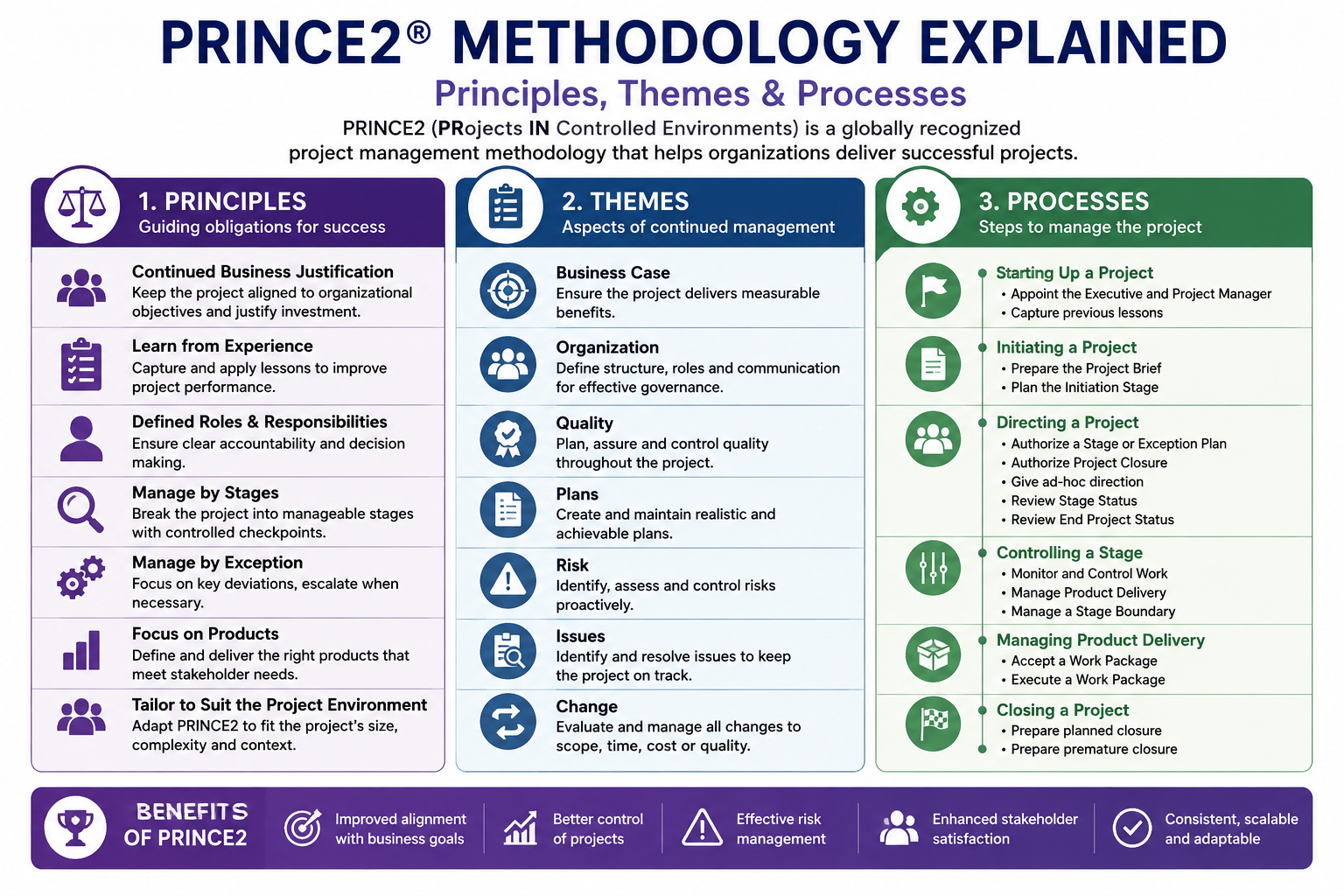
The PRINCE2 methodology stands as one of the most widely recognized project management frameworks in the world, especially in India. It equips project managers with the tools they need to deliver successful projects by emphasizing structure, organization, and control. In this comprehensive guide, we will delve deep into the PRINCE2 methodology, breaking down its core principles, themes, and processes to help you understand the framework better. Understanding PRINCE2 Methodology PRINCE2, which stands for PRojects IN Controlled Environments, is a structured project management method that provides a clear blueprint for managing projects effectively. Launched in the UK in the 1980s, it has since gained global recognition, especially in sectors where precision and control are paramount. Why Choose PRINCE2 in India? In the context of India's rapidly evolving business landscape, adopting the PRINCE2 methodology can offer numerous advantages: Core Principles of PRINCE2 The foundation of the PRINCE2 methodology lies in its seven guiding principles. These principles ensure that the project is effectively managed and aligned with business objectives. 1. Continued Business Justification Every project must have a valid reason for its existence. This principle ensures that the project remains viable throughout its lifecycle, adapting as necessary based on changing circumstances. 2. Learn from Experience PRINCE2 encourages teams to learn from past projects. By documenting lessons learned, teams can avoid repeating mistakes and leverage successful strategies. 3. Defined Roles and Responsibilities Clear delineation of roles promotes accountability. Each team member should understand their responsibilities and how they contribute to the project’s success. 4. Manage by Stages Breaking the project into manageable stages allows for focused attention and better control. Each stage must be planned, monitored, and reviewed. 5. Manage by Exception PRINCE2 allows project managers to focus on exceptions rather than micromanaging every detail. This principle empowers teams to act autonomously as long as they remain within predefined tolerances. 6. Focus on Products The methodology emphasizes delivering quality products that meet stakeholder needs. This focus ensures that the project delivers real value rather than just completing tasks. 7. Tailor to Suit the Project PRINCE2 is not a one-size-fits-all approach. It encourages tailoring the methodology to suit specific project environments and requirements. PRINCE2 Themes: The Building Blocks The PRINCE2 themes are integral to the methodology, providing guidance on how to approach various aspects of project management. There are seven themes in total: 1. Business Case This theme outlines the justification for the project. It ensures that the project remains aligned with the organization’s goals and provides a framework for evaluating its success. 2. Organization The organization theme focuses on the structure of the project team, detailing roles and responsibilities, and ensuring effective communication among stakeholders. 3. Quality Quality assurance is vital in PRINCE2, ensuring that deliverables meet the required standards and satisfy stakeholder expectations. 4. Plans The plans theme defines how the project will be delivered, including the resources required, timelines, and activities involved in achieving the project objectives. 5. Risk Effective risk management is a cornerstone of PRINCE2. This theme involves identifying, assessing, and planning for potential risks that may impact the project. 6. Change Projects often face changes in scope or requirements. This theme provides guidelines on how to manage changes effectively without derailing the project. 7. Progress The progress theme involves monitoring the project's advancement against its plans, ensuring that it stays on track and within budget. PRINCE2 Processes: The Roadmap The PRINCE2 processes provide a structured approach to managing projects. There are seven processes that guide project managers through the project lifecycle: 1. Starting Up a Project (SU) This initial process aims to ensure that the project is viable and aligns with business objectives. It involves appointing a project manager and creating the project brief. 2. Initiating a Project (IP) During this phase, detailed planning occurs. The project team develops the full business case, project plan, and risk management strategy. 3. Directing a Project (DP) This process involves making key decisions and ensuring the project remains aligned with its objectives. The project board is responsible for governance at this stage. 4. Controlling a Stage (CS) During each stage of the project, this process focuses on monitoring progress, managing risks, and ensuring the project stays on track. 5. Managing Product Delivery (MP) This process ensures that the project team delivers the products to the required quality standards and within the agreed timeframe. 6. Managing Stage Boundaries (SB) At the end of each stage, this process assesses the outcomes and prepares for the next stage, ensuring continued alignment with project goals. 7. Closing a Project (CP) The final process involves evaluating the project against its objectives, capturing lessons learned, and formally closing the project. FAQs about PRINCE2 Methodology 1. What is the main advantage of using PRINCE2 methodology? The main advantage of PRINCE2 is its structured approach, which helps organizations manage projects effectively, control risks, and ensure successful delivery. 2. Is PRINCE2 suitable for all types of projects? Yes, PRINCE2 is flexible and can be tailored to suit projects of any size and complexity, making it applicable across various industries. 3. How can one become PRINCE2 certified? To become PRINCE2 certified, individuals must complete a training course and pass the PRINCE2 certification exam offered by accredited training organizations. 4. Can PRINCE2 be integrated with Agile methodologies? Yes, PRINCE2 can be tailored to work alongside Agile methodologies, allowing organizations to benefit from both approaches. Conclusion Understanding the PRINCE2 methodology is crucial for any project manager looking to enhance their skills and deliver successful projects. By grasping the PRINCE2 principles, themes, and processes, you will be better equipped to navigate the complexities of project management. Whether you're working in IT, construction, or any other sector in India, applying PRINCE2 can lead to improved efficiency and project success. If you're ready to take your project management skills to the next level, consider enrolling in a PRINCE2 certification course today! Join the ranks of successful project managers and make a mark in your industry.

Pravin sahani
May 31, 2026
PRINCE2 Foundation vs Practitioner Certification: Key Differences Explained

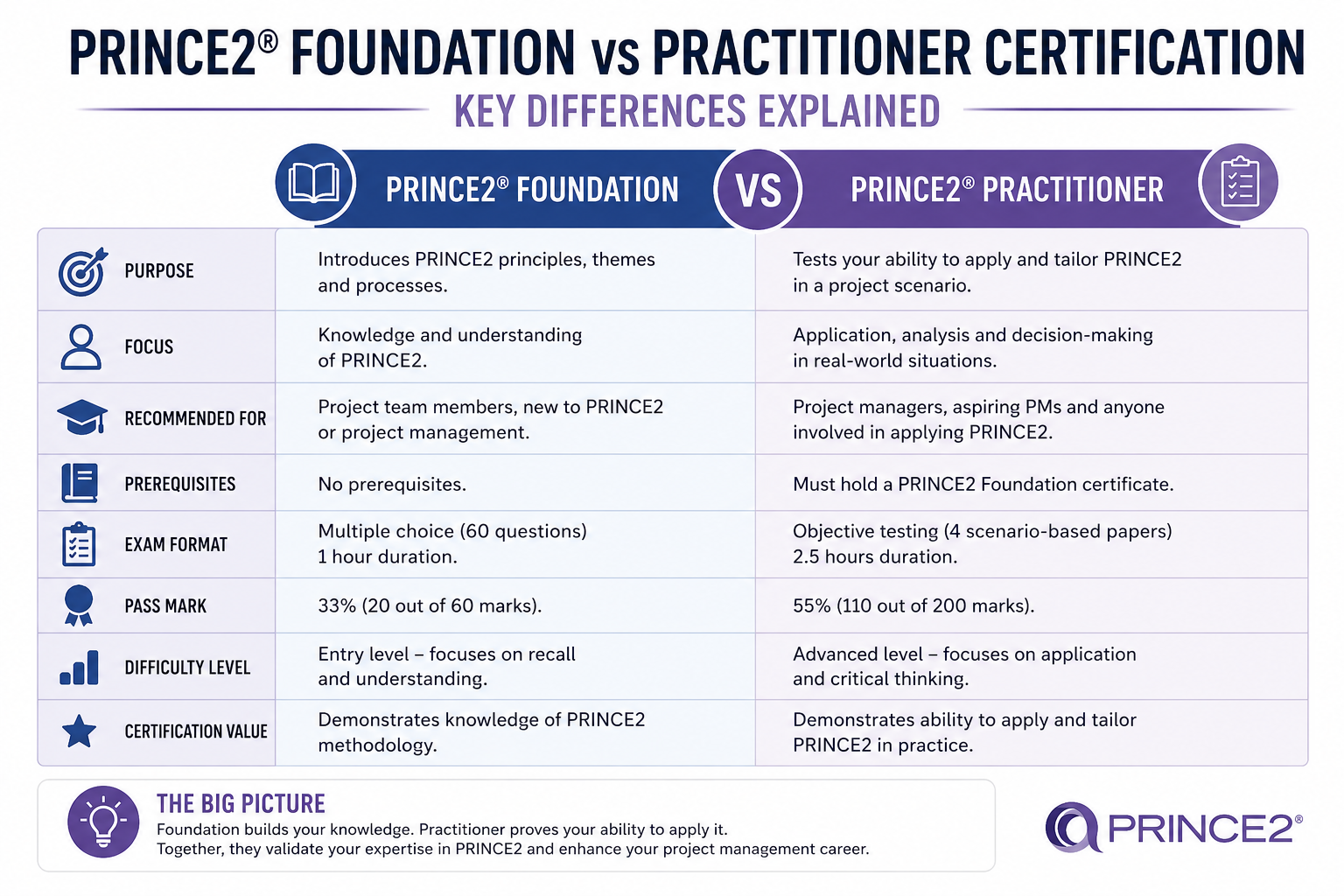
If you're looking to elevate your project management skills, you might have come across the PRINCE2 certification. However, with two distinct levels—PRINCE2 Foundation and PRINCE2 Practitioner—it's essential to understand the key differences between these certifications. This comprehensive guide will explore the nuances of each certification, helping you decide which path is best for your career. Understanding PRINCE2 Certification Levels PRINCE2, which stands for PRojects IN Controlled Environments, is a process-driven project management methodology widely recognized across various industries. In India, as businesses increasingly adopt agile project management techniques, having a PRINCE2 certification can set you apart from your peers. The certification is divided into two main levels: PRINCE2 Foundation Certification What is PRINCE2 Foundation Certification? The PRINCE2 Foundation certification is aimed at individuals who are new to project management or those looking to gain a solid understanding of the PRINCE2 methodology. It covers the key concepts, principles, and terminology of PRINCE2. Key Features of PRINCE2 Foundation Certification Benefits of PRINCE2 Foundation Certification Obtaining the PRINCE2 Foundation certification can significantly enhance your career prospects. Here are some benefits: PRINCE2 Practitioner Certification What is PRINCE2 Practitioner Certification? The PRINCE2 Practitioner certification is designed for individuals who have already acquired the Foundation certification and want to apply their knowledge in real-world projects. This certification allows you to tailor PRINCE2 to your project's specific needs. Key Features of PRINCE2 Practitioner Certification Benefits of PRINCE2 Practitioner Certification The Practitioner certification offers several advantages: Key Differences Between PRINCE2 Foundation and Practitioner Certification Level of Knowledge The Foundation certification focuses on the basic principles and concepts of PRINCE2, while the Practitioner certification delves deeper into practical applications and adaptations of the methodology. Eligibility Requirements To take the PRINCE2 Practitioner exam, you must first complete the Foundation certification. There are no prerequisites for the Foundation certification. Exam Structure The Foundation exam consists of 60 questions, whereas the Practitioner exam has 68 questions. The passing scores are also different, reflecting the increased complexity of the Practitioner level. Career Implications While both certifications are valuable, the Practitioner certification is more likely to lead to higher-level project management roles and increased earning potential. Which Certification is Right for You? The decision between PRINCE2 Foundation and Practitioner certification depends on your current experience and career aspirations. If you're just starting in project management, the Foundation certification is the right entry point. However, if you already have some experience and wish to deepen your skills, the Practitioner certification is the ideal choice. FAQs 1. How long does it take to complete PRINCE2 Foundation and Practitioner certifications? The time required varies by individual. Generally, the Foundation certification can be completed in a few days to a week, while the Practitioner certification may take an additional few weeks of study. 2. Are there any prerequisites for the PRINCE2 Foundation certification? No, there are no prerequisites for the PRINCE2 Foundation certification, making it accessible for beginners. 3. Is the PRINCE2 certification recognized globally? Yes, PRINCE2 certification is recognized globally and is highly respected in the project management community. 4. Can I take both certifications back-to-back? Yes, many candidates choose to complete both certifications in quick succession, especially if they are focused on advancing their project management careers. Conclusion In summary, understanding the differences between PRINCE2 Foundation and Practitioner certification is crucial for any aspiring project manager. While the Foundation certification provides the necessary foundation, the Practitioner certification allows for practical application and deeper knowledge. As you weigh your options, consider your career goals and current experience to make the best choice for your future. Ready to take your project management skills to the next level? Enroll in a PRINCE2 certification course today and start your journey towards becoming a certified project management professional!

Pravin sahani
May 31, 2026
What is PRINCE2 Certification? Complete Guide for Project Management Professionals

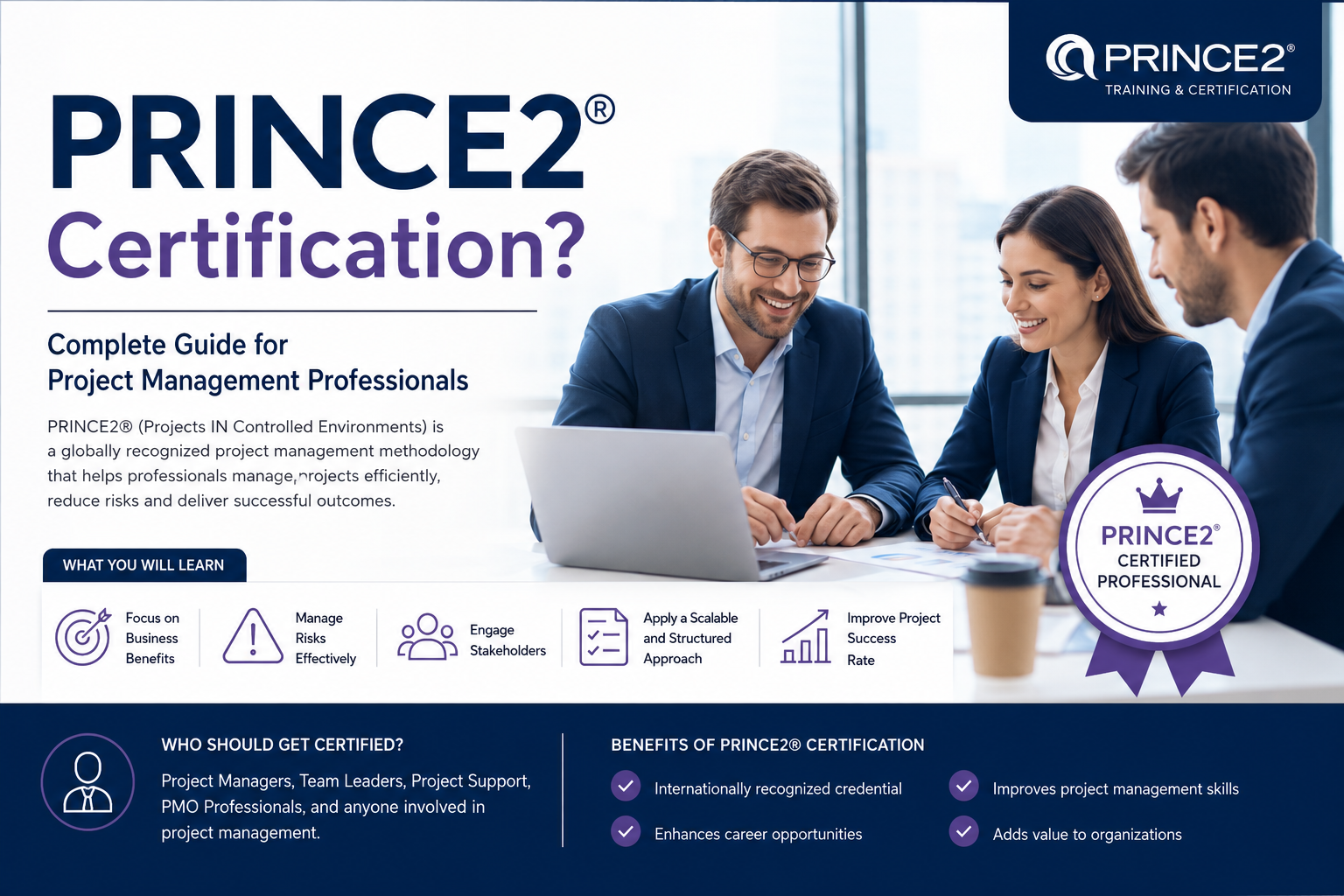
In the fast-paced world of project management, having a recognized certification can significantly enhance your career prospects. One such certification that has gained immense popularity is PRINCE2 certification. If you are wondering, what is PRINCE2 certification? This article aims to provide a comprehensive guide to help you understand its significance, the training involved, and how it can benefit your career in project management. Understanding PRINCE2 Certification PRINCE2, which stands for PRojects IN Controlled Environments, is a structured project management methodology that emphasizes organization and control throughout a project’s lifecycle. Developed in the UK, it has become a global standard in project management, embraced by professionals around the world. Why PRINCE2 Certification is Important Obtaining a PRINCE2 certification signifies that you possess a deep understanding of project management principles and practices. Here are a few reasons why this certification is essential for project management professionals in India: Components of PRINCE2 Certification PRINCE2 certification is divided into two main levels: Foundation and Practitioner. 1. PRINCE2 Foundation The Foundation level provides an introduction to the PRINCE2 methodology. It covers the basic components and principles of PRINCE2, making it suitable for beginners or those new to project management. 2. PRINCE2 Practitioner The Practitioner level is designed for those who want to apply PRINCE2 in real-life scenarios. This certification focuses on how to tailor the PRINCE2 methodology to different project environments. PRINCE2 Training and Course Structure To achieve PRINCE2 certification, you must undergo formal training. There are various institutions offering PRINCE2 training in India, each providing tailored courses to suit different learning needs. PRINCE2 Course Content The course typically covers the following topics: Duration and Format of the Course Most PRINCE2 training courses can be completed in a matter of days, typically ranging from 3 to 5 days, depending on the level. Courses are available in various formats: How to Prepare for PRINCE2 Certification Exams Preparation for the PRINCE2 certification exams is crucial. Here are some effective strategies: Benefits of PRINCE2 Certification for Indian Professionals In India, the demand for certified project management professionals is on the rise. Here are the key benefits: FAQs about PRINCE2 Certification 1. What is PRINCE2 certification? PRINCE2 certification is a globally recognized project management certification that teaches the PRINCE2 methodology for managing projects effectively. 2. How long is the PRINCE2 certification valid? PRINCE2 certifications do not expire, but it is recommended to stay updated with the latest practices and methodologies. 3. Can I take the PRINCE2 exam online? Yes, many training providers offer online exams for both Foundation and Practitioner levels. 4. Is PRINCE2 certification worth it? Absolutely! PRINCE2 certification enhances your skills, improves job prospects, and increases earning potential in the project management field. Conclusion In conclusion, obtaining a PRINCE2 certification can be a game-changer for project management professionals in India. With its structured approach and global recognition, PRINCE2 equips you with the necessary tools and knowledge to manage projects efficiently. If you're serious about advancing your career in project management, consider enrolling in a PRINCE2 training course today! Ready to take your project management career to the next level? Sign up for a PRINCE2 course today and unlock your potential!

Pravin sahani
May 31, 2026
How to Prepare for CAPM Certification Exam? Study Plan, Tips & Practice Tests

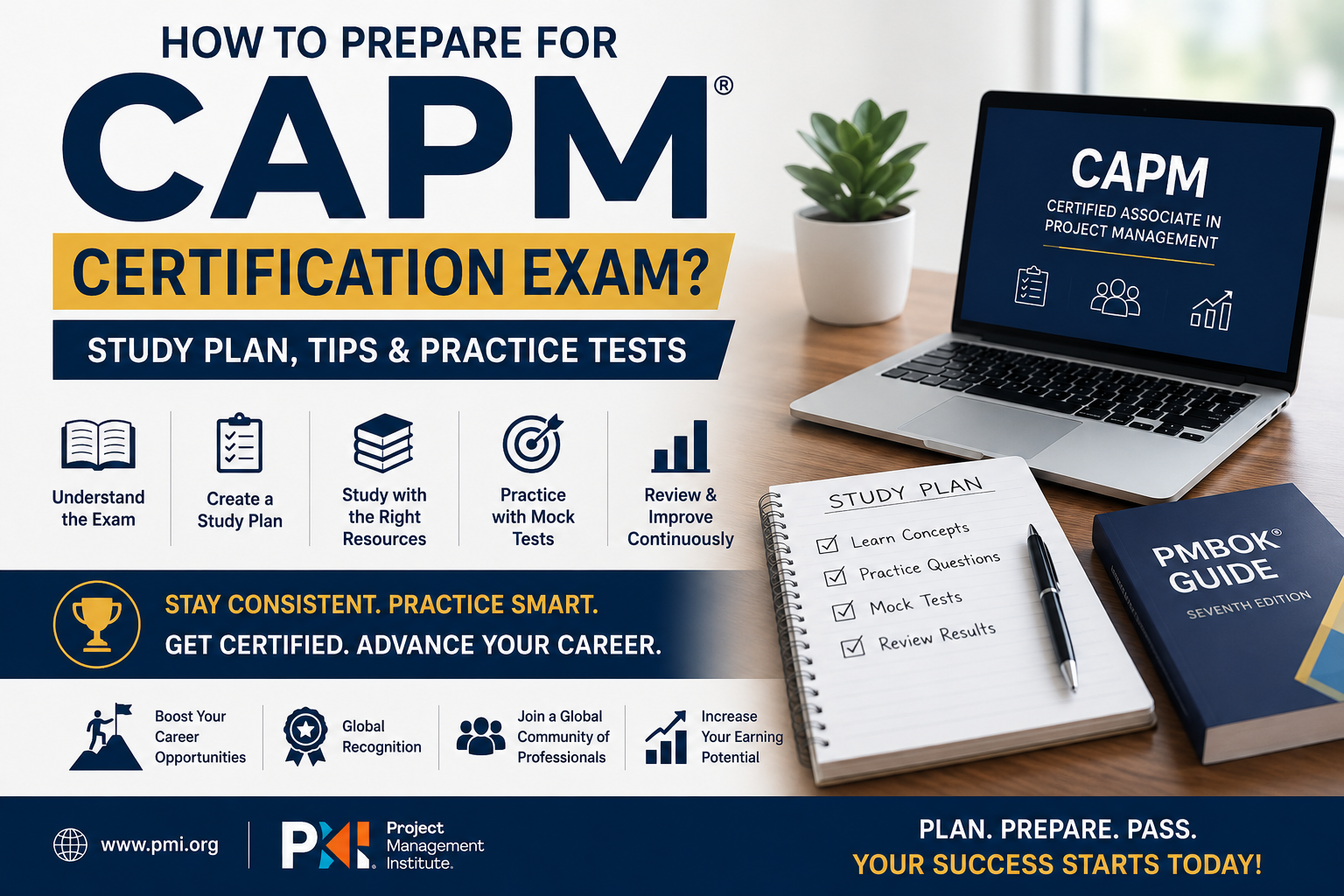
How to Prepare for CAPM Certification Exam? Study Plan, Tips & Practice Tests Are you aspiring to enhance your project management skills and career prospects? The Certified Associate in Project Management (CAPM) certification is a fantastic stepping stone for professionals looking to establish themselves in the field of project management. In this blog, we will discuss effective strategies for CAPM exam preparation, including a comprehensive study plan, essential tips, and the value of practice tests. Let's dive in! Understanding the CAPM Certification Exam The CAPM certification, offered by the Project Management Institute (PMI), is designed for individuals who are new to project management or those who wish to demonstrate their understanding of the fundamental concepts and terminology of project management. This certification can significantly boost your career by showcasing your commitment to professional development. Study Plan for CAPM Exam Preparation 1. Know the Exam Structure Before you begin your CAPM exam preparation, it is crucial to understand the exam structure. The CAPM exam consists of 150 multiple-choice questions, which you must complete within three hours. The questions are based on the PMBOK® Guide (Project Management Body of Knowledge) and cover various domains of project management. 2. Create a Study Schedule Creating a study schedule is essential for effective CAPM exam preparation. Dedicate at least 2-3 months for your preparation, depending on your existing knowledge of project management concepts. Break down your study plan into weekly goals, focusing on each knowledge area outlined in the PMBOK® Guide. 3. Utilize a CAPM Study Guide A reliable CAPM study guide is an invaluable resource for your preparation. Look for study guides that align with the latest PMBOK® Guide edition and cover the exam syllabus comprehensively. A good study guide will provide structured content, practice questions, and real-world examples to help you grasp complex concepts. 4. Join a CAPM Prep Course Enrolling in a CAPM prep course can enhance your understanding and boost your confidence. These courses often include interactive sessions, expert guidance, and access to additional resources. Many institutes in India offer online and offline courses tailored to the CAPM certification exam, making it convenient to choose one that fits your schedule. 5. Make Use of Study Groups Joining a study group can provide motivation and diverse insights into project management concepts. Collaborate with peers who are also preparing for the CAPM exam. Discussing topics and quizzing each other can reinforce your understanding and retention of the material. Effective Study Tips for CAPM Exam Preparation 1. Focus on Understanding, Not Memorization While it’s important to be familiar with key terms and processes, the CAPM exam tests your ability to apply project management concepts. Focus on understanding the “why” behind each process and how they interconnect rather than rote memorization. 2. Practice with CAPM Mock Tests Taking CAPM mock tests is one of the best ways to prepare for the actual exam. These practice tests simulate the exam environment and help you identify your strengths and weaknesses. Aim to complete at least 5-10 mock tests before the exam date to build your confidence and improve your time management skills. 3. Review and Revise Regularly Set aside time each week to review previously covered material. Revisiting concepts helps reinforce your knowledge and aids long-term retention. Consider using flashcards for quick revision of key terms and processes. 4. Utilize Online Resources The internet is a treasure trove of resources for CAPM exam preparation. Explore forums, blogs, and websites dedicated to project management. Websites like PMI’s official site, projectmanagement.com, and various YouTube channels offer valuable insights and tips for the CAPM certification exam. 5. Stay Updated with PMBOK® Changes The PMBOK® Guide is periodically updated, reflecting the latest trends and practices in project management. Ensure you are studying the most recent edition to avoid discrepancies between your study material and the exam content. Practice Tests: The Key to Success Incorporating practice tests into your CAPM exam preparation is essential. Here’s why: FAQs About CAPM Certification Exam Preparation 1. What is the CAPM certification? The Certified Associate in Project Management (CAPM) is a globally recognized certification offered by PMI, aimed at individuals seeking to demonstrate their understanding of project management principles. 2. How long should I study for the CAPM exam? Ideally, you should dedicate at least 2-3 months for your CAPM exam preparation, but this can vary based on your prior knowledge and experience in project management. 3. Is the CAPM exam difficult? The difficulty of the CAPM exam can vary from person to person. However, with a solid study plan, effective resources, and consistent practice, you can increase your chances of passing the exam. 4. Can I take CAPM mock tests online? Yes, there are numerous online platforms that offer CAPM mock tests. These tests are designed to simulate the actual exam environment and provide instant feedback on your performance. 5. What are the prerequisites for the CAPM certification? To be eligible for the CAPM certification, you need a secondary degree (high school diploma or global equivalent) and 23 hours of project management education completed before you sit for the exam. Conclusion Preparing for the CAPM certification exam requires a strategic approach and dedication. By developing a structured study plan, utilizing a reliable CAPM study guide, and practicing with CAPM mock tests, you can enhance your confidence and knowledge. Remember to stay motivated, leverage available resources, and engage with fellow aspirants to make your preparation journey enjoyable and effective. If you are ready to take the first step towards earning your CAPM certification, start your preparation today! Explore our recommended study resources and practice tests to ensure you are well-equipped for success. Call to Action: Don’t wait any longer! Begin your CAPM exam preparation today and pave the way for a successful career in project management. Click here to discover essential resources and tools tailored for your success!

Pravin sahani
May 31, 2026
CAPM Knowledge Areas and Project Management Concepts Explained

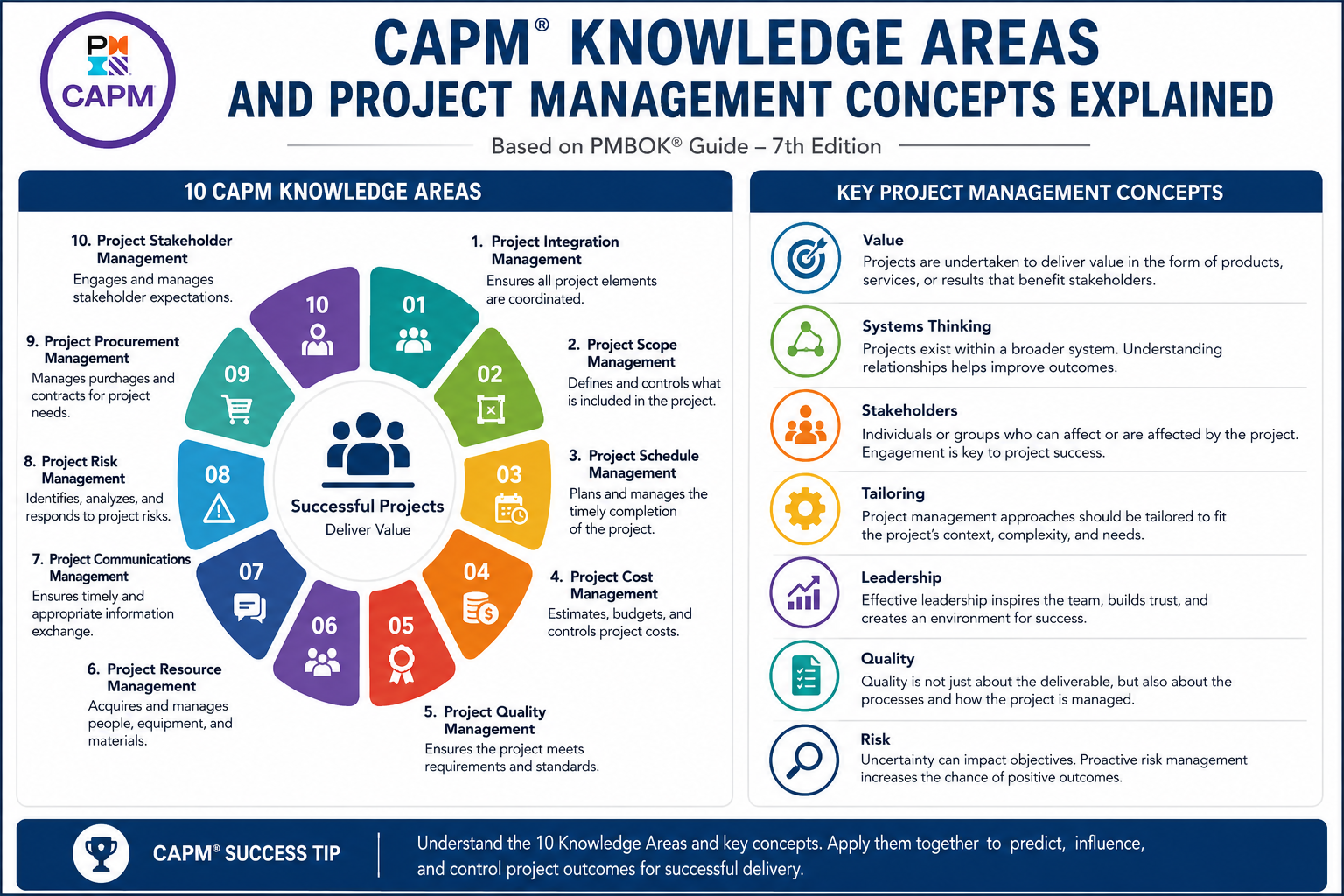
The Certified Associate in Project Management (CAPM) certification, offered by the Project Management Institute (PMI), is your gateway to understanding the fundamental principles of project management. For aspiring project managers in India, grasping the CAPM knowledge areas, CAPM syllabus, and project management concepts is vital for professional growth and successful project execution. Understanding CAPM Knowledge Areas The CAPM knowledge areas encompass essential components that project managers need to master for effective project delivery. According to the PMBOK (Project Management Body of Knowledge), there are ten knowledge areas that form the core of project management. 1. Project Integration Management This area focuses on ensuring that all aspects of the project are coordinated. It involves developing the project charter, project management plan, and managing project execution, monitoring, and closure. Effective integration is crucial for aligning project objectives with organizational goals. 2. Project Scope Management Defining and managing project scope is critical for preventing scope creep. This knowledge area covers requirements gathering, scope definition, scope validation, and scope control. Clear documentation and stakeholder involvement are key to successful scope management. 3. Project Schedule Management This area involves planning and controlling the project timeline. Key activities include defining activities, sequencing them, estimating durations, and developing a project schedule. Effective schedule management ensures timely project delivery. 4. Project Cost Management Managing project costs is vital for maintaining budgetary constraints. This knowledge area includes estimating costs, determining budget, and controlling costs. Understanding cost management helps project managers make informed financial decisions. 5. Project Quality Management Quality management ensures that project deliverables meet the required standards. This area covers quality planning, quality assurance, and quality control. A focus on quality enhances customer satisfaction and reduces rework. 6. Project Resource Management This knowledge area deals with identifying, acquiring, and managing project resources, including human resources and materials. Effective resource management leads to improved team performance and project efficiency. 7. Project Communication Management Clear communication is essential for project success. This area focuses on planning communications, managing stakeholder engagement, and ensuring that project information is effectively disseminated. Good communication enhances collaboration and reduces misunderstandings. 8. Project Risk Management Identifying and managing risks is crucial for minimizing project uncertainties. This knowledge area involves risk identification, risk analysis, and risk response planning. A proactive approach to risk management can save time and resources. 9. Project Procurement Management Procurement involves acquiring goods and services needed for the project. This area covers planning procurements, conducting procurements, and controlling procurements. Understanding procurement processes helps ensure that project resources are obtained efficiently. 10. Project Stakeholder Management Engaging stakeholders is critical for project success. This knowledge area focuses on identifying stakeholders, analyzing their needs, and managing their expectations. Effective stakeholder management fosters support and reduces resistance to change. CAPM Syllabus Overview The CAPM syllabus is designed to provide a comprehensive understanding of project management principles. It includes both theoretical and practical aspects, ensuring candidates are well-prepared for the certification exam. Key Components of the CAPM Syllabus CAPM Process Groups Explained In addition to the knowledge areas, the CAPM syllabus emphasizes the importance of understanding process groups. These groups represent the phases of a project lifecycle and help project managers organize their work effectively. 1. Initiating Process Group This phase involves defining the project at a high level and obtaining authorization to proceed. It includes developing the project charter and identifying stakeholders. 2. Planning Process Group In this phase, detailed planning takes place. It involves defining project objectives, creating a project management plan, and establishing baselines for scope, schedule, and cost. 3. Executing Process Group Execution involves implementing the project plan by coordinating people and resources. It also includes managing stakeholder engagement and ensuring quality deliverables. 4. Monitoring and Controlling Process Group This phase focuses on tracking project performance to ensure it aligns with the project management plan. It involves measuring project progress, identifying variances, and implementing corrective actions. 5. Closing Process Group The closing phase involves finalizing all project activities. It includes obtaining acceptance of deliverables, closing contracts, and documenting lessons learned. Why CAPM Certification is Valuable for Indian Professionals In India’s rapidly evolving business landscape, CAPM certification holds significant value for professionals seeking to enhance their project management skills. Here are a few reasons why pursuing CAPM is beneficial: Frequently Asked Questions (FAQs) 1. What is the eligibility criteria for the CAPM exam? To be eligible for the CAPM exam, candidates must have a secondary degree (high school diploma, associate’s degree, or global equivalent) and 23 hours of project management education completed before the exam. 2. How long is the CAPM certification valid? The CAPM certification is valid for five years. To maintain your certification, you must retake the exam before it expires. 3. What resources can I use to prepare for the CAPM exam? Several resources are available, including PMI’s PMBOK Guide, online courses, and study groups. Utilizing mock exams and practice questions can also enhance your preparation. 4. How can I apply for the CAPM exam? You can apply for the CAPM exam by creating an account on the PMI website, filling out the application form, and paying the exam fee. Conclusion Understanding the CAPM knowledge areas, CAPM syllabus, and project management concepts is essential for anyone looking to pursue a career in project management. With the right preparation and commitment, you can successfully earn your CAPM certification and elevate your professional journey. Are you ready to take the next step in your project management career? Explore CAPM certification and unlock new opportunities today! Call to Action: For more information about CAPM certification and to access valuable resources, visit the PMI website or enroll in a comprehensive CAPM preparation course today!

Pravin sahani
May 31, 2026
CAPM vs PMP Certification: Which Project Management Course Should You Choose?

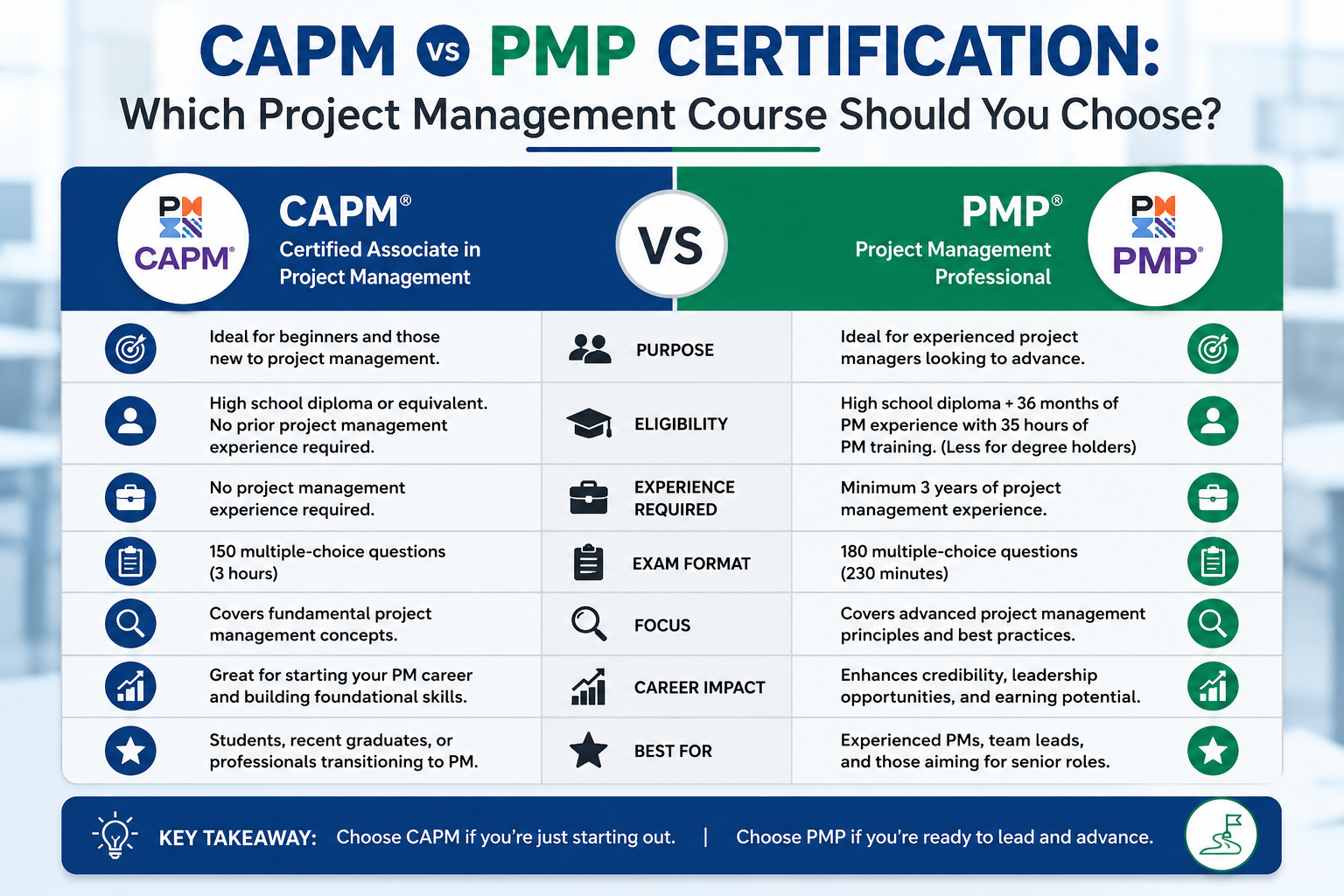
In the fast-paced world of project management, obtaining the right certification can significantly enhance your career prospects. Among the most sought-after certifications are the CAPM (Certified Associate in Project Management) and PMP (Project Management Professional). But which one should you pursue? In this detailed guide, we will explore the differences between the CAPM certification and the PMP project management certification, providing a comprehensive CAPM vs PMP certification comparison to help you make an informed decision. Understanding CAPM and PMP Certifications The CAPM and PMP certifications are both offered by the Project Management Institute (PMI), a globally recognized authority in project management. However, they cater to different audiences and have distinct requirements. What is CAPM Certification? The CAPM certification is designed for individuals who are new to project management or have limited experience. It serves as an entry-level certification, providing foundational knowledge of project management principles and practices. The CAPM is ideal for: To qualify for the CAPM, candidates must have a secondary degree (high school diploma or equivalent) and either 23 hours of project management education or a project management course completed before the exam. What is PMP Certification? The PMP certification is aimed at experienced project managers. It demonstrates that you have the necessary skills and knowledge to lead and direct projects effectively. The PMP is ideal for: To qualify for the PMP, candidates must have either a four-year degree and at least 36 months of leading projects, or a secondary degree with 60 months of leading projects. Additionally, candidates must have 35 hours of project management education. CAPM vs PMP: Key Differences Understanding the differences between the CAPM and PMP certifications is crucial for making the right choice for your career path. Below are the key distinctions: 1. Target Audience The CAPM is targeted towards individuals who are just starting their careers in project management. On the other hand, the PMP is aimed at seasoned professionals who have substantial project management experience. 2. Experience Requirements As mentioned above, the CAPM requires no prior project management experience, making it accessible for beginners. Conversely, the PMP necessitates significant project management experience, thus catering to a more experienced audience. 3. Exam Content and Structure The CAPM exam consists of 150 multiple-choice questions covering the fundamentals of project management, based on the PMBOK (Project Management Body of Knowledge). The PMP exam, however, consists of 180 questions that test your ability to apply project management concepts in real-world scenarios. 4. Certification Cost The cost for obtaining the CAPM certification is generally lower than that of the PMP certification. The CAPM exam fee is around INR 21,000 for PMI members and INR 29,000 for non-members. In contrast, the PMP exam fee is approximately INR 33,000 for members and INR 48,000 for non-members. 5. Maintenance and Renewal Both certifications require ongoing education to maintain your status. The CAPM certification is valid for five years, after which you must retake the exam. The PMP certification, however, requires 60 PDUs (Professional Development Units) every three years for renewal. Benefits of CAPM Certification Choosing the CAPM certification offers several advantages: Benefits of PMP Certification The PMP certification also comes with its unique set of benefits: Which Certification Should You Choose? Your choice between the CAPM vs PMP certification should be guided by your current experience level, career goals, and the time you are willing to invest in preparation. When to Choose CAPM Certification If you are just starting out in project management, the CAPM is an excellent choice. It will provide you with the necessary knowledge and skills to begin your career in this field. Additionally, it can help you stand out in a competitive job market. When to Choose PMP Certification If you have several years of project management experience and are looking to advance your career, the PMP certification is the better option. It will validate your skills and knowledge, making you more attractive to employers. Frequently Asked Questions (FAQs) 1. How long does it take to prepare for CAPM and PMP certifications? Preparation time varies by individual, but generally, you can expect to spend around 2-3 months for CAPM and 3-6 months for PMP, depending on your prior knowledge and study habits. 2. Can I take both certifications? Absolutely! Many professionals choose to pursue the CAPM certification first to build their foundational knowledge and then move on to the PMP as they gain experience. 3. What study materials are recommended for CAPM and PMP? For both certifications, it is advisable to study the PMBOK guide, take practice exams, and consider enrolling in a formal training course or workshop. 4. Is there a significant difference in job opportunities with CAPM vs PMP? Yes, PMP certification typically opens more advanced job opportunities and higher salaries compared to CAPM. However, CAPM can still be a valuable stepping stone into the project management field. Conclusion In summary, both the CAPM and PMP certifications have their distinct advantages and cater to different audiences. If you are starting your career in project management, the CAPM certification can provide you with a strong foundation. However, if you are an experienced project manager looking to validate your skills and increase your earning potential, the PMP certification is the way to go. Whichever path you choose, investing in your education and certification will undoubtedly pay off in the long run. Start your journey today and take your first step towards becoming a certified project management professional! Call to Action Ready to take the next step in your project management career? Whether you choose the CAPM or PMP certification, we can help you prepare! Visit our website for comprehensive study materials, expert guidance, and training courses tailored for Indian professionals. Don’t wait—secure your future in project management today!

Pravin sahani
May 31, 2026
CAPM Certification Eligibility, Exam Pattern & Requirements Explained

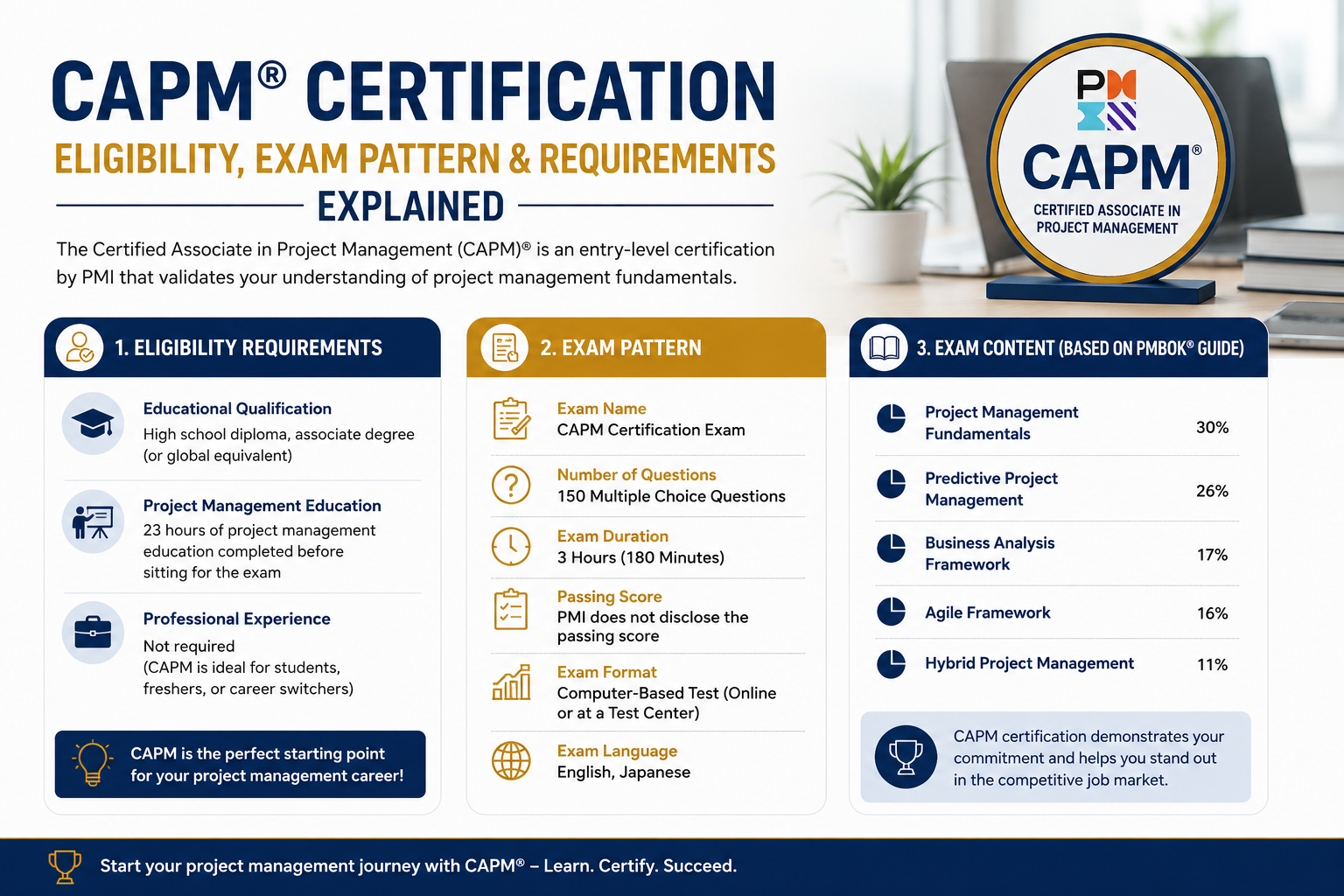
If you’re looking to advance your project management skills, obtaining the CAPM certification (Certified Associate in Project Management) could be a significant step in your career. However, it’s essential to understand the CAPM eligibility criteria, CAPM certification requirements, and the exam pattern before embarking on this journey. This guide aims to provide a comprehensive overview tailored for the Indian audience. What is CAPM Certification? The CAPM certification is an entry-level certification offered by the Project Management Institute (PMI). It is designed for individuals eager to gain foundational knowledge in project management principles and practices. The certification demonstrates your commitment to the profession and can significantly enhance your job prospects in India and abroad. CAPM Eligibility Criteria Before applying for the CAPM certification, it’s crucial to ensure you meet the CAPM exam eligibility requirements. Here’s what you need: 1. Educational Requirements 2. Project Management Education You must complete 23 hours of project management education. This can be achieved through various channels: Many institutions in India offer CAPM preparatory courses that fulfill this requirement, enhancing your understanding of project management concepts. 3. No Prior Experience Required Unlike other project management certifications, the CAPM does not require any prior project management experience. This makes it an ideal certification for students, fresh graduates, and professionals transitioning into project management roles. CAPM Certification Requirements Once you meet the CAPM eligibility criteria, the next step is to understand the CAPM certification requirements for application and examination: 1. Application Process To apply for the CAPM certification, follow these steps: 2. Exam Preparation Prepare thoroughly for the exam using various resources: Being well-prepared will significantly enhance your chances of passing the exam on your first attempt. CAPM Exam Pattern Understanding the CAPM exam pattern is crucial for effective preparation. Here’s what you need to know: 1. Exam Structure The CAPM exam consists of: Of these, 135 questions are scored, and 15 are unscored pre-test questions. The unscored questions do not affect your score but are included to evaluate their effectiveness for future exams. 2. Topics Covered The exam tests your knowledge across various domains, including: Familiarizing yourself with these topics will help you focus your studies effectively. 3. Scoring and Results The CAPM exam is scored on a scale of 0 to 100, with a passing score typically set around 61%. You will receive your results immediately after completing the exam. In case of failure, you can retake the exam after 45 days. Frequently Asked Questions (FAQs) Q1: How long is the CAPM certification valid? The CAPM certification is valid for five years. To maintain your certification, you must retake the exam before the expiration date. Q2: Is there a need for renewal after five years? Yes, since the CAPM certification is not a continuous professional development certification, you need to reapply and retake the exam after five years to maintain your credential. Q3: Can I take the CAPM exam online? Yes, PMI offers the option to take the CAPM exam online through a proctored environment, allowing you to take the exam from the comfort of your home or office. Q4: How can I prepare for the CAPM exam? Preparation can include studying the PMBOK guide, enrolling in CAPM preparatory courses, and practicing with mock exams to familiarize yourself with the exam format. Conclusion Obtaining your CAPM certification is an excellent way to validate your project management knowledge and skills. By understanding the CAPM eligibility criteria, CAPM certification requirements, and CAPM exam pattern, you can approach your certification journey with confidence. If you’re serious about enhancing your career in project management, start preparing for the CAPM exam today! Call to Action Ready to take the next step in your project management career? Enroll in a CAPM preparatory course today and get on the path to certification success! Visit [Your Website] to learn more about available courses and resources tailored for Indian students.

Pravin sahani
May 31, 2026
What is CAPM Certification? Complete Beginner Guide for Aspiring Project Managers

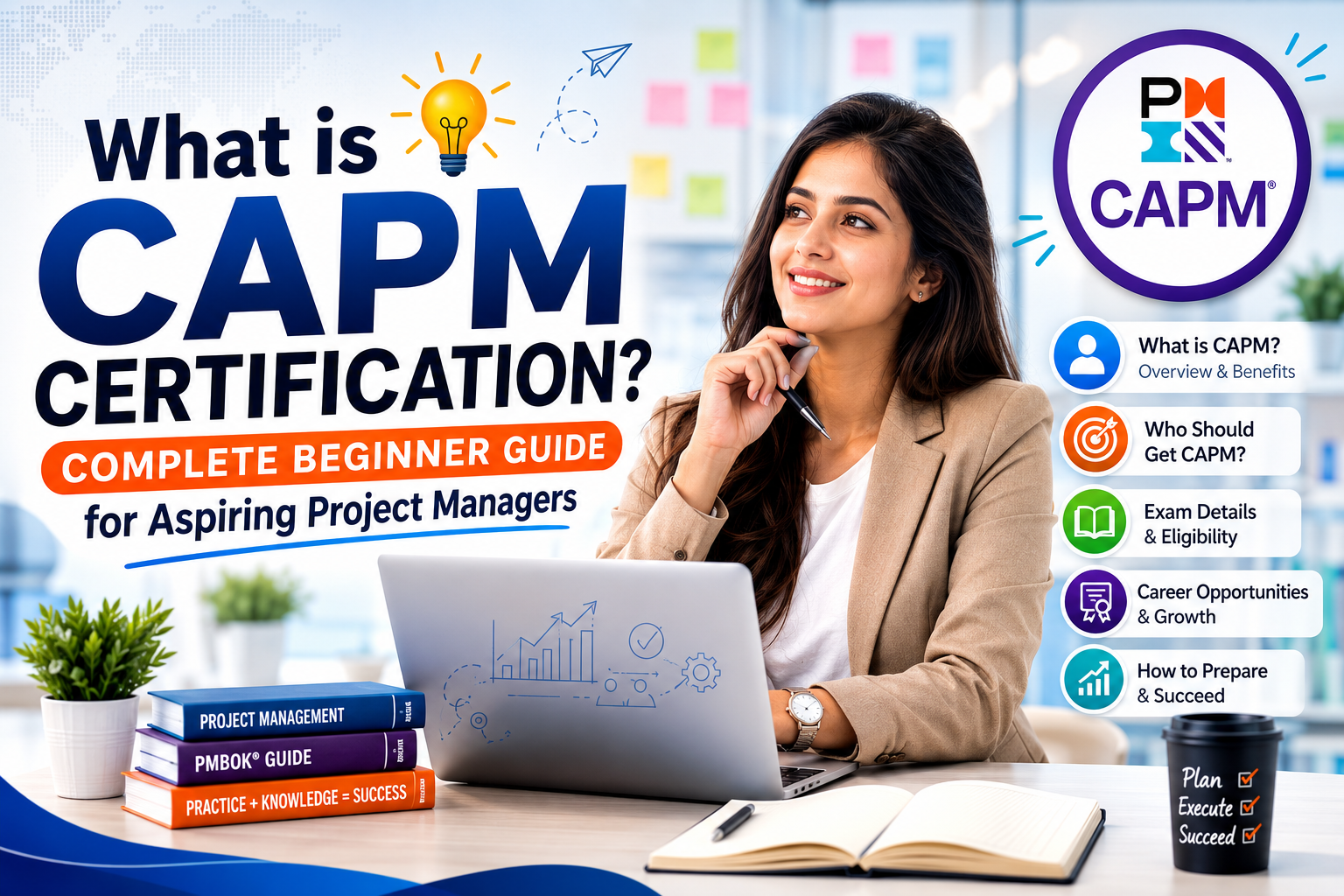
In today's fast-paced business environment, effective project management is crucial for success. For aspiring project managers in India, one of the most valuable credentials to consider is the CAPM certification, also known as the Certified Associate in Project Management. This comprehensive guide will help you understand what CAPM certification is, the benefits of obtaining it, the training involved, and how it can enhance your career prospects. Understanding CAPM Certification The CAPM certification, offered by the Project Management Institute (PMI), is designed for individuals who are new to project management and want to demonstrate their understanding of the fundamental concepts and terminology of project management. This certification serves as a stepping stone for those looking to advance their careers in project management, whether they are students, fresh graduates, or professionals looking to switch careers. Why Choose CAPM Certification? Obtaining a CAPM certification can provide numerous advantages: Who Should Pursue CAPM Certification? The CAPM certification is suitable for: Requirements for CAPM Certification To be eligible for the CAPM certification, you need to meet the following requirements: CAPM Training: Preparing for the Exam Preparing for the CAPM exam involves a combination of formal training and self-study. Here’s a breakdown of what you need to consider: 1. Choose the Right CAPM Course Select a reputable training provider that offers CAPM courses. Look for programs that are PMI-approved and provide comprehensive training covering all the domains of project management as outlined in the PMBOK® Guide. 2. Study Materials Utilize various study materials such as: 3. Join Study Groups Joining a study group can enhance your preparation. Engaging with peers allows for the exchange of ideas, clarifying doubts, and maintaining motivation. The CAPM Exam: What to Expect The CAPM exam consists of 150 multiple-choice questions, which you must complete within three hours. The questions cover various topics, primarily drawn from the PMBOK® Guide, including: Maintaining Your CAPM Certification Once you obtain your CAPM certification, it is essential to maintain it. The CAPM certification is valid for five years. To renew your certification, you must retake the exam or earn 15 PDUs (Professional Development Units) every three years. Frequently Asked Questions (FAQs) 1. How much does CAPM certification cost? The cost of the CAPM exam varies based on whether you are a PMI member or not. As of now, the exam fee is around INR 25,000 for non-members and INR 20,000 for PMI members. 2. How long does it take to prepare for the CAPM exam? Preparation time varies by individual, but on average, candidates spend between 3 to 6 months preparing for the exam, depending on their prior knowledge and experience in project management. 3. Is CAPM certification worth it? Yes, CAPM certification is worth it, especially for beginners in project management. It enhances your resume, provides you with essential knowledge, and opens doors to various job opportunities. 4. Can I take the CAPM exam online? Yes, PMI offers the option to take the CAPM exam online, allowing you to complete the certification process from the comfort of your home. Conclusion In conclusion, the CAPM certification is an excellent choice for aspiring project managers looking to gain a solid foundation in project management principles. It not only enhances your knowledge but also increases your employability in a competitive job market. With the right preparation, commitment, and training, you can confidently pursue your CAPM certification and take a significant step toward a successful career in project management. Call to Action If you're ready to kickstart your journey in project management, consider enrolling in a CAPM course today. Equip yourself with the skills and knowledge needed to excel in this dynamic field. Explore local training providers or online platforms offering CAPM certification and take the first step toward achieving your professional goals!

Pravin sahani
May 31, 2026
How to Prepare for PMP Certification Exam? Study Plan, Tips & Practice Questions

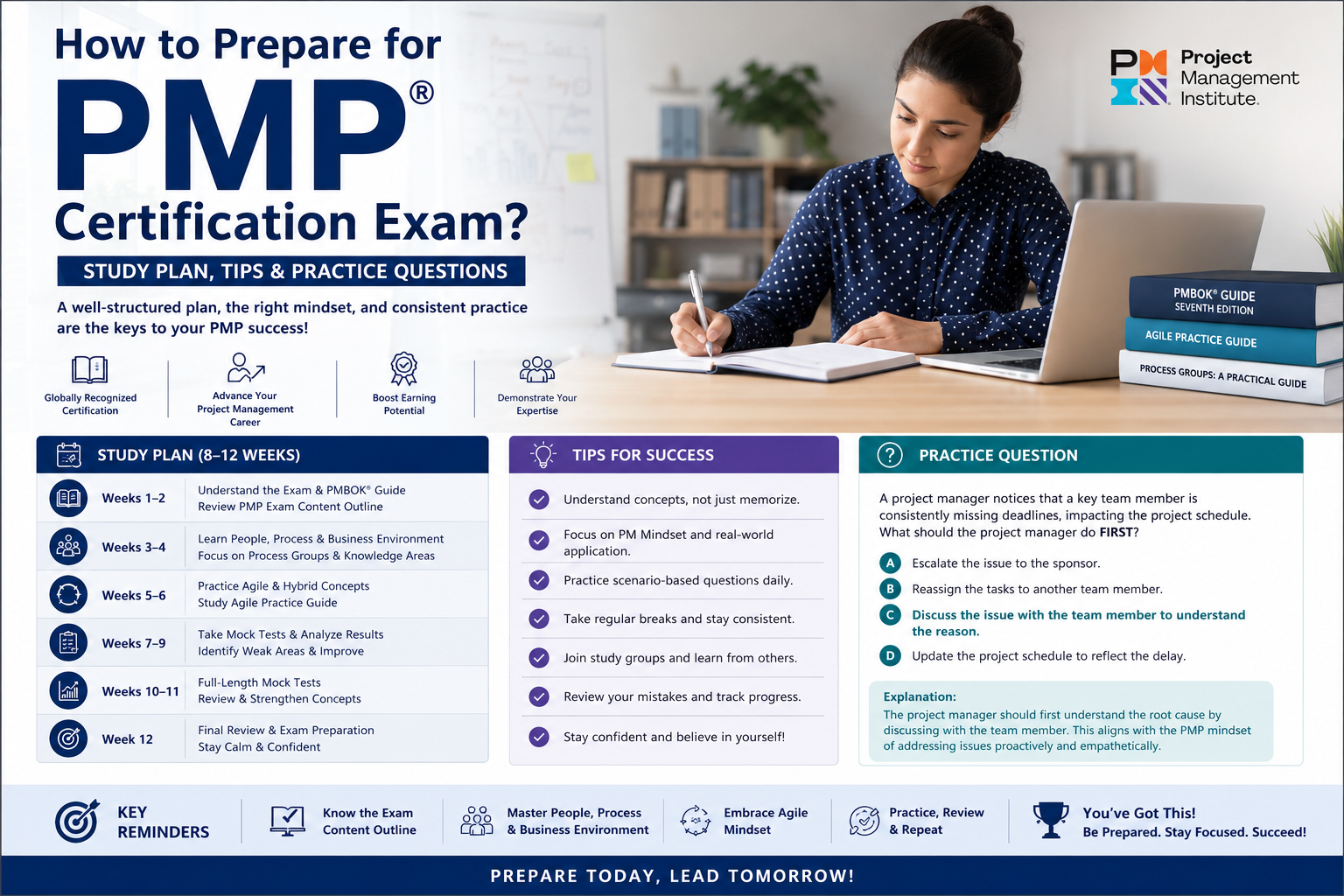
Are you gearing up for the PMP certification exam? If so, you’re not alone. The Project Management Professional (PMP) certification is a globally recognized credential that can significantly enhance your career in project management. However, the journey to successfully passing the PMP exam requires diligent preparation, a structured PMP study plan, and practical insights. Understanding the PMP Certification Exam The PMP certification, offered by the Project Management Institute (PMI), is designed to validate your skills and knowledge in project management. The exam tests your ability to manage projects effectively, covering various domains such as initiating, planning, executing, monitoring, and closing projects. Eligibility Criteria Before embarking on your PMP exam preparation, ensure you meet the eligibility criteria: Creating an Effective PMP Study Plan A well-structured PMP study plan is essential for your exam preparation. Here’s a step-by-step guide to help you create your personalized study plan. 1. Assess Your Current Knowledge Start by evaluating your current understanding of project management concepts. Take a practice test or use online resources to identify your strengths and weaknesses. This assessment will guide your study focus. 2. Set a Study Timeline Decide how much time you can dedicate to studying each week. A typical study plan spans 8-12 weeks, depending on your familiarity with the material. Ensure to allocate more time to challenging topics. 3. Gather Study Materials Invest in the right study materials, including: 4. Create a Study Schedule Draft a weekly study schedule that includes: 5. Join a Study Group Collaborating with others can be beneficial. Join a local study group or an online community where you can share insights, resources, and practice questions. Engaging with others can enhance your understanding and keep you motivated. Tips for Success in PMP Exam Preparation Here are some practical tips to enhance your PMP exam preparation: 1. Understand the Exam Format The PMP exam consists of 180 multiple-choice questions, and you have 230 minutes to complete it. Familiarize yourself with the exam format and practice time management. 2. Focus on Key Concepts Pay attention to the key concepts outlined in the PMBOK® Guide. Make sure you understand the processes, knowledge areas, and the interrelationship between them. This understanding is crucial for answering situational questions on the exam. 3. Practice with PMP Mock Tests Regularly take PMP mock tests to assess your progress. Mock tests help you become accustomed to the exam format and identify areas that need improvement. Aim to complete a few full-length practice exams before exam day. 4. Use Flashcards Flashcards are an excellent tool for memorizing key terms, formulas, and concepts. Create your own or use digital flashcards to study on the go. 5. Stay Updated The field of project management is continually evolving. Stay updated with the latest trends, tools, and best practices through webinars, articles, and forums. This knowledge can give you an edge in the exam. Practice Questions for the PMP Exam Practicing with real exam-style questions is vital for your success. Here are a few sample questions to get you started: Sample Question 1 Which of the following is a tool used in the Monitor and Control Project Work process? Sample Question 2 What is the primary purpose of the project charter? Make sure to review the answers to these questions thoroughly and understand the reasoning behind them. Frequently Asked Questions (FAQs) 1. What is the passing score for the PMP exam? The passing score for the PMP exam is not publicly disclosed. However, PMI uses a criterion-referenced scoring approach, meaning the score reflects your performance against a set standard. 2. How long is the PMP certification valid? The PMP certification is valid for three years. To maintain your certification, you must earn 60 PDUs (Professional Development Units) during this period. 3. Can I take the PMP exam online? Yes, PMI offers an online proctored option for the PMP exam, allowing you to take the exam from the comfort of your home or office. 4. What resources are recommended for PMP exam preparation? Recommended resources include the PMBOK® Guide, online courses, study guides, and PMP exam prep books. Additionally, consider joining PMP forums and study groups for peer support. Conclusion and Call to Action Preparing for the PMP certification exam can be a daunting task, but with a structured PMP study plan and the right preparation strategies, you can significantly increase your chances of success. Remember to take practice tests, collaborate with peers, and stay focused on your study goals. Ready to take the plunge into project management excellence? Start your PMP exam preparation today! For more resources, tips, and guidance, follow our blog or reach out to us for personalized coaching. Let’s embark on this journey together!